Wednesday Oct 21, 2026
Wednesday Oct 21, 2026
Thursday, 29 January 2026 01:17 - - {{hitsCtrl.values.hits}}
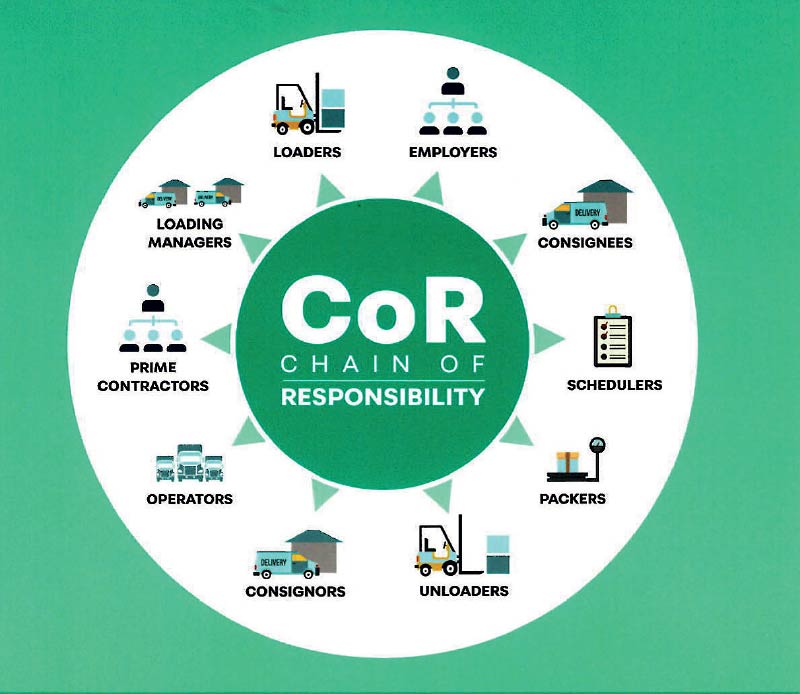
 Recap of Chain of Responsibility
Understanding the Chain of Responsibility (CoR) in a governance context
IN the political structure, Sri Lanka has the Executive President at the apex with the Prime Minister and Cabinet of Ministers sitting below.
The Chain of Responsibility in national governance and the public sector is the missing piece of governance structure in Sri Lanka. Basically, it is about thinking holistically of the end-to-end process of any task, identifying all internal and external stakeholders, mapping the whole process and making sure all accountable and responsible stakeholders do their individual jobs to the best of their ability. It also involves periodic checking to ensure tasks are being done as planned. This monitoring and checking goes beyond one’s own accountable and responsible areas and if any stakeholder sees the process is not working anywhere, they have the responsibility of documenting those lapses to alert the relevant parties. Overall process implementation responsibility may rest with a leader at the top and that person could be a Director General of an organisation (if the process is confined to an organisation), a Secretary to a Ministry or a Cabinet Minister. This could even be the Prime Minister or the Executive President of Sri Lanka. It all depends on the complexity of the process.
The Chain of Responsibility
The CoR is built on a simple but powerful idea: when multiple parties influence an outcome, responsibility must be shared across the entire chain and not pushed onto the last person in the line.
A classic example of the absence of CoR thinking in Sri Lanka is the poor implementation of educational reforms, where failures were often attributed to frontline actors rather than systemic weaknesses in planning, coordination, and oversight.
Although the CoR concept was coined in Australia and implemented for transport safety, its underlying principles translate remarkably well to public governance, policy implementation, and public sector accountability. In fact, applying the CoR thinking to Government operations can strengthen transparency, reduce systemic failures, and improve service delivery.
The following narrative explains how this works.
Why the Chain of Responsibility principles fit public governance
Modern governments are complex systems. Policy outcomes are rarely the result of a single decision-maker. They could emerge from:
When something goes wrong and corruption, service failure, cost blowouts, safety and incidents occur, traditional governance often blames the frontline worker or the final decision point. The CoR challenges this by recognising that risk is created upstream, through planning, resourcing, leadership, and system design.
Applying CoR to governance means shifting from faultfinding to system accountability.
Translating Chain of Responsibility concepts into public sector governance
Below is a direct mapping of CoR principles to public sector operations.
A. The primary duty: Duty to ensure safe, ethical, and effective public administration
In CoR, every party must ensure safety “so far as is reasonably practicable.”
In Government, this becomes:
Every public sector leader must ensure that their decisions, policies, and systems minimise risks to public trust, service quality, financial integrity, and community wellbeing.
This includes:
This reframes governance as a proactive duty, not a reactive one.
B. Executive due diligence: Ministerial and senior executive accountability
Chain of Responsibility requires executives to:
Applied to Government, this means Ministers, Secretaries, and Directors-General must:
This strengthens leadership accountability and reduces the “I wasn’t aware” defence.
C. Prohibited requests: Preventing unethical or unrealistic directives
Chain of Responsibility in Australia prohibits actions that pressure drivers to break the law.
In Government, this translates to prohibiting:
This protects both the public and public servants.
D. Shared responsibility: WholeofGovernment accountability
Chain of Responsibility recognises that multiple parties influence outcomes.
In public governance, this means:
This reduces siloed thinking and encourages collaborative risk management.
Practical applications in public sector operations
Here are concrete ways the CoR thinking can improve Government performance.
A. Policy development
Chain of Responsibility approach:
Outcome: Policies that work in practice, not just on paper.
B. Procurement and contract management
Chain of Responsibility approach:
Outcome: Reduced cost blowouts, safer operations, and better value for money.
C. Regulatory oversight
Chain of Responsibility approach:
Outcome: More effective, fair, and transparent regulation.
D. Public service workforce management
Chain of Responsibility approach:
Outcome: A healthier, more ethical, more productive public sector.
Benefits of applying CoR to national governance
Adopting the CoR principles across Government leads to:
It shifts governance from a blame culture to a systemsthinking culture.
Why this matters
Countries succeed when their governance systems are:
The CoR provides a readymade framework for achieving this. It encourages leaders to look beyond individual failures and examine the systemic causes of poor outcomes.
In a world where public expectations are rising and Government complexity is increasing, CoR offers a modern, practical approach to strengthening governance and improving public sector performance.
(The author is an engineer currently working in the Australian NSW Local Government sector. He aims to share his perspectives on various social development issues alongside his professional expertise to inspire others to think critically and differently. He can be reached at [email protected])

Part 1 of this article is available online at https://www.ft.lk/janaka_seneviratne/Chain-of-Responsibility-Strengthening-accountability-in-public-institutions-Part-I/10517-787511




