Friday Oct 23, 2026
Friday Oct 23, 2026
Tuesday, 12 May 2026 06:05 - - {{hitsCtrl.values.hits}}
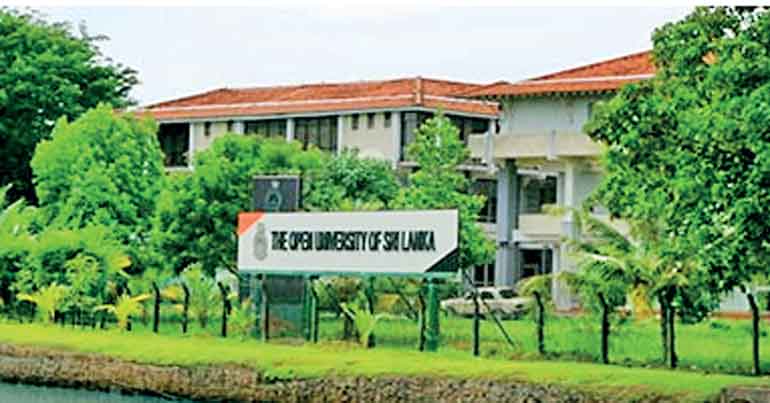
The Court of Appeal has ruled that there can be no “hide-and-seek games” in higher education institutions as it upheld a Right to Information Commission (RTIC) determination directing the Open University of Sri Lanka to release a student’s evaluated answer scripts and marks from an LLB selection test under the Right to Information Act.
In a judgement delivered on 8 May, the Court dismissed a revision application filed by the Open University and members of its governing council challenging an RTIC order issued in November 2023. The Bench comprising Court of Appeal Judge R. Gurusinghe and Court of Appeal Judge Dr. Sumudu Premachandra held that the RTIC’s decision was “well founded” and could not be faulted.
The dispute arose after R.A. Janaka Roshan Ranasinghe sought access on behalf of his daughter, R.A.D. Sashindya Ranasinghe, to her answer scripts and marks relating to the Open University’s LLB selection examination conducted on 8 January 2023.
The university’s Information Officer and Designated Officer initially refused the request in July 2023 under Section 5(1)(l) of the Right to Information Act No. 12 of 2016, arguing that disclosure of examination-related material could compromise the integrity and confidentiality of the examination process.
However, after an appeal by the applicant, the RTIC directed the university on 28 November 2023 to release the requested information. The university subsequently sought revisionary relief from the Court of Appeal, contending that disclosure of answer scripts would reveal the nature and structure of the examination and undermine examination security.
In its analysis, the Court examined Section 5(1)(l) of the RTI Act, which permits refusal of information where disclosure “would harm the integrity of an examination being conducted by the Department of Examination or a Higher Educational Institution”.
The judgement noted that the Sinhala text of the provision introduces an additional emphasis on confidentiality, but observed that there was no basis to deny an examinee access to their own answer script and the manner in which it had been evaluated.
“If a standard marking scheme were applied, to protect the integrity of the higher institution, it should be revealed. There cannot be hide-and-seek games in higher institutions, and transparency is a paramount consideration,” the Court said, while referring to Article 14A of the Constitution and the preamble to the RTI Act.
The Court also cited the earlier Court of Appeal ruling in Bank of Ceylon v. Right to Information Commission and S.M. Pasansani Anuradha, delivered in February 2024, where disclosure of examination-related information connected to a Bank of Ceylon recruitment examination was upheld on the grounds of public interest and transparency.
Drawing on Indian jurisprudence, the Bench referred to the Indian Supreme Court decision in CBSE v. Aditya Bandopadhyay, which recognised evaluated answer books as “information” under RTI legislation and held that examinees are entitled to inspect or obtain certified copies of their own evaluated scripts, subject to confidentiality protections relating to examiners.
The Court further cited the Indian Supreme Court ruling in Mradul Mishra v. UPSC Chairman, which held that permitting candidates to inspect answer sheets does not adversely affect the efficient operation of government institutions, while reiterating that examiner identities may remain confidential.
Importantly, the Court held that the Open University’s internal by-laws governing examinations could not supersede the RTI Act. Referring to Section 4 of the Act, the judgement stated that the legislation prevails over inconsistent provisions in any other written law.
“Thus, the University By-Laws suppressing the RTI has no force in law,” the Court said.
The judgement also addressed procedural issues relating to the university’s decision to invoke the Court’s revisionary jurisdiction instead of pursuing the statutory right of appeal available under Section 34(1) of the RTI Act.
The Bench observed that revisionary jurisdiction is discretionary and reserved for exceptional circumstances involving manifest injustice or miscarriage of justice. It found that the university had failed to demonstrate such exceptional circumstances and had not explained why it failed to pursue the ordinary appellate remedy available under the statute.
The Court cited several Sri Lankan authorities on the limited scope of revisionary jurisdiction, including Rustom v. Hapangama, Attorney General v. Podisingho, Indika Roshan Francis v. Bulathsinghalage Lal Cooray, and Sunil Chandra Kumara v. Veloo.
Concluding that the petitioners had not acted with due diligence and that the circumstances did not warrant intervention under revisionary powers, the Court dismissed the application without costs.




