Thursday Oct 29, 2026
Thursday Oct 29, 2026
Thursday, 29 October 2026 09:28 - - {{hitsCtrl.values.hits}}
By Madhuri Peiris
Any country loves a resilient future. Few have had to work out what that word means as sharply as Sri Lanka has over the past year. When Cyclone Ditwah affected the country on 28 November 2025, it brought rain, landslides and flooding on a scale the island had rarely faced. On World Sustainability Day, the real question is not whether Sri Lanka cares about climate change. It is whether the country has built the systems it needs to live with it.
What Ditwah revealed
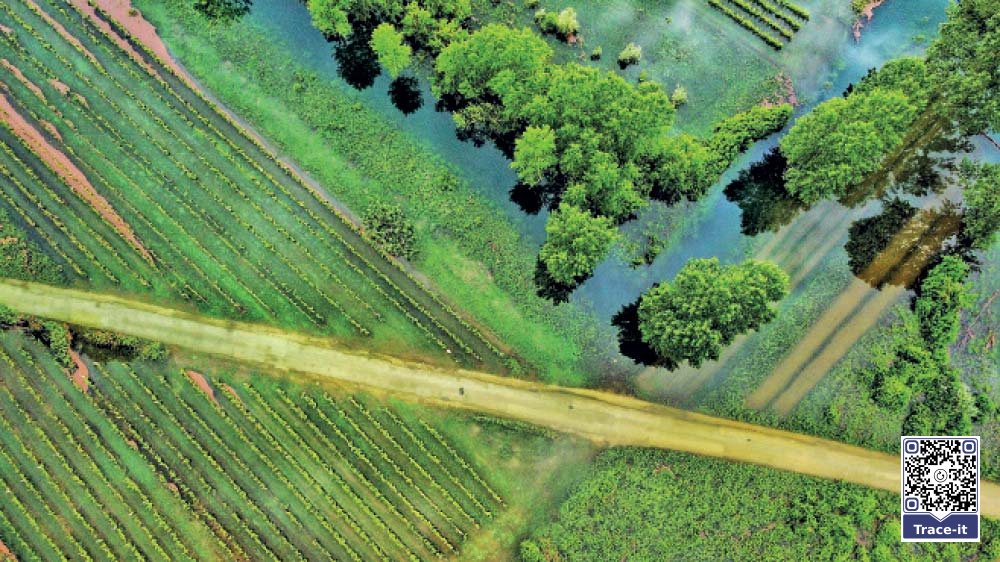
We can never forget the damage it caused. It took more than 640 lives and affected 2.3 million, which is over a tenth of the population. Floodwater covered about a fifth of the country’s land, and roughly 1,200 landslides struck, mostly in the hilly interior. Behind those figures are families who lost their homes, farmers who lost their harvests, and communities that waited days for help to arrive.
There is also a deeper lesson. Researchers have described much of the island’s infrastructure as designed for a climate that no longer exists. Roads, tanks, drainage channels and housing standards were largely planned around old weather patterns. The UNDP office in Sri Lanka says the evidence points to climate change increasing both the frequency and the severity of extreme events here. Planning for yesterday’s rainfall will not protect anyone from tomorrow’s.
What we already have
It would be unfair to say Sri Lanka is starting from nothing. A Disaster Management Act and a national policy have existed since 2005. The country has also committed to net zero by 2050 and to the 2030 Agenda for sustainable development. Our society is educated, adaptable and used to improvising when things go wrong.
That last point deserves some care. Many people believe that ordinary citizens, rather than the government, were the first responders during Ditwah. Community spirit is a real strength, but a country cannot build its safety on goodwill alone. Resilience needs institutions that act early, communicate clearly, and reach every district, not only the ones that make the news.
Where the gaps are
Money is the most obvious one. The government announced about $1.6 billion in extra spending for 2026, and early estimates suggested rebuilding could cost up to $7 billion. That is a heavy load for an economy still recovering from its 2022 crisis. The IMF approved a $2.9 billion bailout in early 2023. Moody’s has since warned that Sri Lanka is the most credit-exposed economy in South and Southeast Asia to the region’s recent climate disasters.
Planning rules are another gap. Houses still go up on unstable slopes and in flood-prone areas because land is scarce and enforcement is uneven. Commentators have called for climate-resilient housing codes backed by risk mapping, safer siting and support for retrofits in vulnerable areas. These ideas are practical, and none of them needs new technology. They need political will and steady follow-through.
What readiness would look like
Being ready does not mean being immune. It means that when the next storm comes, fewer people are in harm’s way, the warnings arrive in time, and the recovery does not wipe out a decade of progress. A few priorities stand out.
First, rebuilding should mean rebuilding differently. Repairing a bridge or a canal to its old standard only restores the old vulnerability. New infrastructure should be designed for heavier rainfall and higher flood levels from the start.
Second, early warning has to reach the last mile. Forecasts are only useful if a farmer in a remote village, a fisherman on the coast or a family on a hillside can understand them and act in time. That means local language, local volunteers and regular drills.
Third, nature should be treated as infrastructure. Wetlands soak up floodwater, mangroves soften coastal surges, and forested catchments hold soil in place. Protecting and restoring them is often cheaper and longer-lasting than concrete alone.
Fourth, climate finance has to be pursued with purpose. Sources such as the Green Climate Fund and ADB resilience programmes could be tapped, but only if projects are well designed and the spending is transparent. An inclusive and accountable governance mechanism for rebuilding would help people trust that the money reaches those who need it.
Finally, the clean energy transition belongs in this conversation. Reducing dependence on imported fuel strengthens the economy, cuts emissions, and makes the country less exposed to price shocks. Resilience and sustainability are not separate goals. They support each other.
So, is Sri Lanka ready?
The honest answer is not yet, but that is not a reason for despair. Readiness is built in the years between disasters, through budgets, building codes, land use decisions and the everyday work of local authorities. UNDP has described this moment as a chance to turn adversity into resilience by embedding adaptation, ecosystem restoration and inclusive development into recovery and economic plans.
World Sustainability Day is a good moment to ask whether that chance is being taken. The knowledge exists, the talent exists, and the cost of delay has been made painfully clear. What remains is the decision to act before the next storm, not after it.




