Thursday Oct 29, 2026
Thursday Oct 29, 2026
Thursday, 29 October 2026 09:34 - - {{hitsCtrl.values.hits}}
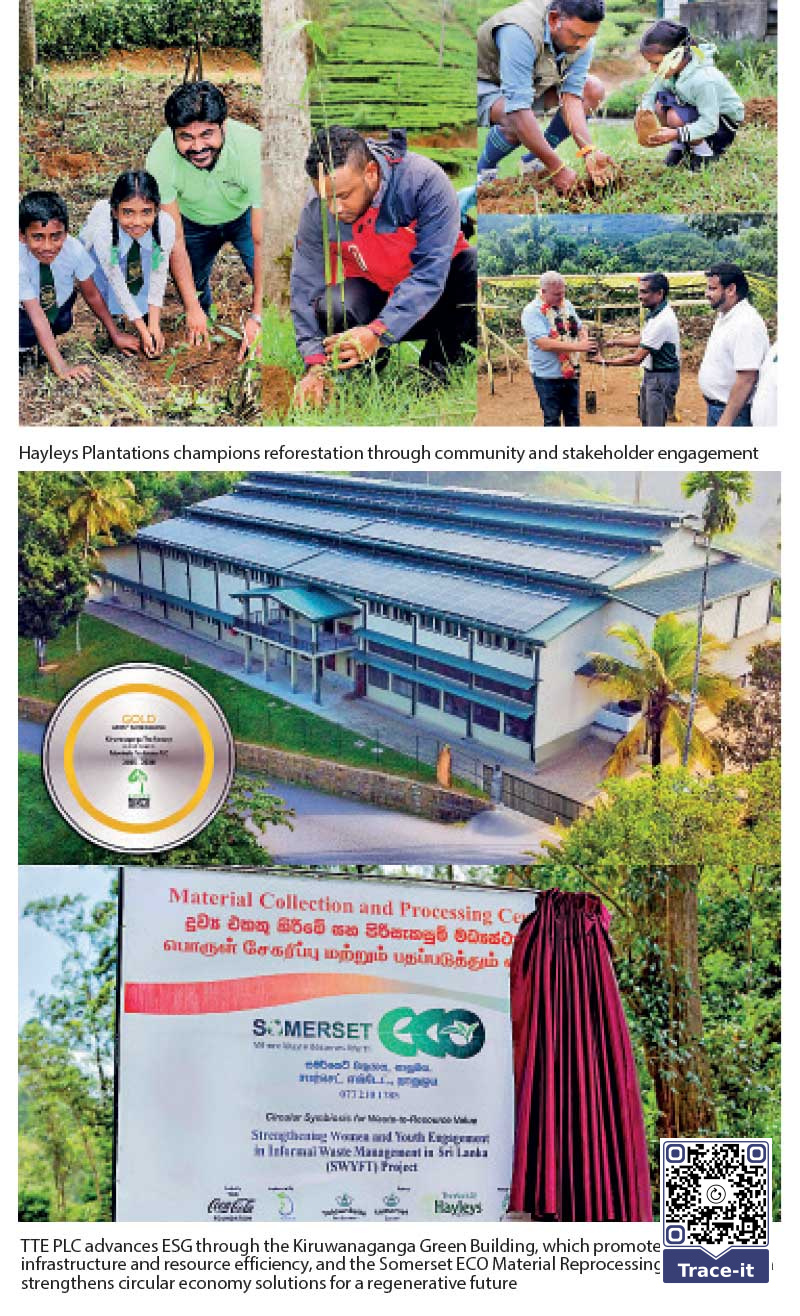
 Sustainability is central to Hayleys Plantations’ vision of building a resilient, responsible and future-ready plantation industry. Through its three Regional Plantation Companies Kelani Valley Plantations PLC (KVPL), Talawakelle Tea Estates PLC (TTE PLC) and Horana Plantations PLC (HPL) the sector continues to integrate environmental stewardship, climate action and community wellbeing into its operations. From biodiversity conservation and ecosystem restoration to renewable energy, circular economy initiatives and sustainable agriculture, each company translates shared commitments into meaningful action across its estates. Equally important is the sector’s dedication to its people, advancing initiatives that support housing, healthcare, education, employee wellbeing and inclusive community development.
Managing Director of Hayleys Plantations Group Dr. Roshan Rajadurai stated, “The long-term resilience of the plantation industry depends on protecting the ecosystems that sustain production while improving outcomes for our employees and communities. Through our three plantation companies, we are advancing climate action, resource conservation and community development across our estates.” - as it connects sustainability directly to operational resilience and identifies the Plantations group priorities.”
Kelani Valley Plantations PLC: Protecting Biodiversity and Advancing Sustainable Agriculture
Across its 25 estates, covering more than 13,000 hectares, Kelani Valley Plantations PLC (KVPL) applies its KVPL’S Corporate DNA ESG framework to integrate environmental responsibility, social development and governance into estate management.
KVPL signed the United Nations Global Compact in 2007 and the UN CEO Water Mandate in 2008, becoming – according to the company’s records – the first plantation company in Sri Lanka and the first Regional Plantation Company to make these commitments, respectively. Halgolla Estate became the first tea estate globally to receive regenagri® certification, which has since been extended across KVPL’s estates. The company has also committed to the Science Based Targets initiative’s Forest, Land and Agriculture (FLAG) framework.
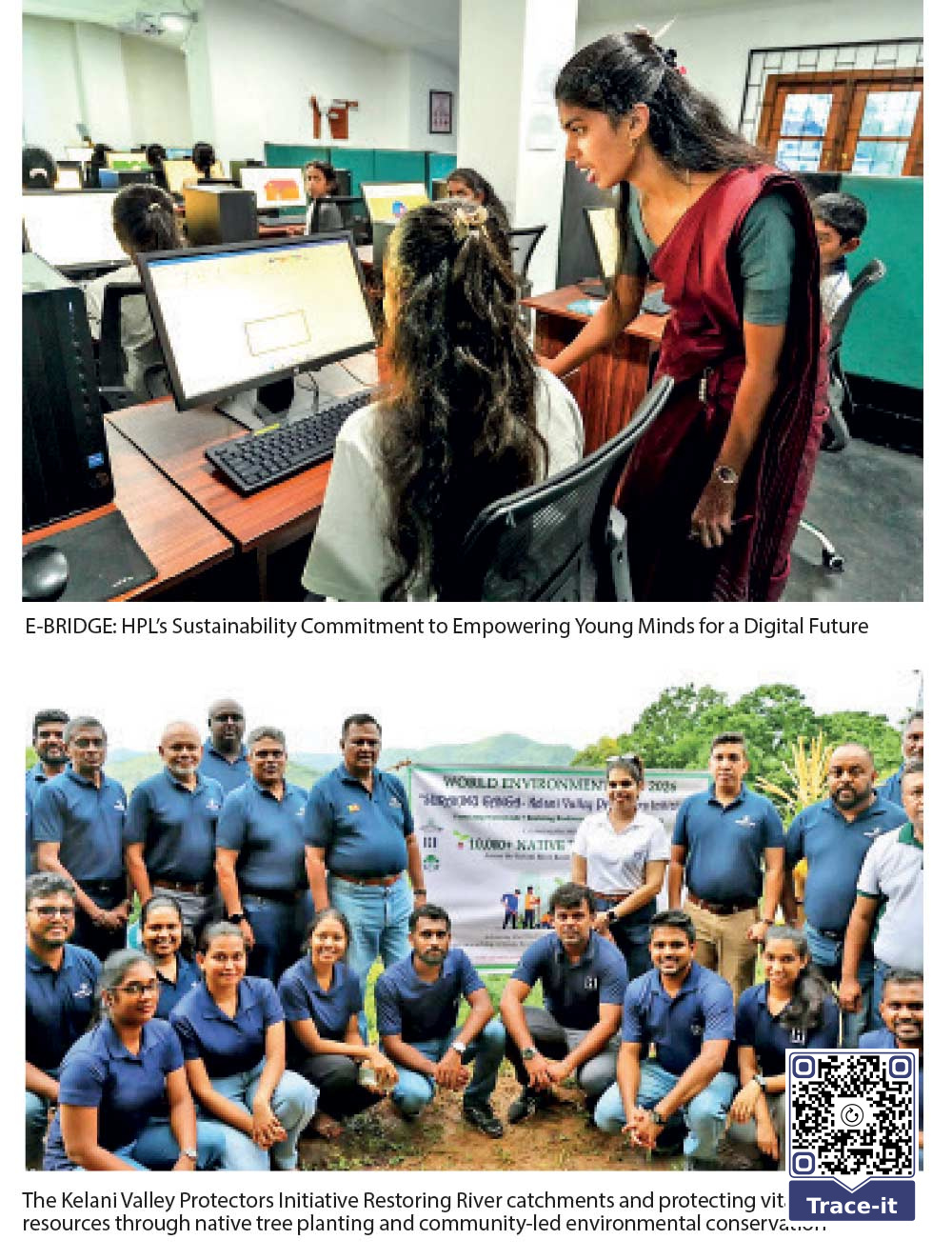
Launched at We Oya Estate in 2022, the Kelani Valley Protectors Initiative supports the Government’s Surakimu Ganga programme through river clean-ups, native tree planting and catchment restoration. KVPL also runs Green Clubs with the Central Environmental Authority, the Forest Department and the International Union for Conservation of Nature to deliver environmental education to schoolchildren. The company reports a 99% survival rate for planted trees, which are maintained for up to four years. KVPL also works with the Wilderness and Wildlife Conservation Trust (WWCT) to restore the Elbedda Ridge Corridor (ERC) across seven estates in the Hatton region. The landscape provides an important wildlife passage, supporting more than 55 leopards. Native plant nurseries, camera-trap monitoring and snare-removal patrols help restore habitats and protect wildlife.
Through its Trash to Treasure initiative, KVPL works with SPJ Creation to turn discarded electronic components into jewellery and other products, creating opportunities for women entrepreneurs and people with disabilities. Its Halgolla Agroforestry Project, climate information systems and research partnerships support efforts to improve agricultural resilience and inform estate management.Launched in 2006, KVPL’s A Home for Every Plantation Worker programme supports more than 7,000 employees and a wider plantation community of over 58,000 people. Its initiatives cover housing, healthcare, childcare, preschool facilities and educational opportunities.
Talawakelle Tea Estates PLC: Leading Science-Based Climate Action and Resource Efficiency
Through its ReGen Agenda 2030, Talawakelle Tea Estates PLC (TTE) brings together climate action, ecosystem conservation and community development. Its programmes include science-based emissions targets, habitat restoration, renewable energy, waste reduction and initiatives to improve employee wellbeing.TTE is a pioneer in science-based climate action, becoming the world’s first plantation company and Sri Lanka’s first organization ts have its emissions-reduction targets validated by the Science Based Targets initiative (SBTi). Its net-zero ambition for 2050, role as a Patron of the UN Global Compact Network Sri Lanka’s Climate Emergency Task Force Working Group, and representation on the Science Based Targets Network (SBTN) Ambition Board demonstrate its commitment to advancing climate and nature action.
TTE’s Payment for Ecosystem Services (PES) agreements link catchment conservation with community benefits. Initially valued at Rs. 4.1 million, the two agreements include an 80-hectare catchment at Great Western Estate, maintained without tea cultivation or agrochemicals to protect drinking water for 1,214 residents across 223 households. A second agreement extends conservation to the Pekoe Trail corridor. The company also reports restoring or rehabilitating 65.7 hectares of ecosystems, planting more than 16,060 native trees along the 13-kilometre Nanu Oya–Agra Oya Forest corridor, protecting 147 natural water sources and maintaining 1,413 hectares as protected forest buffers. Opened in March 2026 under the SWYFT Project, TTE’s Somerset ECO Material Collection and Processing Centre supports plastic recovery in partnership with the Coca-Cola Foundation, Janathakshan and Neptune Recyclers. In FY2025/26, TTE reported a second consecutive year of zero waste to landfill, returned approximately 700 tonnes of compost to estate soils and sourced 88.25% of its total energy consumption from renewable sources. Kiruwanaganga Tea Factory, described as Sri Lanka’s first Gold-rated green building tea factory, incorporates 220 kWp of rooftop solar, low-VOC materials and recycled construction materials. Its design target is to generate 150% of the factory’s electricity demand from renewable sources. During FY2025/26, TTE allocated Rs. 120.8 million to community investment and achieved Mother & Child-Friendly certification across its 16 estates, supporting initiatives such as A Home for Every Plantation Worker which focus employee and family wellbeing such as TTE received six Presidential Environmental Awards in 2026 across Gold, Silver, Bronze and Merit categories. It was also named a Category B winner and Agriculture Sector Award winner at the Best Corporate Citizen Sustainability Awards 2025, and recognized among the Top Ten Corporate Citizens and ranked No. 1 in LMD’s 2025 Most Awarded Entities.These achievements reflect the company’s integrated approach to environmental stewardship, climate action, responsible resource management and community wellbeing across its 16 estates.
Horana Plantations PLC: Driving Ecosystem Restoration and Community Wellbeing
Horana Plantations PLC (HPL) focuses on carbon management, biodiversity conservation, resource efficiency and community development across its estates. Its initiatives include a registered carbon project, forest corridor restoration, waste management, education and healthcare programmes.
A significant milestone is the Tea Shade Development and Ecological Restoration (TSHADE) Carbon Project at its Gouravilla and Mahanilu estates. Registered under the Verified Carbon Standard administered by Verra as Project ID 5571, it is a pioneering landscape-scale carbon initiative in Sri Lanka’s tea sector. Through tea shade development and ecological restoration, the project supports carbon sequestration and creates potential access to international carbon markets. Certified carbon credits could generate additional revenue for reinvestment in estate communities, linking climate action with economic value.
Biodiversity conservation is another priority. HPL reports 245.25 hectares under conservation and has set a 2030 target to expand its conservation area. Its partners include the Wildlife and Nature Protection Society, the Wilderness and Wildlife Conservation Trust, Biodiversity Sri Lanka and Dilmah Conservation, supporting conservation planning, habitat connectivity and ecosystem monitoring.
HPL’s REGROW initiative targets restoration of a nine-kilometre forest corridor along a tributary. Its wider conservation activities include cloud forest restoration, invasive species management and native tree planting. HPL has also signed a memorandum of understanding with the United Nations Development Programme (UNDP) on watershed conservation under a Payment for Ecosystem Services framework.Through the CIRCULAR project, HPL works with Expertise France to assess waste and identify circular economy opportunities across its value chain.
Investment in people is equally important. The E-BRIDGE Learning Centre provides children with information and communication technology, English language learning, multimedia teaching and reading resources. Accommodating up to 20 children at a time, it supports digital literacy, creativity and critical thinking.
HPL extended its alcohol prevention programme to Lindula during 2025/26, building on its work in Upcot with the Alcohol and Drug Information Centre. The programme trains estate personnel to provide guidance and connect affected families with counselling support.Healthcare initiatives include an upgraded Primary Medical Care Unit with a resident doctor and more than 152 essential medicines provided free of charge. Serving approximately 100 outpatients daily, the unit supports routine care and referrals. During the year, HPL also conducted 22 medical camps and 322 nutrition sessions, alongside screening programmes.
This World Sustainability Day, Hayleys Plantations highlights how its three plantation companies are advancing climate action, biodiversity conservation, resource efficiency and community wellbeing. Through initiatives that protect ecosystems, strengthen sustainable agriculture and improve lives, the sector continues to translate sustainability commitments into action for a more resilient plantation industry.




