Saturday Jul 04, 2026
Saturday Jul 04, 2026
Friday, 3 July 2026 00:23 - - {{hitsCtrl.values.hits}}
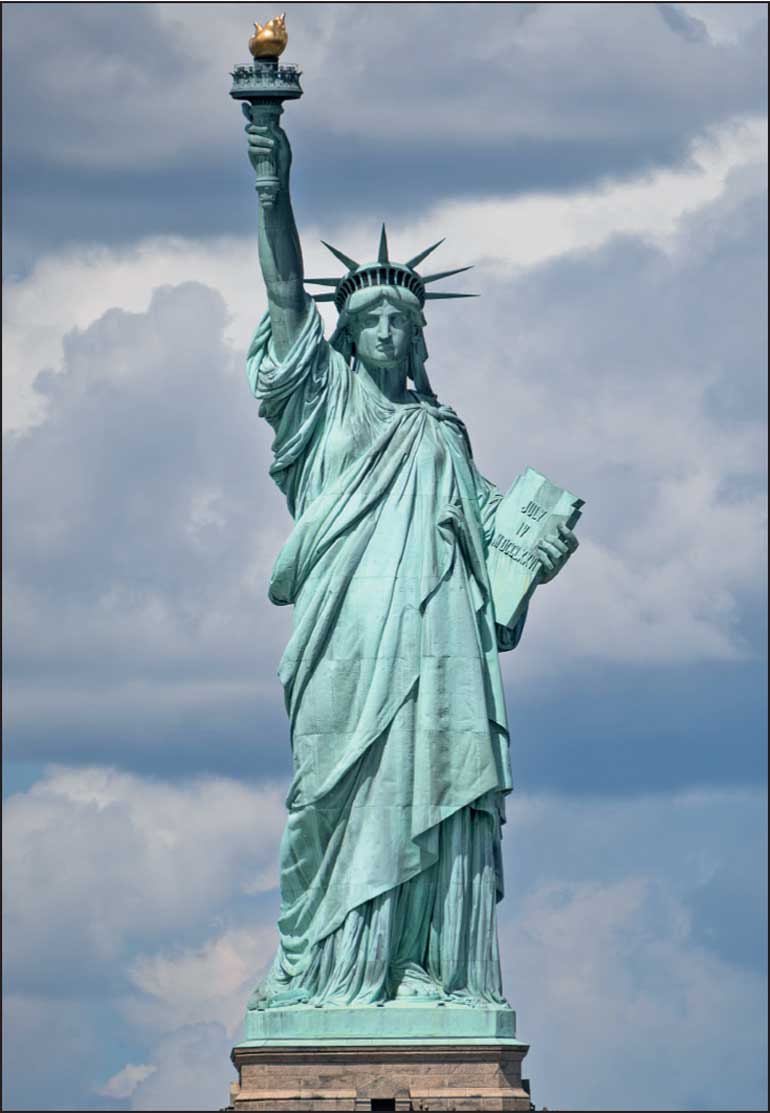
 Every empire believes itself to be eternal. This faith in its own permanence spans history, from the colonial age to as far back as the classical civilisations.
Rome spoke not of empire but of destiny. The idea was ‘imperium sine fine’: rule without end. Great Britain, at the zenith of its imperial reach, imagined not merely conquest but moral dominion. The United States, inheriting both traditions and redefining them, articulates its ambitions in the language of a manifest mission: ‘leadership’, ‘security architecture’, a ‘rules-based international order’.
Yet, history is indifferent to vocabulary. Whether it is clothed in a purple toga, the red coat, or the stars and stripes, every hegemon eventually confronts the same structural question: not whether it is powerful, but whether it can sustain the burdens that accompany primacy.
The American century, declared in the mid-20th, was not merely a statement of power. It was a claim about endurance. That claim now sits at the centre of global debate, amidst the ruins of the rules-based order and surrounded by the carnage of the US’s umpteenth war.
The United States remains, by most measurable indicators, the most powerful nation in human history. Its military reach is global – and arguably beyond the stratosphere, all the way to Earth’s only natural satellite, which Uncle Sam visited once again only recently, as if to assert its super-terra domination. Its currency structures the world economy, with few challengers to contest its stranglehold. Its universities dominate knowledge production. And its technological firms define the increasingly weaponised digital age.
And yet, as with all prior hegemonic orders, strength does not eliminate storm, and stress, and strain. In fact, it often intensifies it. And the very flexing of its muscles triggers a course-correction from within the most powerful machine’s seemingly inexorable forward-march.
Architecture of Pax Americana
The post-1945 international order was not accidental or coincidental. It was quite deliberately constructed. From the ruins of the Second World War, the United States built a system whose pillars included Bretton Woods, NATO, the Marshall Plan, and a network of bilateral alliances spanning Europe and Asia. Naval supremacy secured the global commons. The dollar became the world’s reserve currency. Cultural production from Hollywood to Silicon Valley became instruments of soft power that were as significant as aircraft carriers and intercontinental ballistic missiles.
This was Pax Americana in its classical sense: a system in which order was maintained not by universal consent, but by asymmetric capability.
In this respect, it bears comparison with Rome at its height. Not as conquest alone, but as infrastructure: roads, trade routes, legal codes, and security guarantees that made imperial order appear only too natural.
Uncle Sam became, in effect, “the world’s policeman,” patrolling not only geography but international goodwill itself, as well as any global crisis. But policing the world did not come cost-free… either to the guardian or those whom it ostensibly guarded.
Price of primacy
The concept of “imperial overstretch,” associated with the historian Paul Kennedy, is deceptively simple: great powers decline when their strategic commitments exceed their fiscal, political, and institutional capacities.
The United States has never fought a continental war for survival. Instead, it has engaged in a series of asymmetric conflicts. Korea, Vietnam, Iraq, Afghanistan. Each of these was politically justifiable in isolation, but cumulatively corrosive to strategic clarity.
Afghanistan ended not in victory, but withdrawal. Iraq reshaped the region in ways that continue to destabilise American credibility. Libya and Syria further illustrated the limits of the US’ interventionist confidence. Its most recent misadventures in the Levant and the Middle Eastern region have brought the spotlight of scrutiny to bear more steadily on its moral imperatives.
None of these wars seriously challenged, much less destroyed, American power. But they have steadily altered its perception, undermining the US’s monopoly on being the world’s top-dog.
This is because empires rarely fall in defeat. They often do fray in exhaustion, however, rotting from within while maintaining what passes for the peace elsewhere.
Rome did not collapse because of a single decisive battle. It accumulated burdens – military, fiscal, and administrative – down the centuries until equilibrium became impossible to maintain, much less be sustainably used for further expansion.
The United States today faces a similar structural question: can a republic indefinitely underwrite global security while maintaining domestic cohesion and avoiding disintegration at home and abroad?
Republic under strain
If military overstretch is one axis of imperial stress, political cohesion is another.
The late great Roman republic experienced intensifying factionalism: elite competition, institutional paralysis, and the gradual erosion of shared civic norms. Governance became theatre, compromise turned into betrayal, and violence was artfully used as a political instrument.
Modern America is not quite Rome. The calibre of its respective senators would serve to settle that argument, and I trust you don’t need me to tell you which way the gavel will fall. But the two empires exhibit parallel stresses in different forms.
Then, as now, institutional trust is on the decline. Legislative gridlock is recurrent. Electoral legitimacy is contested. The executive and judiciary are increasingly drawn into political confrontation. Governance often proceeds through crisis management rather than long-term planning.
As scholars of democratic stability have noted, polarisation reduces institutional adaptability – even when formal structures remain intact.
The historian Francis Fukuyama has argued that institutional decay often precedes systemic crisis, not follows it.
What matters here is not collapse but cohesion. Empires endure not merely through force but through belief: in legitimacy, purpose, and shared identity.
Is it the case that such a belief is no longer uniformly distributed in the American polity?
Rome’s long night into sleep
The most persistent error in popular comparisons is to imagine Rome as suffering a rapid decline and a sudden fall.
In reality, Rome’s decline was protracted and uneven. The republic weakened long before the empire stabilised. Civil wars preceded imperial consolidation. Administrative centralisation followed political breakdown, rather than preventing it.
The transition from republic to empire under Augustus Caesar was not merely political transformation, but institutional adaptation to crisis.
Later centuries saw continued adjustment: Diocletian’s reforms, Constantine’s reorientation, and the eventual divergence between the Eastern and Western realms of the empire.
The point is not that Rome ‘fell’. It is that the empire transformed under pressure it could no longer resolve within its original constitutional framework.
The parallel is suggestive, not determinative.
The United States for its part remains institutionally robust. But like Rome in its later phases, the US faces the challenge of maintaining coherence under conditions of expanded scale, internal division, and external competition.
Challenger to the system
No hegemonic order survives without contestation.
Today, the principal systemic challenger is China. Not as an ideological mirror image of the Soviet Union as during the Cold War, but as a civilisational State competitor operating through economic scale, technological ambition, and infrastructural reach.
Unlike the Cold War bipolarity, this competition is deeply embedded in global supply chains, digital infrastructure, rare earth materials, and artificial intelligence ecosystems.
One could argue that the world is not returning to a simple polarity. It is entering multi-polar complexity. The United States no longer operates in a system it can unilaterally structure.
This does not imply decline. But it does imply constraint.
Burden of order
The metaphor of the United States as “the world’s policeman” is both accurate and misleading.
It is accurate; because, since 1945, the US has underwritten global security across oceans and continents. It is misleading; because no police force operates without consent, resources, or legitimacy.
Rome’s Pax Romana required permanent military presence on multiple frontiers. Stability was not absence of force, but its institutionalisation.
The US’s Pax Americana requires continuous enforcement: naval deployment, intelligence architecture, alliance maintenance, and financial system stewardship.
The question is whether such a system remains sustainable in a world of rising peers (China, India?) and fragmenting consensus (no more easy confraternity with its Continental cousins!).
Counterargument: American resilience
Any serious analysis, however, must confront the strongest opposing view.
Thinkers such as Joseph Nye have emphasised that American power is not solely military, but structural and attractive (what he termed ‘soft power’).
The United States remains a magnet for talent, capital, and innovation.
Economically, it retains unmatched productivity in high-value sectors. Technologically, it leads in frontier innovation. Militarily, it retains global reach unmatched by any peer competitor. Institutionally, its alliance system remains unprecedented.
Scholars such as Michael Beckley argue that fears of American decline are often overstated because they confuse relative shifts with absolute weakness.
From this perspective, the United States is not Rome in decline but Rome after reform. And as such it is adaptive, resilient, and still structurally dominant.
Twilight then, not sunset
The temptation in imperial analysis is always binary: rise or fall, ascent or collapse, dominance or defeat. But history resists such simplicity.
The Roman Empire did not end at any single moment in time or a splinter of the mind’s eye in terms of a place. Nor did the British Empire for that matter. Both transitioned through phases of retrenchment, adaptation, and reconfiguration of influence.
The United States may be entering a similar phase. Not collapse, but adjustment. Not disappearance, but recalibration.
The more precise metaphor is not sunset, but twilight. And for those who loves facts as much as fantasy, twilight is not darkness. It is simply a shift in the angle of light.
Conclusion: the lesson of empire
Empires do not end when they lose power. They end when they can no longer reconcile power with purpose.
The United States still possesses vast material capabilities. But it faces a question that Rome once faced in different form: whether the demands of global order exceed the internal cohesion required to sustain it.
As Edward Gibbon observed of Rome: “The decline of Rome was the natural and inevitable effect of immoderate greatness.”
Whether that insight applies to America is not a conclusion history has yet written. It is a question contemporaneity is still asking. And that, perhaps, is the most important distinction of all.
The writer is the Editor-at-large of LMD and is a senior journalist with a Post-graduate Diploma in Politics and Governance)




