Friday Jul 17, 2026
Friday Jul 17, 2026
Friday, 17 July 2026 00:16 - - {{hitsCtrl.values.hits}}
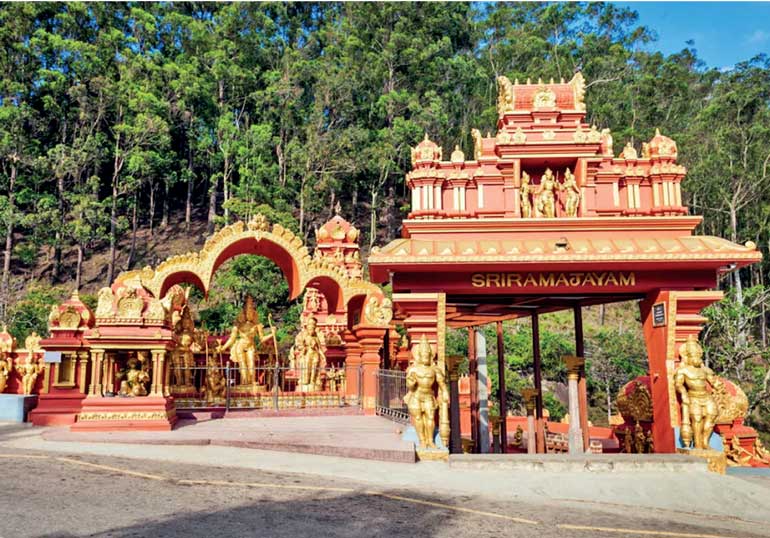
The Seetha Amman Temple in Nuwara Eliya is a magical stop on the Ramayana Trail
 The cognitive evolution of Homo sapiens spanned millions of years, yet for much of that time, we lacked written scripts. Before the advent of literacy, storytelling was the primary medium of communication, serving as the essential bridge for sharing knowledge, history, and values.
From the 5th century BCE, a wave of new philosophies and belief systems began shaping human civilisation. However, it took another millennium for these ideas to be codified into printed texts. In the interim, the "word of mouth" tradition ensured cultural dissemination. These stories were more than mere entertainment; they were vehicles for religious thought and ethical guidance, vital for societal progress.
Today, these ancient narratives have found new life. The mythical themes of the past now dominate the animation and video game industries—sectors that have collectively surpassed the traditional Hollywood film industry in global revenue.
Global resonance of the Ramayana
The Ramayana, the epic authored by Maharishi Valmiki in Sanskrit, remains a cornerstone of this storytelling tradition. Even today, it captivates audiences across the Indian subcontinent and beyond through television and digital media.
The narrative portrays the life of Prince Rama, centring on his devotion to dharma (duty) and the ultimate triumph of good over evil. Its influence extends deep into Southeast Asia, particularly in Indonesia. On the island of Bali, where Hinduism thrives, the community continues to pay homage to deities like Brahma, Vishnu, and Shiva, alongside Buddha.
Lessons from Bali: Uluwatu experience
During a recent visit to the ancient Uluwatu Temple in Bali, I observed firsthand how the Ramayana has been masterfully adapted for global tourism. Every evening, an open-air theatre draws thousands of international visitors to witness the Kecak and Fire Dance.
Sri Lanka: The legend of King Rawana
The Ramayana is equally rooted in the geography and soul of Sri Lanka. Local tradition holds that the warrior King Rawana ruled the island. Numerous landmarks bear his name, serving as a map of the myth:
In the early stages of human development, communities worshipped such figures for protection and blessings. Today, these sites offer a "ready-made" itinerary for cultural travellers.
A strategic vision for Sri Lankan tourism
The Sri Lankan tourism industry should look to the Balinese model to reawaken our local legends. By introducing "Ramayana Trails," we can offer immersive experiences that combine geography with live performance.
By integrating traditional Sri Lankan performing arts with these epic stories, we can provide tourists with a "cultural artifact" that is both educational and entertaining. As digital natives look for authentic experiences to escape the clutter of social media, mythical storytelling offers a profound sense of connection to the past.
Recommendations for policymakers:
1.Design "Ramayana Trails": Curate specific travel routes connecting historical sites related to the epic.
2.Invest in performing arts: Create new job opportunities for local artists by funding live, nightly reenactments at key tourist hubs.
3.Digital integration: Use AR (Augmented Reality) and animation to help visitors visualise the mythical events associated with the Sri Lankan landscape.
By treating our myths not just as history, but as living art, we can add immense value to our national tourism offering and preserve our heritage for generations to come.



