Friday Oct 16, 2026
Friday Oct 16, 2026
Wednesday, 3 December 2025 01:09 - - {{hitsCtrl.values.hits}}
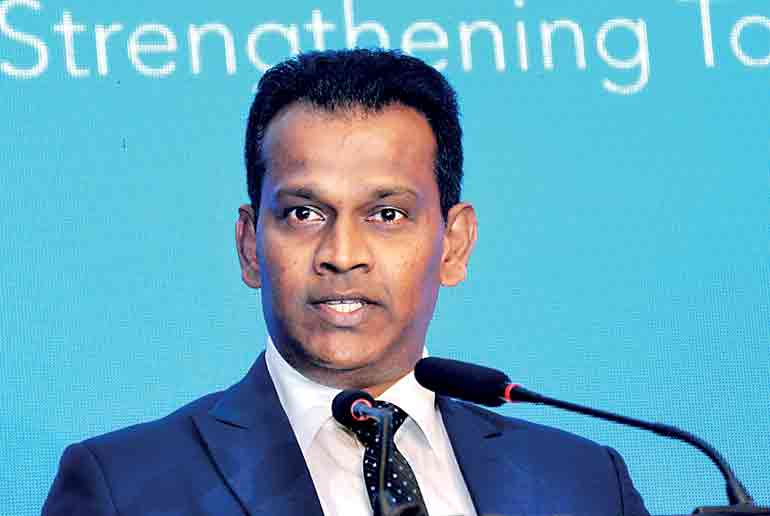
Tourism Deputy Minister Prof. Ruwan Ranasinghe
By Charumini de Silva
Tourism Deputy Minister Prof. Ruwan Ranasinghe said the latest survey conducted in collaboration with the Market Development Facility (MDF) Australia and the Sri Lanka Tourism Development Authority (SLTDA) revealed critical gaps in tourism data systems, underscoring the need for stronger research, better methodologies, and modern technology to guide decision-making in the industry.
He noted that for years, Sri Lanka calculated key indicators such as per-day tourist spending using outdated or inconsistent methods, which is why the new survey findings are especially significant.
“We must thank the Australian High Commission and MDF for working hand in hand with the SLTDA to produce this outcome. It finally allows us to steer the industry based on realities,” he said at the launch of the report last week.
Prof. Ranasinghe said one of the most striking findings of the survey, the largest Sri Lanka has ever conducted was that 58% of visitors are female, which has major implications for tourism offerings and marketing strategies.
He added that more than 55% of tourists fall within the 20–35 age bracket, indicating a complete shift in Sri Lanka’s traditional visitor profile.
“These insights help us make informed policy decisions, guide our marketing and promotional investments, design campaigns, and incorporate new technology. While the world has moved to real-time, data-driven marketing, we are still relying heavily on traditional methods,” he added.
He emphasised that the study marks a turning point, enabling the tourism sector to move away from guesswork and towards scientifically produced data. “This is the foundation on which we must build destination management structures, both nationally and regionally,” he said, adding that the new data will be used effectively in shaping operational mechanisms across the sector. Reflecting on global practices, he pointed out that countries like Australia began building tourism-focused research systems as far back as the 1980s, while others such as Canada developed Tourism Satellite Accounting (TSA) to capture the true economic impact of the industry, including employment and government investment.
“Malaysia and Singapore later incorporated advanced technology into their systems. We still have a long distance to go,” he said, stressing the need to integrate immigration data and other national databases to enable real-time policy decisions and targeted marketing.
He thanked all institutions and partners involved in the study and expressed hope that the findings would support effective dialogue and maximise tourism opportunities through collaborative approaches. (CdeS)
- Pic by Lasantha Kumara




