Saturday Oct 24, 2026
Saturday Oct 24, 2026
Monday, 28 September 2026 04:23 - - {{hitsCtrl.values.hits}}
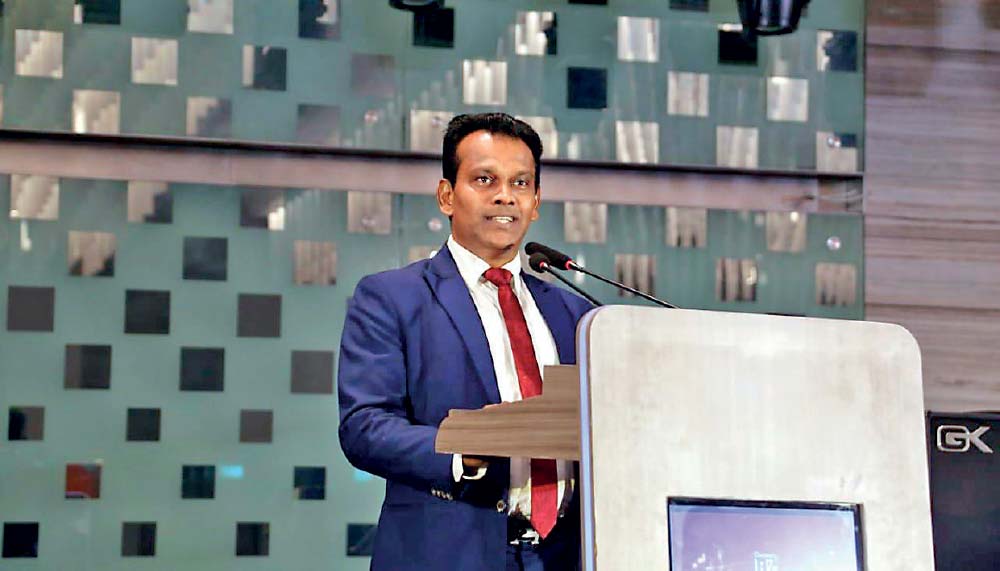
Tourism Deputy Minister Prof. Ruwan Ranasinghe
By Charumini de Silva
The Government is pushing to reposition Sri Lanka’s tourism industry around digitalisation, data-driven decision-making, new products and stronger infrastructure, with Tourism Deputy Minister Prof. Ruwan Ranasinghe calling for closer collaboration between Government and industry to deliver the next phase of growth.
Addressing the 46th AGM of the Sri Lanka Association of Inbound Tour Operators (SLAITO), he said tourism had moved to the centre of the national economic conversation, placing greater responsibility on industry stakeholders to support the sector’s transformation.
“Tourism has really become the topic of the town. All of us who are part of it should be genuinely proud and stay alert to the responsibility that comes with it,” he said.
Prof. Ranasinghe urged industry associations, enterprises and other stakeholders to move beyond individual institutional interests and work towards a common national objective, particularly as the Government pursues a broader economic transformation.
“The model I’d like to see going forward is one where this isn’t just about any one industry body, where enterprises, associations and stakeholders across the board work together toward a shared goal,” he said.
The Deputy Minister said the Government’s tourism mandate was centred on building a sustainable and inclusive industry, regardless of the size of individual businesses.
Prof. Ranasinghe identified digitalisation and data as key areas where Sri Lanka needed to accelerate, pointing to the potential of artificial intelligence and other technologies to improve pricing, promotions and market intelligence.
“If Sri Lanka’s tourism sector can reach that same level of digitalisation, AI-driven pricing, dynamic discounting and similar tools; I’m confident we can do far better with the technology available to us,” he said.
He highlighted ongoing cooperation with Australia and New Zealand, including an Australia-supported tourism data warehouse initiative focused on strengthening data management.
“We have much to learn in this space. The data warehouse project was progressing, but there’s still much more for us to do in this area,” he added.
The Government is also seeking to broaden Sri Lanka’s tourism offering, with Prof. Ranasinghe insisted that the country could no longer depend solely on products that had driven the sector for decades.
He said product development was being pursued alongside investments in supporting infrastructure, citing projects ranging from Yapahuwa and highways to metro systems and expanded electric train capacity.
The Deputy Minister said capital allocations approved last year, together with additional allocations subsequently cleared by relevant departments, were being used to improve tourism facilities across the country.
He also pointed to continued international promotion as a critical component of the strategy, including a digital campaign conducted with Australia that the Government plans to expand.
“Alongside infrastructure development and product enhancement, I believe this will help elevate Sri Lanka’s brand to a new level, with a diversified portfolio of tourism products being promoted collectively,” Prof. Ranasinghe said.
He stressed that capacity development would also need to keep pace with the expansion of the industry, calling for stronger investment in skills and institutional capabilities.
Prof. Ranasinghe also acknowledged the contribution of the outgoing SLAITO leadership, particularly its cooperation with the Government during the COVID-19 crisis, including efforts to maintain engagement with India and other key markets.
He welcomed the newly elected SLAITO office-bearers and Board of Directors, saying the Government expected the association to play an active role in the sector’s transformation.
“We truly need you to be a key part of this journey,” he said.
With regulation and enforcement also requiring further attention, Prof. Ranasinghe called on the private sector and industry associations to work with the Government as Sri Lanka undertakes wider reforms across the economy, industry and governance.
“The tourism piece of that transformation is very much in your hands, and I invite all of you to come together with us to deliver on it,” he said.




