Wednesday Oct 21, 2026
Wednesday Oct 21, 2026
Wednesday, 21 October 2026 00:00 - - {{hitsCtrl.values.hits}}
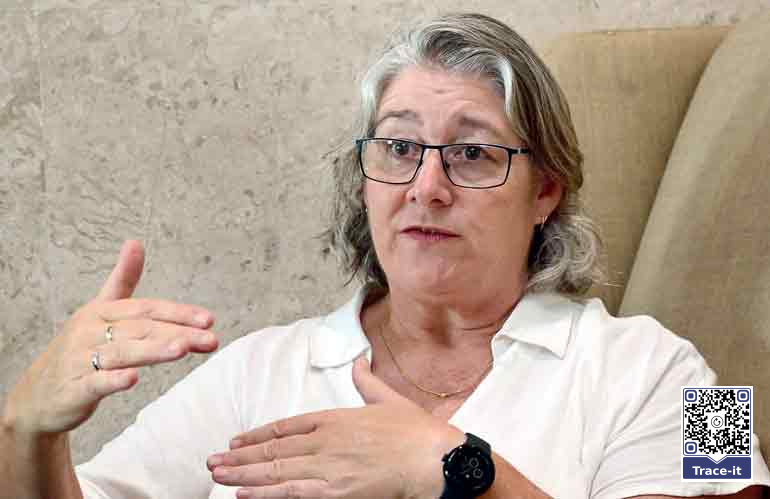
Inclusive Tourism Australia Founder and CEO Melissa James
By Charumini de Silva
Accessible tourism remains one of the industry’s most overlooked opportunities, often misunderstood as an expensive exercise in installing ramps, widening doorways and redesigning facilities for wheelchair users. Yet, the market extends far beyond physical disabilities, including travellers with hearing and visual impairments, mobility limitations and age-related needs, as well as those who simply benefit from more accessible experiences.
For Sri Lanka, the opportunity is both social and commercial. With an ageing global population, longer life expectancy and growing demand for inclusive travel, the ability to accommodate visitors with different needs could help diversify the country’s tourism offering, strengthen competitiveness and encourage repeat visits.
“It’s a large market, and it’s getting bigger,” said Inclusive Tourism Australia Founder and CEO Melissa James, who outlined that businesses do not need to undertake expensive transformations to begin making a difference.
A qualified access consultant with over 12 years of experience, James works with tourism operators, destination management organisations and governments to identify accessibility barriers and develop practical solutions. Her work spans accessibility assessments, destination reviews, industry training and capacity building. In 2018, she spoke at the World Summit on Accessible Tourism in Brussels on how collaboration between governments, businesses and communities can drive meaningful change.
On her first visit to Sri Lanka, James has been engaging with local tourism suppliers to understand the industry’s opportunities and challenges. She also conducted a training session at Sri Lanka’s first tourism forum dedicated to improving accessibility for visitors with disabilities, organised last week by Australia’s Market Development Facility (MDF) in partnership with Ayu by Walkers Tours.
In an interview with the Daily FT, she discusses the commercial case for accessible tourism, practical steps businesses can take without significant investment, the importance of reliable accessibility information and what Sri Lanka needs to do to turn inclusion into a competitive advantage. Below are excerpts of the interview;
Q: Accessible tourism is both a basic human right and a business opportunity. Why has the industry been slow to recognise its potential?
A: Many operators misunderstand what accessible tourism means. They immediately think of wheelchair users, ramps and wider doors, then conclude that it is too difficult or expensive. But wheelchair users represent only a part of the market. Once operators understand the broader range of people who benefit from accessibility, they begin to recognise the opportunity.
Another major barrier is simply not knowing where to start. If businesses are given practical ideas and shown what they can do immediately, they become more willing to act.
I always say this is not a sprint; it is a marathon. Accessibility takes time, and businesses do not need to transform everything overnight. They can begin with small, affordable changes that make a meaningful difference.
A restaurant, for instance, can provide large-print menus with dark text on a light background. A hotel that already has a step-free shower and a handheld shower head could provide a shower chair. For someone with mobility difficulties who does not use a wheelchair, that simple addition could make the room suitable for their needs.
There are many improvements businesses can make quickly, without substantial financial or physical investment.
Q: How significant is the accessible travel market, and what are businesses missing by failing to cater to it?
A: It is estimated that 24% of international travellers require access. Sri Lanka welcomed approximately 2.36 million international visitors last year, so even a quarter of that market represents a substantial opportunity.
The market is also growing as people live longer and the global population ages. 
Many older travellers have the financial means and the desire to travel, but may experience back pain, knee problems, hearing loss, impaired vision or other conditions that affect their mobility and independence. They still want to enjoy holidays and experiences like everyone else. Better accessibility allows them to do so more comfortably and confidently.
Businesses that overlook this market are missing potential customers. Those that understand their needs can improve their offerings, attract new visitors and encourage repeat business.
Q: In most destinations, accessibility is often reduced to ramps and wheelchair access. What does genuinely inclusive tourism look like in practice?
A: Access is about infrastructure; can you get someone there? Inclusion is about ensuring that, once there, they can participate in the experience.
A good example is the Yala safari jeep, which we have discussed since I arrived in Sri Lanka. A wheelchair user might be accommodated in the front seat beside the driver, while their friends and family sit in the back. The person can go on the safari, but they are separated from their group. That is access without meaningful inclusion.
We need to consider how everyone can share the experience rather than simply get through the door.
Similarly, a beach wheelchair mat may enable someone to reach the water’s edge, but what happens next? Can they get into the water and enjoy the experience alongside everyone else?
That is the distinction. Accessibility provides the means to participate; inclusion ensures people can enjoy the whole experience together.
Q: For businesses operating on tight margins, what practical improvements can they make without major investment?
A: The first step is to document what they already offer through an access statement. This should explain the facilities available, the barriers that remain and the type of visitor the business can accommodate.
Businesses can also improve printed materials by using larger fonts and clearer layouts, then identify ways to build on their existing facilities.
For example, a hotel with a step-free room, a step-free shower and a handheld shower head could add a shower chair. That relatively small investment may make the room suitable for people who cannot stand for long periods.
Businesses cannot cater to absolutely everybody, and they do not have to. They need to understand whom they can accommodate, communicate that clearly and focus on the market they can serve well.
There are also simple ways to make tourism experiences more inclusive. Consider a whale-watching operator. Laminated information cards identifying the marine life visitors might see, with descriptions of each species, would help deaf or hard-of-hearing visitors who cannot access the spoken commentary. These are small changes, but they can significantly improve the overall experience.
Q: How important is accessibility information in helping travellers plan and book with confidence?
A: It is essential. Travellers need accurate, practical information to determine whether a destination, accommodation provider or activity will meet their individual needs.
Everyone’s disability and abilities are different. Someone might be able to walk along a flat path but struggle to climb stairs without a handrail. A hotel does not necessarily need a completely flat entrance to accommodate that person, provided it has suitable steps and handrails. The important thing is to explain what is available and allow travellers to make informed decisions.
Service providers should conduct an access audit, document their findings and publish the information on their websites, ideally supported by photographs. Travellers research extensively before booking, and they need to know what to expect. Research cited in the industry indicates that 86% of travellers want better practical accessibility information. If one business provides that information, while its competitors do not, it has an advantage.
Technology can make this information easier to access and use, but the foundation must be accurate, detailed and transparent information. Businesses should not simply label themselves accessible; they should explain precisely what visitors can and cannot do.
Q: What would it take for Sri Lanka to turn accessible tourism into a competitive advantage?
A: Sri Lanka has already started making progress, and some operators are doing good work. The next step is to connect those efforts and create itineraries that allow travellers to plan complete trips.
You could have the most accessible hotel in the world, but if visitors cannot access attractions, activities or experiences around it, the overall destination is still limited. Hotels, tour operators, accommodation providers and experience operators need to work together to understand what each can offer and how those services can be combined into inclusive itineraries.
Walkers Tours, for example, has itineraries in place and understands which accommodation providers offer different levels of accessibility. It has also partnered with experience providers willing to accommodate visitors with disabilities.
We visited a whale-watching operation where the boat itself was not wheelchair-accessible, but the staff’s attitude helped overcome that barrier. They were willing to assist wheelchair users to board, and the operator is now considering simple modifications, including a platform that would allow seated visitors to see over the railings. That is encouraging. The operator is identifying what can be improved rather than dismissing the opportunity because the boat is not fully accessible.
Clear communication remains essential. If a wheelchair user cannot board independently but trained crew members can assist, the access statement should explain that. Visitors can then decide whether the arrangement meets their needs.
Independent verification by qualified access consultants can also build confidence. When a business’s accessibility claims have been assessed, travellers have a stronger basis for choosing that experience, while operators can benefit from increased trust and repeat visits.
Q: What are the government’s priorities in ensuring accessibility becomes part of Sri Lanka’s tourism development rather than remaining a voluntary initiative?
A: As far as I understand, Sri Lanka is looking at developing accessibility standards. During my visit, I am scheduled to meet representatives of the Sri Lanka Tourism Development Authority (SLTDA) and the relevant qualifications body to discuss the development of standards, alongside training pathways through which people can become qualified and certified.
The response from Government representatives at the recent workshop was encouraging. There appeared to be genuine interest in exploring what could be implemented and how the industry could move forward.
Establishing clear standards is important, but so is developing the expertise needed to assess compliance and help businesses understand what is required.
Q: What lessons can Sri Lanka draw from Australia’s approach to accessibility standards and implementation?
A: In Australia, accessibility requirements are incorporated into the National Construction Code, meaning new buildings must comply with the applicable standards. Compliance is considered throughout the construction process. Certifiers assess buildings at different stages, and a final inspection is required before an occupation certificate is issued. Accessibility therefore needs to be considered from the planning and design stages, rather than treated as an afterthought.
There is also a growing role for qualified access consultants in development applications submitted to local councils. Some councils require consultants to review plans and confirm whether they comply with accessibility requirements.
Sri Lanka could consider a similar approach once its standards are established, ensuring that accessibility is incorporated into the design and construction of new buildings. The Gold Coast offers a useful illustration. It has been a tourism destination for decades, so many older buildings remain. However, newer hotels and apartment buildings must comply with current requirements, expanding the accommodation options available to travellers who need accessible facilities.
The key lesson is to build accessibility into development from the beginning. Retrofitting existing buildings can be challenging, but ensuring new developments meet appropriate standards can steadily expand the supply of accessible accommodation.
Q: Beyond construction standards, how should destinations measure whether their tourism industries are becoming genuinely inclusive?
A: Destinations need to work with qualified access consultants and embed accessibility into their broader planning and decision-making.
In Australia, I worked with Bellingen Shire Council to develop an inclusive tourism strategic plan. The council adopted it as part of its business development strategy, meaning future decisions must take the plan into account. The approach has also helped the area secure Federal Government funding for accessibility-related infrastructure.
Accessibility can be incorporated into procurement policies, too. Consider taps and door handles: lever-operated designs are easier for people with hand-mobility difficulties to use. A council or business can require these fittings whenever replacements are made. That is how change becomes embedded in everyday decisions. It does not always require a separate, expensive project; sometimes it means making accessibility a standard consideration whenever something is built, purchased or upgraded.
Destinations should also assess whether visitors can access a complete experience, from accommodation and transport to attractions, activities and information. Counting ramps or accessible rooms alone will not tell the whole story.
Q: How can Sri Lanka raise awareness of inclusive tourism and position itself as a destination for travellers with disabilities?
A: Raising awareness is key. Sri Lanka could work with its para-athletes, including those who compete internationally, to create ambassador roles and help make accessibility more visible.
As businesses become more aware of the opportunity, interest can grow organically. Sustainability was once seen as an additional responsibility, but it has increasingly become part of how tourism businesses operate. Accessibility can follow a similar path.
There are already encouraging examples in Sri Lanka. At DoubleTree by Hilton, we were shown accessible accommodation, and the team explained that its accessible rooms attract repeat visits from domestic travellers who know what facilities are available. That is a powerful message. Businesses do not necessarily need to wait for international visitors to recognise the opportunity; domestic tourism can also generate demand.
Sri Lanka has a substantial domestic visitor base, alongside its international arrivals. Making tourism experiences more accessible can help more people enjoy the country’s attractions and encourage visitors to return. The industry needs to communicate what is available, be honest about limitations and make it easier for travellers to identify experiences suited to their needs.
Q: Having spent a week engaging with Sri Lanka’s tourism industry, what is your overall assessment of its readiness to move forward?
A: I am excited by what is already happening in Sri Lanka. I was particularly encouraged by the interest shown during the training session and by the discussions among government representatives about what could be implemented and what needs to be considered.
There is momentum, and the challenge now is to maintain it. The industry does not need to solve everything at once. It needs to start with practical improvements, share information, build partnerships and progressively strengthen standards and skills.
I would be very happy to return and contribute to that process.




