Saturday Oct 24, 2026
Saturday Oct 24, 2026
Wednesday, 23 September 2026 04:06 - - {{hitsCtrl.values.hits}}
Songkran
|
Yi Peng Lantern Festival |
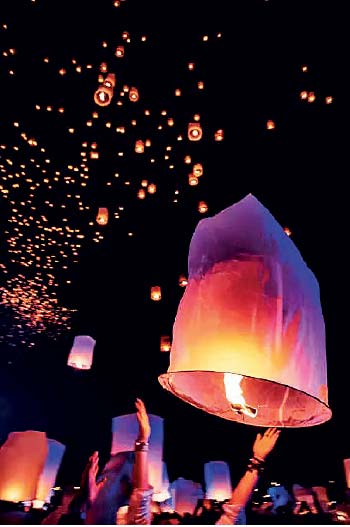
Late November can make Thailand feel almost dreamlike. Across rivers and ancient waterways, tiny candlelit krathongs drift into the darkness, while in Chiang Mai, lanterns rise into the night sky. Streets glow, temples fill with activity and centuries-old traditions take on a wonderfully vivid presence. It is one of those moments when travelling becomes about far more than simply seeing a place. The timing itself becomes part of the experience.
That sense of occasion continues throughout the year. Festivals in Thailand reflect religion, history, family traditions, regional identity and, increasingly, the country’s contemporary international outlook. Annual celebrations offer another way to experience Thailand, revealing an aspect of the country that the Tourism Authority of Thailand is keen to share alongside its better-known attractions.
November: Candlelight, lanterns and ancient cities
On 25 November 2026, Loy Krathong will be celebrated in Bangkok, Chiang Mai, Sukhothai and Ayutthaya. Although the festival is best known for its floating krathongs, the setting plays an equally important role in shaping the experience.
As evening falls, waterways become dotted with small floral offerings carrying flickering candles. At Sukhothai, the ruins of the former capital lend the occasion an almost timeless quality. Ayutthaya offers a similarly evocative setting, with celebrations unfolding around a city whose history is inseparable from its rivers. In Bangkok, the scale changes dramatically, with the Chao Phraya and the modern city providing a striking backdrop to an ancient tradition.
Then there is Chiang Mai, where Loy Krathong coincides with Yi Peng on 24 and 25 November. Lanterns illuminate the northern sky, creating one of Thailand’s most recognisable festival scenes. Beyond the spectacular photographs, however, lies a strong connection to Lanna heritage, religious tradition and the rhythm of local life. The result is an evening that feels both deeply rooted and wonderfully alive.
December and January: A different kind of celebration
By December, Thailand’s festival atmosphere takes on a more contemporary character. Christmas and New Year celebrations will bring Bangkok, Phuket, Chiang Mai and Pattaya to life throughout December 2026 and into the New Year.
In Bangkok, grand hotels, restaurants and shopping districts embrace the festive season with elaborate displays, special events and evening celebrations. Along the Andaman coast, Phuket brings the festivities to the seaside, while Chiang Mai’s cooler December evenings create a very different setting in the north. Pattaya, meanwhile, combines the festive season with its lively waterfront atmosphere and entertainment scene.
As January arrives, the calendar shifts towards another side of Thailand’s international lifestyle scene. From 14 to 17 January 2027, Phuket will host the Thailand International Boat Show, bringing yachts, marine experiences and luxury brands together on the island.
From ancient traditions to contemporary celebrations, Thailand’s festival calendar offers travellers a chance to experience the country in many different ways through its culture, its communities and the occasions that bring them together.
February: A celebration shaped by heritage
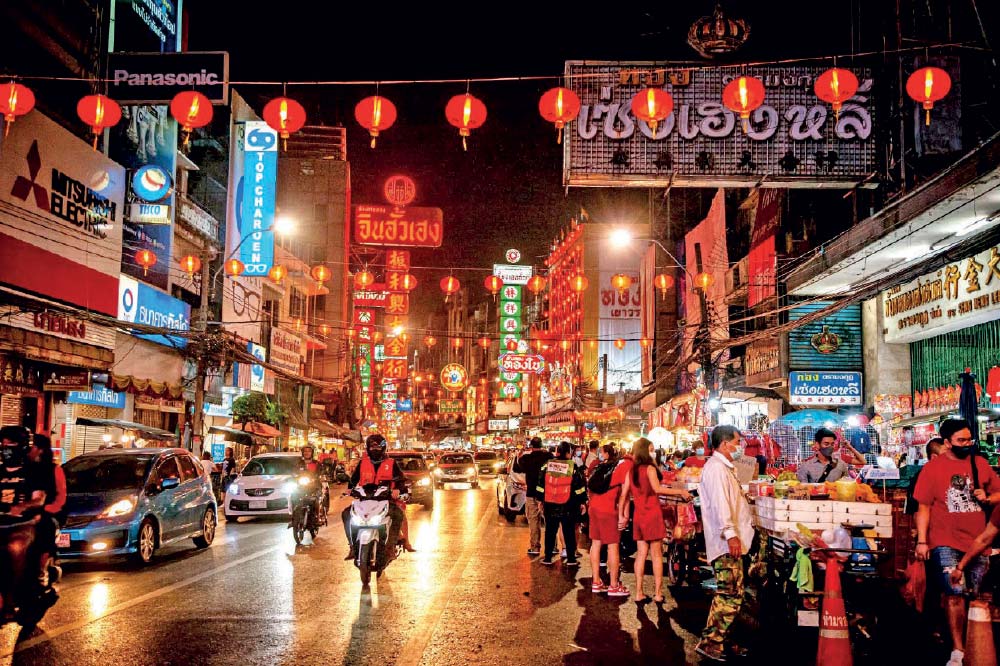
A few weeks later, another cultural tradition takes over the streets. Chinese New Year falls on 6 February 2027, with celebrations planned in Bangkok, Phuket and Hat Yai.
Bangkok’s Chinatown becomes a particularly vibrant setting, its streets filled with colour, performances, decorations and the aromas of festive food. Phuket offers a story of its own, shaped by generations of Chinese influence and the island’s distinctive Sino-Portuguese heritage. In Hat Yai, one of southern Thailand’s major commercial centres, the celebration takes on a lively regional character, reflecting the city’s close cultural and commercial connections with the wider region.
For visitors, Chinese New Year offers more than a spectacular celebration. It provides a glimpse into the different cultural influences that have helped shape Thailand’s identity, showing how traditions brought from elsewhere have become woven into the country’s own cultural fabric. The festivities may be vibrant and colourful, but the history behind them gives the experience considerably more depth.
April: When the whole country gets involved
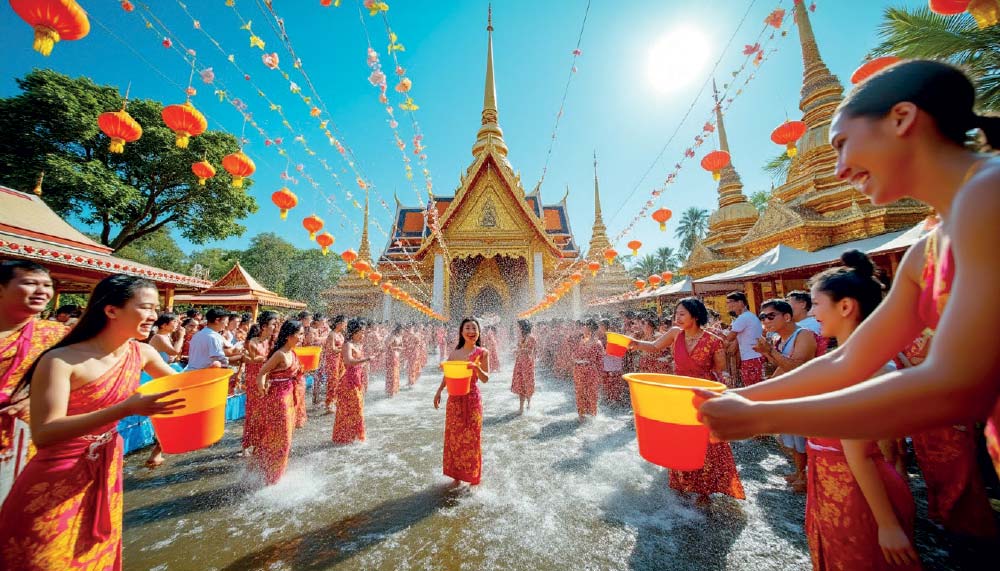
Few celebrations capture the spirit of Thailand quite like Songkran. From 13 to 15 April 2027, Bangkok, Chiang Mai, Phuket and Pattaya will come alive for the country’s traditional New Year celebrations.
Water is at the heart of the modern festivities. Streets fill with people carrying water pistols, buckets and containers, transforming cities into an enormous, good-natured water battle. Yet beneath the excitement lies a tradition rooted in renewal. Water symbolises cleansing and a fresh beginning, while families visit temples, make offerings and pay their respects to elders as they welcome the new year.
Each destination brings its own character to the celebration. In Chiang Mai, Songkran is closely connected to northern traditions and local customs, while Bangkok provides a vast urban stage for the festivities. Phuket combines the celebrations with its tropical island setting, and Pattaya is known for its particularly lively atmosphere.
For three days, Thailand’s streets become places of celebration, connection and renewal, offering visitors a chance to experience one of the country’s most joyful and deeply rooted traditions.
July: The art of the Candle Festival
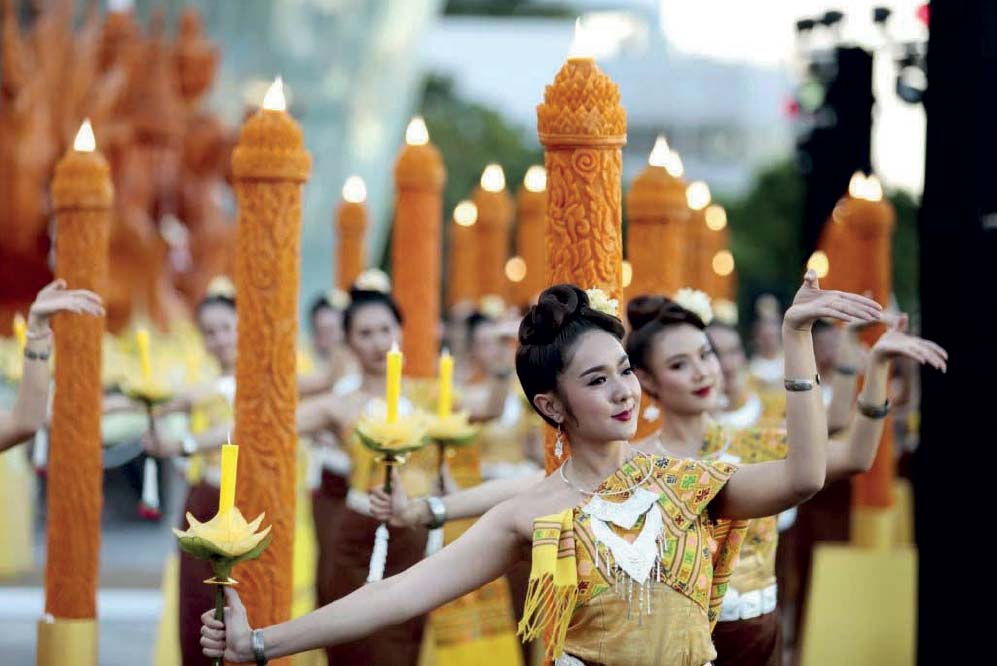
By July, the country’s festival spotlight moves to Ubon Ratchathani in northeastern Thailand. From 28 and 30 July 2027, the city will host its Candle Festival, an event rooted in Buddhist tradition and renowned for its elaborate wax sculptures.
The craftsmanship is extraordinary. Large blocks of wax are transformed into intricate sculptures, often depicting religious scenes and mythological figures, before being carried through the city during grand processions. Buddhist observances marking the beginning of Buddhist Lent add a deeper spiritual dimension to the celebrations.
Ubon Ratchathani itself becomes an important part of the story. The festival offers a window into northeastern Thai culture, where local craftsmanship, faith and community traditions remain closely connected. It is also a reminder that some of Thailand’s most rewarding cultural experiences can be found well beyond the destinations most familiar to international visitors.
One country, many ways to celebrate
Look across the calendar and a fascinating pattern emerges. Thailand’s festivals are remarkably varied, yet each offers a way into the character of the place where it is celebrated.
November leads towards ancient capitals, rivers and lantern-filled northern skies. December and January introduce the glamour of contemporary celebrations and an international boat show in Phuket. February brings centuries of Chinese-Thai heritage into the streets, while April transforms the traditional New Year into a nationwide celebration. By July, religious devotion and remarkable craftsmanship take centre stage in Ubon Ratchathani.
The geographical journey is equally revealing. Bangkok, Phuket and Chiang Mai may already feature prominently in many Thai holidays, but Sukhothai, Ayutthaya, Hat Yai and Ubon Ratchathani demonstrate how much regional character exists beyond the country’s most familiar names. Together, these celebrations invite travellers to look beyond the usual itinerary and discover Thailand through the traditions, communities and places that give each festival its own sense of identity.
Let the calendar shape the journey
A festival can change the way a destination is experienced. Ancient ruins take on a different atmosphere beneath candlelight. A northern city becomes almost unrecognisable when thousands of lanterns fill its skies. A tropical holiday can suddenly become a cultural celebration, while a journey into northeastern Thailand can lead to some of the country’s most impressive expressions of religious art.
For Sri Lankan travellers, Thailand’s festival calendar creates twelve months of possibilities rather than a single style of holiday. The appeal lies as much in being there at the right moment as in deciding where to go.
Some journeys begin with a beach. Others begin with a lantern, a candle, a procession or a splash of waterIn Thailand, there is always another reason to set the date, make the journey and experience the country in a different way.
Bangkok Chinatown during Chinese New Year
Candle Festival