Sunday Oct 11, 2026
Sunday Oct 11, 2026
Monday, 20 April 2026 05:07 - - {{hitsCtrl.values.hits}}
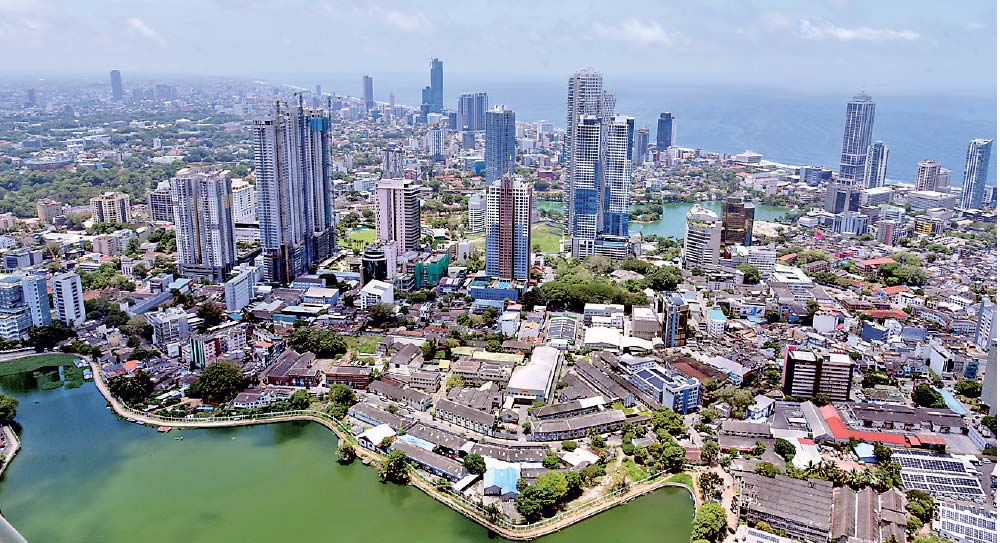
Sri Lanka’s economic growth is expected to slow to 3.6% in 2026 as higher energy prices weigh on activity, although the economy will regain its pre-crisis size last seen in 2018, the World Bank said in its latest South Asia Economic Update April 2026.
Growth is projected to edge up to 3.8% in 2027, with the moderation from 2025 reflecting “higher energy prices as well as a shift from recovery to a pace consistent with its potential,” the report said.
The World Bank noted that growth will be driven primarily by consumption and investment, supported by post-cyclone reconstruction, even as the economy “continues to grapple with the lingering effects of the crisis, shortages of skilled workers exacerbated by outward migration, and continued under-execution of the capital Budget.”
Sri Lanka’s economy expanded by 5% in 2025, matching 2024, driven by a 9.1% increase in private consumption, while workers’ remittances rose by more than 20% during the year. Inflation remained between 2.1% and 2.3% from October 2025 to January.
However, inflation is expected to rise above the 5% target in 2026 due to stronger demand and higher energy prices, the World Bank said.
The report highlighted Sri Lanka’s exposure to external risks, noting that South Asia is particularly vulnerable to rising energy costs due to dependence on imports. “Higher oil import bills would widen current account deficits and, where fuel subsidies are in place, do the same to fiscal deficits,” it said.
It also warned that disruptions in the Middle East could affect remittance inflows, which account for around 3% of GDP, with flows providing “significant support to incomes and current accounts.”
Tourism prospects remain tied to regional stability, with the World Bank noting that once “recent disruptions to flights from the Middle East ease, strong tourism [is] expected to support growth.”
The fiscal position has improved since the sovereign debt crisis, with the debt-to-GDP ratio declining from above 120% to 93% by the third quarter of 2025, alongside a rising primary balance and stronger banking sector conditions, including improved liquidity and profitability.
At the same time, interest payments continue to absorb a high share of Government revenue, limiting fiscal space and increasing vulnerability to changes in borrowing costs.
The World Bank said more than 500 State-owned enterprises (SOEs) had contributed significantly to the debt crisis due to “conflicting objectives, mismanagement, and inadequate oversight,” underscoring the need to strengthen governance and reform.
Cyclone Ditwah, which struck in November 2025, caused over 600 fatalities and an estimated $ 3.3 billion in damages, equivalent to about 3% of GDP, prompting Sri Lanka to secure over $ 200 million in emergency financing from the International Monetary Fund (IMF).
Regionally, South Asia’s growth is expected to slow from 7% in 2025 to 6.3% in 2026 before recovering to 6.9% in 2027, with the World Bank noting that uncertainty around the outlook remains “unusually elevated.”
Energy outlook
The World Bank said the outlook for global energy markets remains highly uncertain, hinging on the intensity and duration of the Middle East conflict, the extent of damage to energy infrastructure, and how long shipping through the Strait of Hormuz remains disrupted.
Its baseline assumes acute trade disruptions ease after a few months, although damage to energy infrastructure persists into the medium term, with Brent crude expected to average around $ 90 per barrel in 2026 in line with market expectations.
The report outlines two alternative scenarios. In a swift resolution, threats to infrastructure and shipping dissipate quickly, the Strait reopens faster, and supply losses are offset by emergency stock releases and increased production elsewhere, resulting in oil prices well below $ 90 per barrel and only modest increases in natural gas and fertiliser prices. In contrast, under a severe disruption scenario, shipping through Hormuz is interrupted for an extended period and production facilities sustain lasting damage, pushing Brent crude well above $ 100 per barrel in 2026 alongside sharp increases in other commodities.
Higher energy prices would raise production costs across sectors, compress margins, and reduce investment, while eroding real household incomes. Oil price shocks would also feed into inflation directly through energy prices and indirectly through transport, fertiliser, and broader production costs. A 10% increase in oil prices is estimated to raise inflation by about 0.4% in both advanced economies and emerging markets.
Rising inflation is likely to constrain monetary policy, with central banks forced to tighten or delay easing even as growth slows, resulting in tighter global financial conditions. Market expectations for rate cuts in the US have already weakened following the recent rise in oil prices, with similar pressures expected globally.
Countries with elevated debt, limited reserves, and high subsidy burdens face greater vulnerability to sustained price increases, while inflation pressures could further limit policy flexibility.
The World Bank also noted that the shock could accelerate structural reforms, including efforts to expand renewable energy, integrate regional power grids, improve energy efficiency, and rationalise fuel subsidies. It also highlighted the need to strengthen adaptive social protection systems to cushion vulnerable households from fuel price shocks, and pointed to potential gains from diversification in global shipping, logistics, and tourism flows.
The report also flagged broader downside risks, including sustained high energy prices, tighter global financial conditions, and potential global financial turbulence, which could be amplified by domestic vulnerabilities such as high interest payment burdens or financial sector weaknesses. Climate-related shocks and structural shifts in global trade and technology, including the impact of artificial intelligence (AI) on services exports, could further weigh on growth.
Global trade growth is expected to slow to an average of 2.5% in 2026 and 2027 from an estimated 3.4% in 2025, reflecting tariff uncertainty and shifting trade patterns, although services trade continues to expand, growing 9% in 2025 and accounting for 27% of global trade.
The report noted that tariff volatility, including increases in US import tariffs, has weighed on some sectors, even as investment linked to AI has supported demand in high-tech industries.
Financial conditions have tightened, with equity valuations declining and expectations of monetary easing receding, although technology-related investment continues to underpin market activity.
Across major economies, growth is expected to moderate, with the US projected to expand at around 2% in 2026 and 2027 amid higher energy prices and policy uncertainty, while growth in the euro area is expected to remain around 1.4%. China’s growth is also expected to slow below 5% as export momentum weakens and domestic demand remains subdued.
The World Bank said medium-term growth prospects will depend on structural reforms, including reducing trade barriers, improving infrastructure and skills, and strengthening the business environment, while targeted industrial policies should focus on addressing market failures given limited fiscal space and administrative capacity.


