Thursday Sep 03, 2026
Thursday Sep 03, 2026
Thursday, 3 September 2026 00:00 - - {{hitsCtrl.values.hits}}
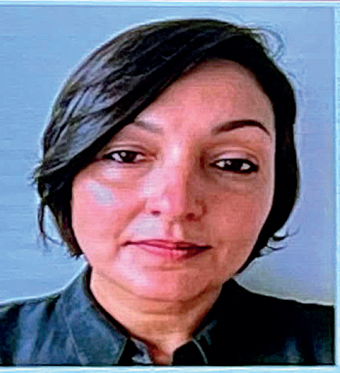 |
| World Bank Lead Private Sector Specialist – South Asia Region, Finance, Competitiveness and Innovation Global Practice Natasha Kapil |
By Charumini de Silva
The World Bank is supporting to transform Colombo into a destination in its own right and attract higher-spending visitors who currently spend only a fraction of their trip in the capital.
World Bank Lead Private Sector Specialist – South Asia Region, Finance, Competitiveness and Innovation Global Practice Natasha Kapil said the Bank’s analysis had identified a significant untapped opportunity in Colombo, despite the city having the country’s largest concentration of five-star hotel rooms.
“Somewhere between 5% and 10% of visitors to Sri Lanka actually stay in Colombo, while the average length of stay is only about half a day,” she said.
Speaking at the launch of the National Tourism Strategic Plan for 2026-2031, alongside a five-year Global Destination Communication Campaign Road Map being developed with international and local consultants under the World Bank’s Grant Facility for Project Preparation (GFPP) on Monday, she said the branded THRIVE Colombo project would be the first of three planned operations, followed by interventions focused on nature-based and marine tourism.
The combined envelope for the three operations is approximately $ 200 million, with Tourism for Heritage, Resilience, Inclusion, and Value-driven Employment (THRIVE) Colombo accounting for around $ 77 million.
“This is much more than a tourism project,” Kapil said, describing THRIVE as a platform for the Government’s wider tourism agenda, encompassing investment as well as policy reforms.
The World Bank’s decision to start with Colombo is based on what Kapil described as a significant untapped opportunity, turning the capital from largely a transit or gateway city into a destination capable of attracting higher-spending international travellers for 48 to 72-hour stays, weekend breaks and short trips.
“We believe there is a strong case for establishing Colombo as a destination in its own right,” she said.
The proposition is particularly significant given the city’s substantial concentration of high-end accommodation. “Colombo has the largest inventory of five-star hotel rooms in Sri Lanka, yet the proportion of international tourists staying in the city remains remarkably low,” she said, adding that the World Bank therefore sees the opportunity not necessarily in building more hotel capacity, but in making the city itself sufficiently attractive for high-end visitors to stay longer and spend more.
She said potential activities such as performing and digital arts, Kala Pola, Colombo Fashion Week, literature festivals and other events capable of attracting higher-value visitors.
THRIVE Colombo will combine institutional reform, destination infrastructure and private-sector investment.
“Two major tourism “loops” have been identified as the initial physical development opportunities; a Fort-centric loop and a nature-centric loop around Colombo’s wetlands,” she said.
According to her, the Fort concept connects the waterfront, Galle Face Green, the heritage buildings in Fort area along the attractions extending towards Pettah, while the nature loop would build on assets such as Beddagana Wetland Park and Diyasaru Park.
Investment could cover site and building upgrades, pedestrianisation and missing connections between attractions, with the aim of turning currently fragmented assets into coherent visitor experiences.
“We have identified several heritage buildings in the Colombo Fort area that could be considered for new tourism activities. But equally, we are very keen to ensure that the private sector participates in managing and operating selected tourism assets, rather than leaving the responsibility entirely with the Government,” Kapil added.
The strategy also recognises the need for a Tourism Entrepreneurship Fund to finance the “software” of the destination, the enterprises, events, creative activities and experiences that can give visitors reasons to stay longer.
She said this fits closely with the emerging direction of Sri Lanka’ National Tourism Strategic Plan for 2026-2031, which is seeking to move the industry from volume to value.
The World Bank is also backing institutional changes intended to support that transition. Under THRIVE Colombo, the Sri Lanka Tourism Development Authority (SLTDA), Sri Lanka Tourism Promotion Bureau (SLTPB) and Sri Lanka Institute of Tourism and Hotel Management (SLITHM) are expected to undergo modernisation, including improvements to digital systems, governance, human resources and data collection. The move will also support tourism skills development, including a review and modernisation of tourism education and training.
She said the initiative also places keen emphasis on the new Tourism Act, under the leadership of the Tourism Ministry as better tourism intelligence will be critical as Sri Lanka seeks to identify changing source markets and target higher-spending travellers.
She said a further component will be the preparation of a National Tourism Strategic Plan for 2026-2031, supported by demand and supply assessments, destination-level planning, investment and regulatory reviews and a tourism skills-gap assessment.
This evidence base is also expected to improve tourism promotion.
Kapil said Sri Lanka’s current promotional efforts could eventually become more targeted once better market intelligence is available, allowing the country to develop campaigns aimed specifically at higher-spending segments for Colombo, as well as distinct segments for nature-based tourism.
“This could represent a departure from broad-based destination marketing towards product- and segment-led promotion,” she added.

