Saturday Sep 05, 2026
Saturday Sep 05, 2026
Monday, 20 July 2026 05:29 - - {{hitsCtrl.values.hits}}
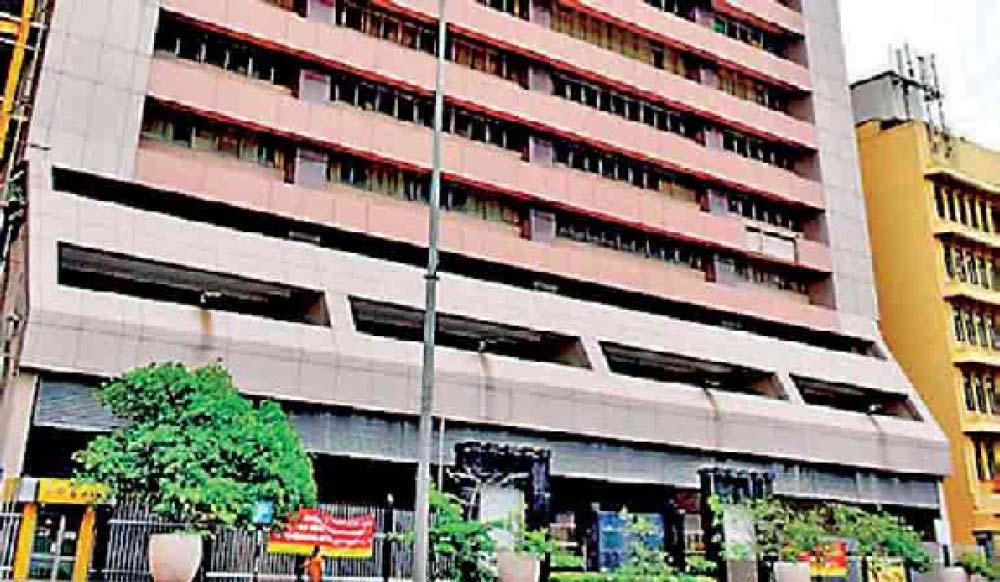 Sri Lanka’s Inland Revenue Department (IRD) has made significant progress after years of neglect, but its reform drive faces structural hurdles that could undermine the sustainability of tax administration improvements unless the institution itself is strengthened, economic policy think tank Arutha Research has warned.
In its July 2026 Solution Brief ‘Inland Revenue Department Needs Strategy Not Tactics,’ Arutha said the national tax system is now in a much stronger position than a few years ago, with Government revenue rising to 16.7% of GDP in 2025 from a low of 8.3% in 2021.
However, the think tank cautioned that while tax policy reforms have advanced, the IRD’s own institutional transformation remains incomplete, with weaknesses in staffing, technology, processes, and compliance systems continuing to constrain its effectiveness.
“The IRD is in a better condition – and functioning more effectively – than even a year ago. That is a cause for celebration. But not too much celebration,” Arutha said, noting that significant problems remain.
“The IRD, having previously long been a conservative organisation that had fallen well behind most other countries in reforming its practices and adopting new technologies, is now at some risk of going to the opposite extreme,” it warned.
The central concern is that the IRD is being asked to operate as a modern tax administration while still carrying the legacy of years of underinvestment and limited organisational reform. The Department remains short of staff with specialist IT and related skills, is only partly digitalised, and continues to devote considerable resources to inefficient manual processes. It also highlighted a backlog of basic procedural issues requiring resolution.
A major weakness is the limited use of risk-based compliance methods. Modern tax administrations typically use data and risk analysis to identify high-risk taxpayers and transactions, allowing limited audit resources to be targeted more effectively. However, the think tank said the IRD continues to rely heavily on the traditional approach of checking broadly to ensure figures are correct.
The report also flagged unresolved issues involving tax arrears and taxpayer records. It said many disputed tax arrears may never be recovered and require a process for writing off unrecoverable amounts. It also called for the taxpayer register to be cleaned of large numbers of individuals unlikely to generate tax revenue following the 2023 registration drive.
The Large Taxpayer Unit, which is critical for revenue collection, is also constrained, with staff tied up in legal processes arising from previous assessments instead of focusing on auditing large taxpayers.
While acknowledging recent achievements, Arutha warned that some reforms are not as robust as they appear.
It cited the improved Value Added Tax (VAT) refund system following the abolition of Simplified VAT (SVAT) as a major achievement but cautioned that the process is not fully digital. The final stage still requires substantial manual work, with around 40 IRD officers permanently deployed since January 2026.
The think tank warned that continued dependence on scarce staff resources could create risks of earlier VAT refund problems returning.
It also raised concerns over the Government’s efforts to expand third-party data access for the IRD, saying Sri Lanka lacks adequate data governance systems to ensure taxpayer information is used securely, legally, and with public confidence.
Arutha questioned some recent compliance initiatives, including IRD street-level surveys in Colombo aimed at identifying unregistered businesses.
While recognising the move as a significant departure from the IRD’s traditionally office-based approach, it said international experience shows such operations are generally ineffective in identifying major sources of tax evasion and can consume significant staff resources.
The think tank argued that focusing heavily on small businesses risks diverting attention from larger-scale tax evasion, which is more likely to involve businesses and individuals outside crowded commercial areas.
It also criticised the proposed Privilege Card scheme for income taxpayers, warning that providing protection from tax inquiries based on increased declarations could unintentionally benefit taxpayers who had previously underpaid taxes while disadvantaging those who had complied consistently.
However, Arutha stressed that the IRD today is in a substantially better position than it was two years ago.
It highlighted improved morale within the Department, recruitment of 100 new Inland Revenue Service officers in January 2026, greater leadership stability, improvements to the Revenue Administration Management Information System (RAMIS) digital tax platform, and the successful transition away from SVAT without the disruption exporters had feared.
The think tank also welcomed stronger cooperation between the IRD and Customs Department, including joint investigations into import undervaluation and tax evasion, as well as the establishment of the Tax Policy Analysis Unit and the inter-agency Tax Crime Investigation Unit.
Arutha said Sri Lanka now has an opportunity to build a modern tax administration capable of supporting the Government’s target of raising revenue to 20% of GDP. But achieving that, it argued, depends less on additional initiatives and more on rebuilding the IRD’s institutional capacity to deliver sustained reform.

