Monday Oct 12, 2026
Monday Oct 12, 2026
Thursday, 23 April 2026 05:57 - - {{hitsCtrl.values.hits}}
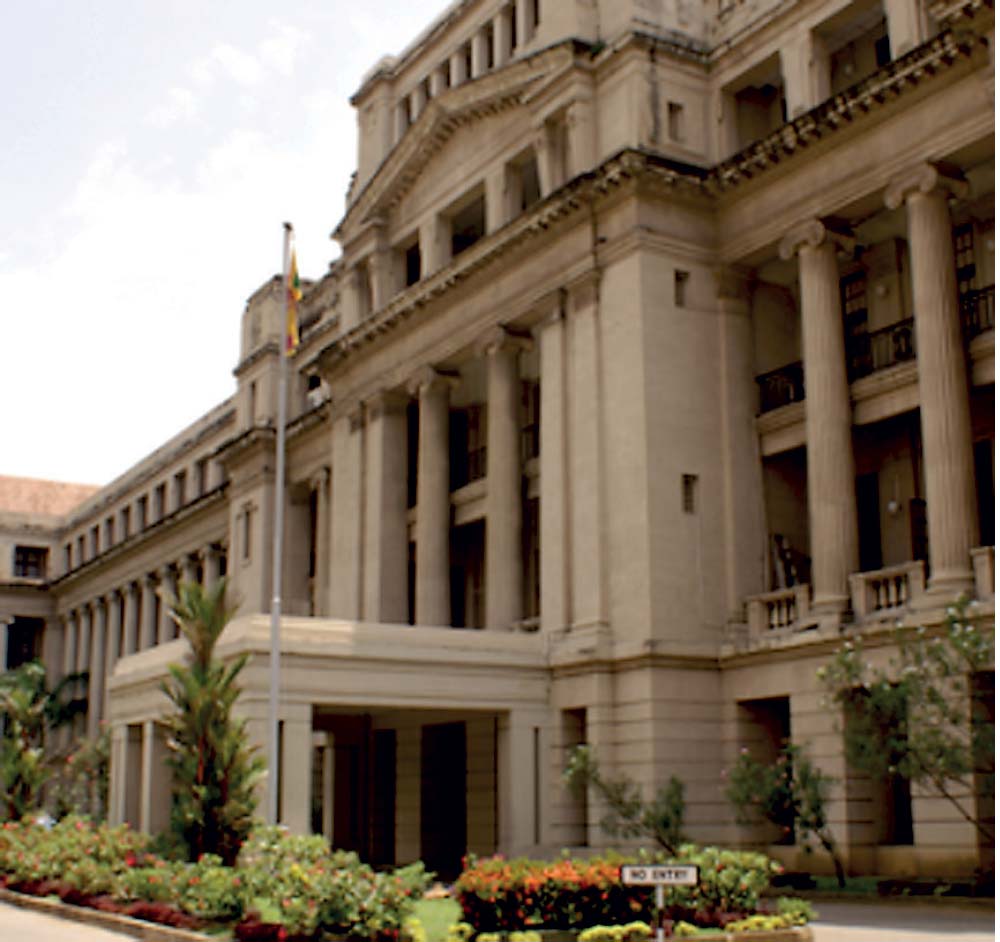 The Government is facing scrutiny following reports that $ 2.5 million (nearly Rs. 800 million) of Treasury funds was diverted during a foreign debt repayment, with the amount yet to reach the intended creditor country.
The funds were part of a bilateral payment to Australia amounting $ 22.9 million, with settlement due in September 2025.
The Treasury has appointed a Technical Investigation Committee to probe a suspected fraudulent payment involving $ 2.5 million linked to a bilateral transaction with Australia. The committee includes two Deputy Secretaries to the Treasury and will be co-chaired by A.N. Hapugala and S.S. Mudalige. The other members are National Planning Department Director General K.T.I. Premaratne, Legal Affairs Department Additional Director General A.K.D.D. Arandara, and Information Technology Management Department Assistant Director E.D. Shirantha.
The Committee has been tasked with probing the risk of fraudulent payment instructions received via email, which may have contributed to the disappearance of the funds remitted to Australia. It has been directed to carry out a comprehensive investigation into the incident and submit its report at the earliest.
The Finance, Planning and Economic Development Ministry yesterday confirmed that cyber hackers had breached its systems. In a statement, the Ministry said the breach involved the External Resources Department and was identified in relation to a foreign currency transaction in January 2026. It noted that the incident had been reported to the Sri Lanka Computer Emergency Readiness Team (SLCERT), the Police Computer Crime Investigation Division, the Criminal Investigation Department (CID), and the Central Bank of Sri Lanka’s (CBSL) Financial Intelligence Unit (FIU).
The Ministry said a preliminary internal inquiry had been conducted and disciplinary action initiated against several officials, while assuring that it is extending full cooperation to ongoing investigations.
It added that further updates would be provided at an appropriate time so as not to disrupt investigations, and that future arrangements would be made in line with existing agreements between Sri Lanka and foreign jurisdictions.
Cabinet Spokesperson and Minister Dr. Nalinda Jayatissa yesterday said the Finance Ministry would issue a clarification on the matter, noting that he did not yet have detailed information.
He confirmed that a letter had been sent to Speaker Dr. Jagath Wickramaratne by President’s Counsel Maithri Gunaratne requesting a Parliamentary probe into the incident. Dr. Jayatissa said the Speaker would review the matters outlined and decide whether an investigation should be initiated. He also acknowledged reports that several Treasury officials had been suspended in connection with the incident.
The Free Lawyers Organisation has called for a Parliamentary investigation into the alleged diversion of $ 2.5 million of Treasury funds, in a letter to the Parliament Speaker signed by its Chairman Gunaratne.
The letter requests that Parliament examine whether the funds, which were part of a $ 22.9 million external debt repayment due by end-September 2025, had been misdirected to a computer hacker or a third party instead of the intended creditor country.
According to the letter, the Treasury had effected the $ 2.5 million payment between December 2005 and 31 January 2026. However, it is now understood that the funds had not reached the relevant creditor.
Gunaratne noted that a Technical Investigation Committee had been appointed on or around 24 March to examine the incident. He said two Deputy Directors, two Directors, and the Head of the Computer Division of the Treasury had been suspended in connection with the matter.
The letter states that responsibility for foreign debt repayments, previously handled by the CBSL, had been transferred to the Department of Foreign Resources and the Public Debt Management Office (PDMO) following the enactment of the new Finance Act. Accordingly, the documentation and execution of the payment had been carried out by those institutions.
Gunaratne said a transaction of this magnitude could not have been authorised or executed solely by junior or mid-level officials, noting that such payments would require the involvement of both the Deputy Secretary to the Treasury and the Secretary to the Treasury.
He further pointed out that the current investigation is being conducted under an Additional Secretary to the Treasury who also oversees debt repayment operations, raising concerns over independence.
The letter emphasised that the ultimate responsibility for public finance rests with Parliament, and called for a full and independent investigation by a body external to the Finance Ministry and the Treasury.
Gunaratne urged Parliament to take appropriate steps through a suitable mechanism to establish the facts surrounding the transaction and determine accountability.
Opposition Leader Sajith Premadasa said the reported diversion raised concerns about the country’s financial management systems and broader financial security. He said the funds had allegedly been transferred to a third party through fraudulent instructions during the repayment of a foreign loan instalment.
Premadasa questioned how such a transaction could have taken place without proper verification, and whether institutions including the Finance Ministry, Treasury, CBSL, State Debt Management Office, and Department of Foreign Resources had adequate procedures in place.
He said the matter required an independent and transparent investigation to determine how the funds were misdirected and whether due processes had been bypassed.
Opposition MP Namal Rajapaksa said the incident was not a minor administrative lapse but a failure of internal controls at a systemic level. In a statement, he said attributing responsibility to junior officials would be misplaced, noting that accountability lay with those responsible for designing and overseeing the system. He questioned how fraudulent email instructions could have bypassed verification protocols and whether existing safeguards were sufficient for high-value external transactions. He also raised concerns about whether the role of the CBSL had been undermined in the handling of such payments.


