Sunday Oct 04, 2026
Sunday Oct 04, 2026
Wednesday, 6 May 2026 02:29 - - {{hitsCtrl.values.hits}}
|
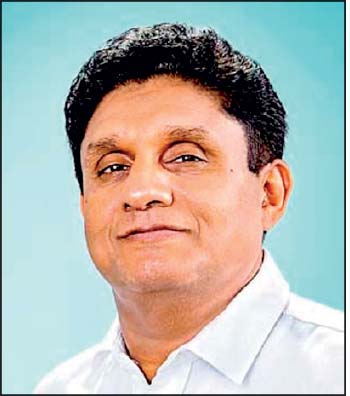
Opposition Leader Sajith Premadasa |
|
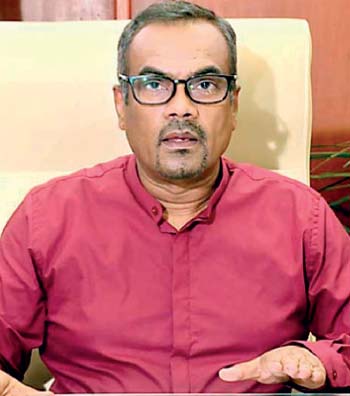
Finance and Planning Deputy Minister Dr. Anil Jayantha Fernando |
|
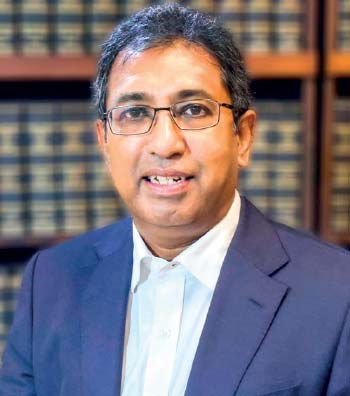
CoPF Chairman and SJB MP Dr. Harsha de Silva
|
|
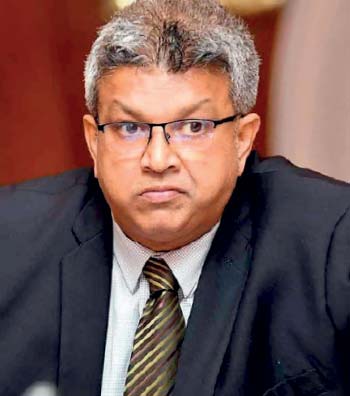
Justice Minister Harshana Nanayakkara
|
The Government yesterday backed down and agreed to a Parliamentary debate on the $ 2.5 million Treasury cyber theft after rejecting the Opposition’s request last week, following a tense standoff in the House that forced a reversal.
Opposition MPs rose in their seats demanding an urgent debate, triggering a confrontation that quickly shifted from procedure to substance, with exchanges exposing how the transactions were processed, where controls failed, and why Parliament was not informed earlier.
Opposition Leader Sajith Premadasa framed the issue as one of institutional accountability, calling for a full account of how 10 transactions amounting to $ 2.5 million were executed, the legal framework governing debt operations, and the transition of responsibilities under the Public Debt Management Act No. 33 of 2024.
He said Parliament required a complete explanation of the process and responsibilities at each stage. “Parliament needs to be briefed on how debt management takes place and the procedures involved, including the steps and responsibilities. We need to know how these transactions were processed, who was responsible at each level, and how this could have happened within what is said to be a multi-step verification process,” he said.
Treasury...
Premadasa questioned how account or SWIFT details could have been altered despite what he described as a four-step verification system, and asked for the dates of complaints made to law enforcement agencies and the sequence of actions taken by the Finance Ministry.
He also raised related issues that, he said, required clarification. “There are reports of a loss of around $ 600,000 linked to payments to the US Postal Service, and concerns about double payments under Aswesuma. There are also claims about missing documentation relating to French loans. These matters need to be clarified to Parliament,” he said.
On disclosure, Premadasa directly challenged the Government’s timeline. “If you had sufficient information to inform the Criminal Investigation Department (CID), why was Parliament not informed when it met in April? What was the rationale for not informing this House?” he asked.
He also questioned whether independent inquiries could proceed while senior Treasury officials remained in office.
Finance and Planning Deputy Minister Dr. Anil Jayantha Fernando, responding, set out the transaction sequence, confirming that payments were made on 14 November (three invoices totalling $ 713,757), 28 November ($ 377,660), 5 January (five invoices totalling $ 420,210), and 29 January ($ 997,799).
He described the payment chain in detail. “Invoices are received via email and verified by the External Resources Department against the Commonwealth Debt Record Management System. The Treasury Operations Department and the Public Debt Management Office coordinate fund allocations with the Central Bank. The data is entered into the non-reserves management system, and the Central Bank releases the funds. Investigations are ongoing to establish where responsibility lies within this process,” he said.
Dr. Fernando said the authorities became aware that the funds had not reached the creditor on 23 March 2026, following notification by Export Finance Australia. He said earlier alerts had been referred on 9 January to the Sri Lanka Computer Emergency Readiness Team and the CID, while the Financial Intelligence Unit of the Central Bank was informed on 1 April.
On the delay in informing Parliament, he said the Government required verified information before making a disclosure. “We did not have sufficient clarity at that stage to present the facts to Parliament. We needed proper information before making any disclosure, and investigations are still ongoing to determine the extent of the incident,” he said.
Premadasa rejected that explanation. “If you had enough information to complain to the CID, then you had enough information to inform Parliament. That is the concern,” he said.
Dr. Fernando denied that information had been withheld. “I am not prepared to present baseless information until investigations are complete. It would be irresponsible to do so,” he said.
On the question of debt classification, Fernando said the incident would not constitute a technical default. “This does not indicate an inability or unwillingness by Sri Lanka to repay its debt. Based on advice from financial and legal advisors, and because this is a cybercrime, creditors including Australia and Paris Club members are unlikely to consider this a default,” he said.
He also cautioned against speculation surrounding the death of a Finance Ministry official linked to the matter. “We should not make unverified claims. Not only does it mislead the public, but it also creates a bad situation,” he said.
The debate sharpened with an intervention from Committee on Public Finance (CoPF) Chairman and SJB MP Dr. Harsha de Silva, who set out a detailed critique of institutional failures within the Finance Ministry.
“From what we have understood in the CoPF closed-door discussions, there are serious gaps in accountability and processes. For example, why was the External Resources Department involved in any of these suspect transactions when the law clearly defines its remit as bilateral debt discussions, while debt servicing is the responsibility of the Public Debt Management Office? There seems to be monumental confusion at the Finance Ministry about the rules, responsibilities and processes,” he said.
He said the explanation that the payments occurred during the transition of Government debt management from the Central Bank to the Treasury pointed to deeper issues. “The story that these payments occurred during the transition makes it very obvious what has happened. It is as if the system was being run without the necessary experience,” he said.
Dr. de Silva contrasted this with established administrative practice. “Usually, Sri Lanka Administrative Service-qualified and experienced public sector officials are appointed to these roles and rise through the ranks to become Directors General heading Finance Ministry departments. What appears to have happened here is ad hoc vacancy filling by delegating staff from the Planning Service,” he said.
He added that, based on information available to him, key positions lacked the required expertise. “From what I gather, the Directors General of the External Resources Department and the Public Debt Management Office are from the Planning Service division without adequate skills and experience. The sitting Treasury Secretary is also a former Member of Parliament without the experience required to run complex operations at the Finance Ministry. If the Treasury Secretary and the department heads do not have the required experience and skills, it is not surprising that processes fall apart,” he said.
Dr. de Silva questioned the internal control framework. “Where is the delegation of authority? Who approved these payments? One payment exceeded over $ 900,000, so where were the approval processes?” he asked.
He said the role of Parliament went beyond identifying perpetrators. “The $ 2.5 million has been stolen and we need to find the perpetrators and recover the funds. Let the CID and law enforcement agencies do that. However, Parliament through the Committee on Public Finance is directly empowered to look into public debt management,” he said.
He also raised concerns over cooperation with oversight. “We have summoned the Treasury Secretary and senior Finance Ministry officials before the CoPF three times, and each time they refused the summons. I wrote to the President and the Finance Minister regarding this. Even last week, the Treasury Secretary refused to appear before the CoPF to discuss the $ 2.5 million theft. However, he later changed his mind and appeared before the committee,” he said.
Dr. de Silva added that the committee had exercised restraint. “I was too good to them. I should have raised this matter in Parliament, but I gave them a chance and they took advantage of it. Now the question is who is answerable for the loss of public funds,” he said.
He warned of the implications for taxpayers. “It is not going to come from Pelawatte (the JVP’s famous headquarters). It will be recovered from the public with raised taxes,” he said.
He concluded by asserting the committee’s mandate. “The Committee on Public Finance has the power to directly monitor public debt management according to the established Standing Orders of Parliament. That responsibility will be exercised,” he said.
Justice Minister Harshana Nanayakkara, addressing the House, said the Government was committed to identifying those responsible for the theft, bringing them before the law and recovering the funds, stressing that investigative processes were already underway.
He said law enforcement agencies had taken the necessary steps, with the CID having submitted a B-report to Court, and noted that investigations were continuing amid several unresolved aspects.
“It would be irresponsible to make uninformed statements at a time when investigations are ongoing and key facts are still being established,” he said.
Nanayakkara added that the Government would follow through on its stated mandate. “This Government came to power on the promise of eradicating corruption, and it will be this Government that resolves this issue and ensures that justice is done,” he said.
The exchanges revealed a widening divide between the Government’s position that the incident constitutes a cybercrime and the Opposition’s argument that it reflects deeper failures in governance, institutional capacity and financial oversight. However, the Government has acknowledged lapses in processes while some Opposition lawmakers misleadingly equated the cybercrime to will-full fraud by the ruling party.