Thursday Oct 15, 2026
Thursday Oct 15, 2026
Monday, 23 March 2026 04:18 - - {{hitsCtrl.values.hits}}
Dhananath Fernando
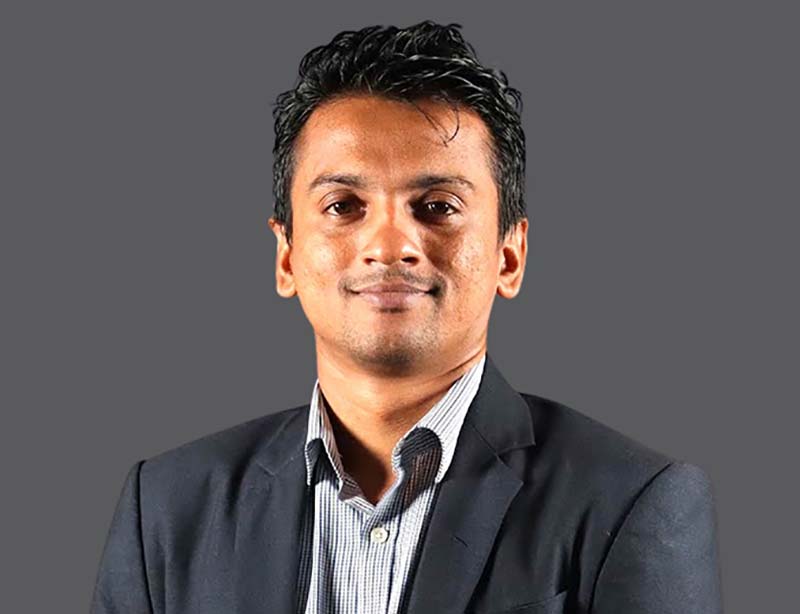
 Advocata Institute Chief Executive Officer Dhananath Fernando said Sri Lanka’s fuel consumption is heavily skewed, with the top 30% income cohort consuming 70% of fuel, pointing to the need for price-based adjustments rather than relying solely on rationing.
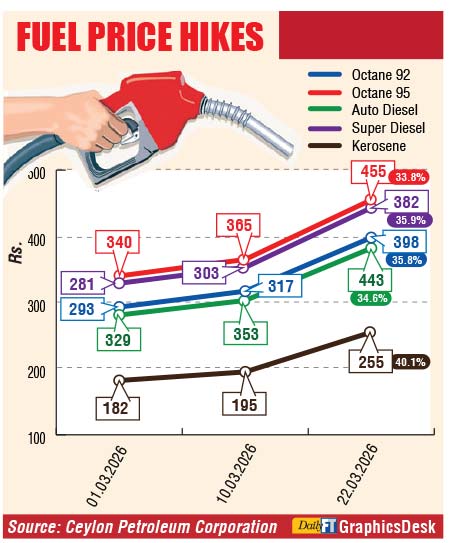
At a CMA Sri Lanka webinar on the economic impact of the Middle East war, Fernando said fuel prices, despite recent increases, remain below levels required to reflect actual costs. The webinar was held prior to the latest revision, after which prices have risen by more than 25% following the escalation of the conflict which began on 28 February.
“Because 70% of the fuel is consumed by the top 30% of the population, we have to be smart about how we consume,” he said.
He cautioned against relying entirely on the QR-based fuel rationing system, noting that while it was introduced due to limited reserves, it may not offer a sustainable long-term solution.
“Without adjusting the prices, without allowing the market system and price signals to work, only trying to do it through a QR code may not be sustainable in the long run,” he said.
President Anura Kumara Dissanayake last week said the Government was reviewing the taxes on fuel imports and exploring subsidies for vulnerable segments of the economy. He said that 40 private companies have been issued temporary licences to import fuel to be sold domestically in US dollars to industries that required it.
Based on Advocata’s estimates, petrol prices would need to rise by around Rs. 100 per litre and diesel by about Rs. 200 to reflect market conditions if current margins and taxes are maintained.
Fernando also called for the removal of price caps to enable private sector participation in fuel imports.
“If private players have the ability to bring fuel through alternative channels at higher prices, we should be able to sell at a higher price,” he said.
He said any move towards higher prices must be accompanied by stronger social safety nets. “It doesn’t mean when the prices go up, the poorest of the poor should bear the burden,” he said.
Fernando warned the crisis would feed through to the broader economy, including higher energy and food costs, pressure on exports, disruptions to tourism, and strain on the balance of payments.
“External shocks happen all the time, but how we respond can cause bigger issues than the crisis itself if we use the wrong tools,” he said.


