Tuesday Sep 15, 2026
Tuesday Sep 15, 2026
Saturday, 28 February 2026 01:41 - - {{hitsCtrl.values.hits}}
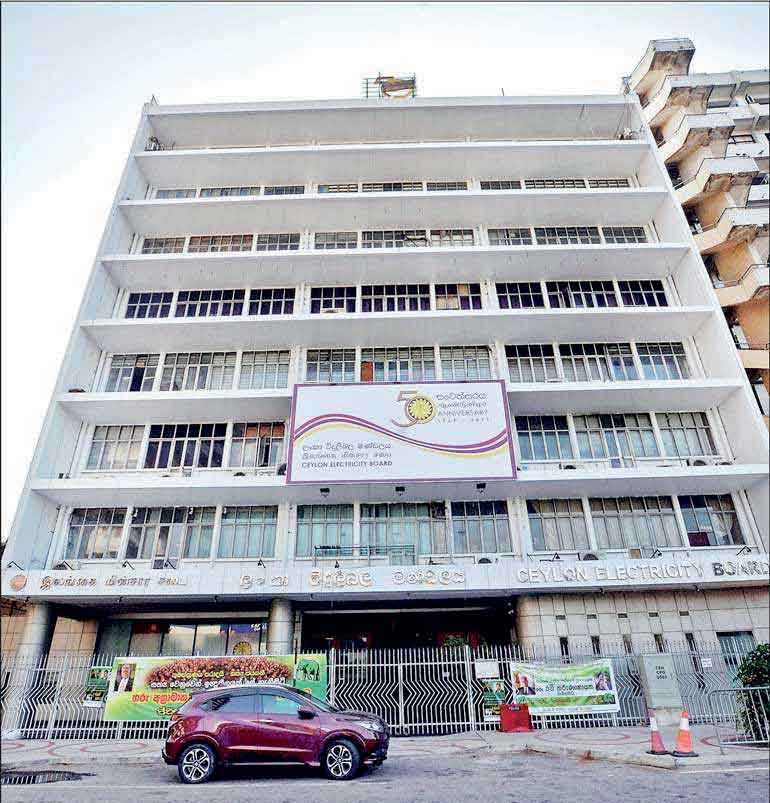
Sri Lanka’s power sector reforms have hit a critical funding snag, with nearly Rs. 8.8 billion needed to pay 2,010 Ceylon Electricity Board (CEB) employees who opted for voluntary retirement now left in limbo after the regulator refused to allow the cost to be passed on to consumers.
In a letter dated 20 February, Energy Ministry Secretary K.T.M. Udayanga Hemapala informed the Treasury Secretary that the Cabinet had earlier approved recovering the estimated Rs. 8,831 million Voluntary Retirement Scheme (VRS) cost through electricity tariffs. The CEB accordingly incorporated the expense into its January 2026 tariff proposal submitted to the Public Utilities Commission of Sri Lanka (PUCSL), along with a plan to recover the amount through a five-year loan facility.
However, the PUCSL has declined to approve the inclusion of VRS costs in the tariff structure, a position reconfirmed during the recent IMF review mission at a January 26 meeting with Energy Ministry and CEB officials.
The decision leaves both the CEB and its newly established successor entities unable to raise funds to meet VRS obligations, as the recovery of such costs through tariffs is not permitted under the regulator’s stance.
With the reform program at stake, the Energy Ministry has indicated that direct Government intervention has now become imperative to ensure the restructuring process proceeds without disruption.
The funding dilemma comes against the backdrop of broader electricity sector reforms tied to Sri Lanka’s IMF program. As part of restructuring CEB’s legacy debt, it has been agreed between the IMF and the regulator that Rs. 71,830 million will be recovered through electricity tariffs over 15 years, generating additional revenue for the Government.
In this context, the Ministry has proposed offsetting the Rs. 8.8 billion VRS cost against this future revenue stream, with the Government releasing the necessary funds to the CEB on the appointed date to enable smooth and timely implementation of the reform agenda.
The correspondence, also copied to the CEB Chairman and General Manager, underscores mounting fiscal and regulatory tensions at the heart of Sri Lanka’s electricity sector overhaul —a reform process closely watched by both domestic stakeholders and international lenders.


