Sri Lanka will exit IMF program with debt overhang intact: Economist

Monday, 23 November 2026 00:00 -     - {{hitsCtrl.values.hits}}


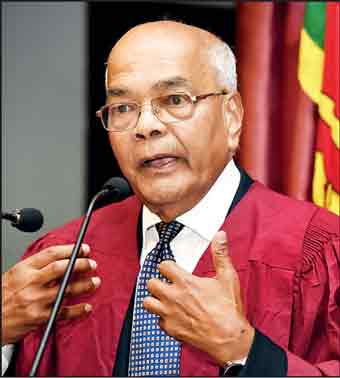
ANU Emeritus Professor of Economics Prof. Prema-chandra Athukorala 

- Pic by Shehan Gunasekara


  • Says stabilisation not yet matched by progress towards debt sustainability
  • National debt to rise to $ 94 b by program end, about 20% above pre-crisis level
  • Annual debt service up from $ 2.8 b in 2023 to $ 5.1 b in 2025; debt service ratio back at pre-crisis level
  • Gross reserves less than half of IMF adequacy target; says import cover inadequate gauge, questions CBSL’s broader measure
  • Junk ratings imply about 9.9% yield on new ISBs; warns of Argentina-style cycle of crises
  • Backs back-to-back IMF program, export-led reforms and SOE overhaul

Sri Lanka’s progress on macroeconomic stabilisation under the IMF has not been matched by progress in restoring debt sustainability, a leading economist warned yesterday, leaving the country exposed to costly borrowing once the program ends.

Delivering the Guest of Honour lecture at the Sri Lanka Economic Association (SLEA) annual international conference at the BMICH, Australian National University (ANU) Emeritus Professor of Economics Prof. Prema-chandra Athukorala said: “Sri Lanka’s stabilisation record under the EFF program is encouraging, but the available evidence suggests that the program is likely to end with a substantial debt overhang still weighing on the economy.”

Total national debt declined only marginally, he said, from $ 104 billion in 2023 to $ 92 billion in 2025. The IMF projects it will rise to about $ 94 billion by the end of the Extended Fund Facility (EFF), about 20% above the pre-crisis level of $ 77.5 billion. Foreign debt is projected to reach $ 58.9 billion by 2027, about 13% above pre-crisis levels.

He attributed this to a restructuring that relied on maturity extensions and coupon (interest rate) cuts rather than haircuts, or write-downs, on International Sovereign Bonds (ISBs). Ghana, by contrast, secured a haircut of about 37% from its bondholders in 2024. Sri Lanka’s upfront debt service relief of about $ 3 billion could fall to $ 1.8 billion under the new macro-linked bonds if growth exceeds the IMF baseline, or rise to $ 4.3 billion if it falls short.

“Paradoxically, therefore, stronger-than-anticipated economic growth could itself increase the debt-servicing burden,” he said.

Annual debt service payments (principal and interest) have climbed from $ 2.8 billion in 2023 to $ 4.3 billion in 2024 and $ 5.1 billion in 2025, with the Government accounting for 47% of the 2025 total. The debt service ratio, debt service as a share of exports, rose from 15.9% to 24.9% over the same period. Prof. Athukorala said the ratio had already reached the pre-crisis level as repayment of past due interest (PDI) bonds began in 2025. It would rise further once ISB coupon payments resume after 2027.

Interest payments fell from 79.9% of Government revenue in 2023 to 45.5% in 2025, but remain heavy. Assuming a conservative 5% average interest rate on debt of about $ 92 billion, equivalent to 90% of GDP, annual interest would amount to about 4.5% of GDP, or roughly 40% of revenue. That compares with the IMF’s primary surplus target, the budget balance before interest, of 2.3% of GDP. The Government would therefore need to keep borrowing just to meet interest, he said.

With much of the debt in dollars, a primary surplus alone cannot service it, making reserves critical. The IMF’s reserve adequacy measure covers not only the import bill but also debt servicing and potential capital flight if investor confidence reverses. Prof. Athukorala said the conventional measure, months of import cover, was inadequate for a country managing a large debt stock.

The IMF estimates Sri Lanka needs about $ 12 billion in reserves by 2027 and over $ 13 billion by 2030. In 2025, gross foreign reserves of $ 6.5 billion and net foreign reserves of $ 5.4 billion were only 48% and 43% of that target. He questioned the Central Bank’s practice of adding banks’ net foreign assets to official reserves. He said these assets are privately owned, cannot automatically service sovereign debt and could reflect hidden capital flight.

The IMF still expects Sri Lanka to raise $ 1.5 billion in international bond markets in 2027. As of 7 October, 2026, all three major rating agencies still rated it ‘junk’. ISB spreads narrowed from about 1,900 basis points to 520 basis points by January 2025, but still implied a yield of about 9.9%, against 5.5% to 6.5% for investment-grade emerging-market sovereigns.

“The central concern is that borrowing at such high interest rates would perpetuate the debt overhang, leaving a sword of Damocles hanging over the country’s economic future and risking a trajectory of recurrent debt crises similar to Argentina’s,” he said.

He favoured a back-to-back IMF program that undertakes the structural reforms neglected so far over the ‘home-grown’ approach still advocated by anti-IMF ideologues. He also called for export-led reforms and an overhaul of State-Owned Enterprises (SOEs).

“Stabilisation of the economy and placing it on a self-sustained growth path is not simply a technical exercise in macroeconomic management. Its success ultimately depends on the political economy of reform: on building credibility, securing public support and sustaining the commitment needed to carry reforms through,” he said.

COMMENTS