Wednesday Oct 21, 2026
Wednesday Oct 21, 2026
Monday, 17 August 2026 04:55 - - {{hitsCtrl.values.hits}}
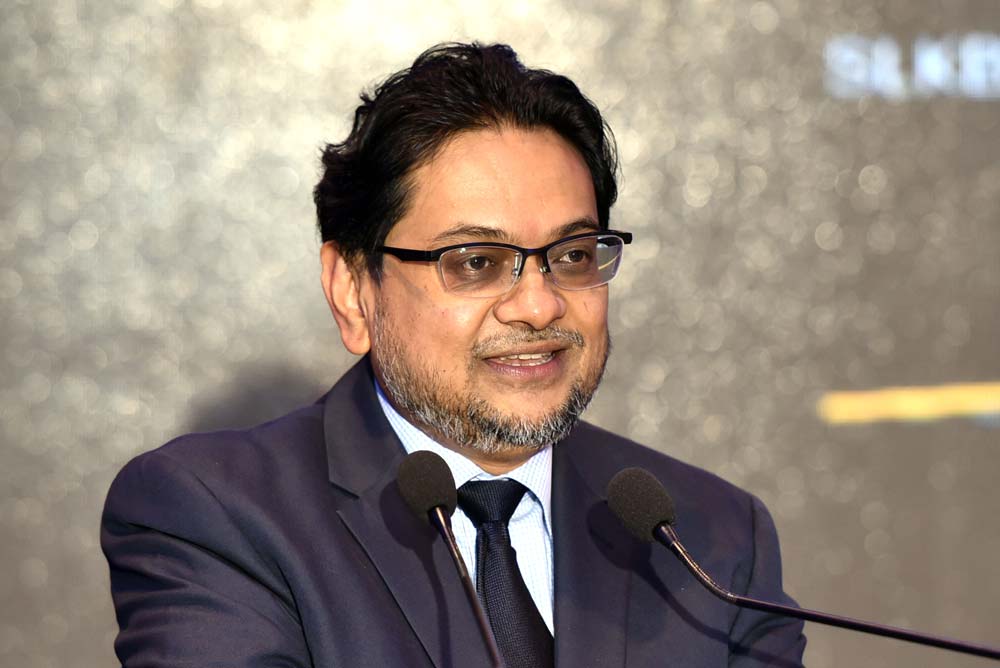
Verité Research Executive Director Dr. Nishan de Mel
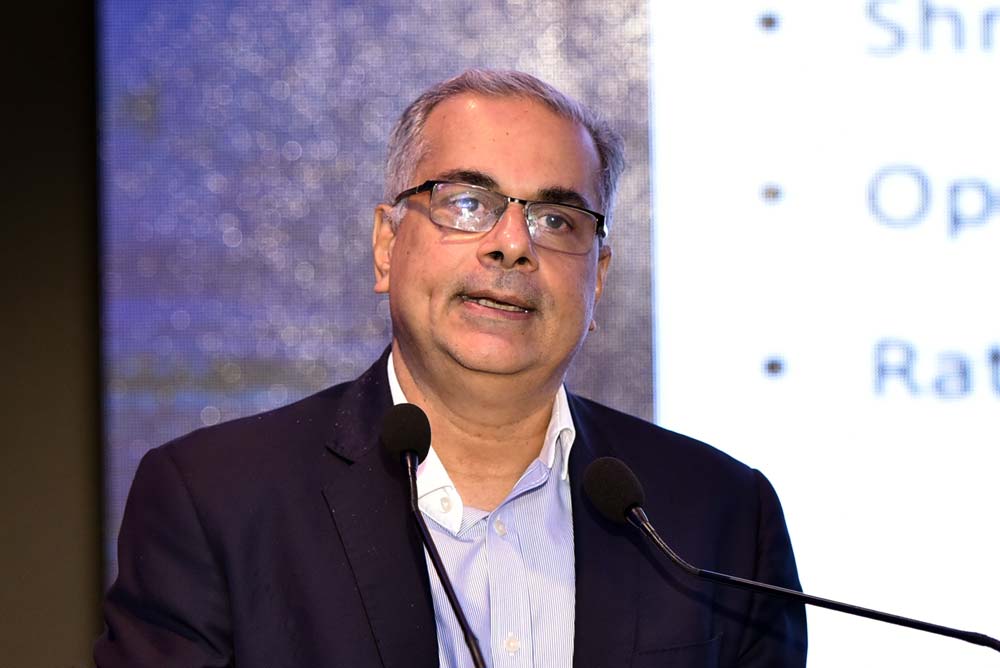
Advocata Institute Chairman Murtaza Jafferjee
Unlike most economic forums where the spotlight falls on Government policy and reform, a discussion on Sri Lanka’s economic future turned the focus on the private sector.
Verité Research Executive Director Dr. Nishan de Mel described the economy as a “racket” marked by tax non-compliance and high real returns to those with financial assets, while Advocata Institute Chairman Murtaza Jafferjee said economic policy was effectively shaped for about 1,000 people and called for greater competition to change the status quo.
Speaking at a panel discussion organised by the Sri Lanka – Korea Business Council on ‘Sri Lanka’s Future: Forecast, Scenarios and Challenges,’ the two economists highlighted structural constraints facing the post-crisis economy.
Jafferjee argued that substantial macroeconomic reforms had already been undertaken but competition, productivity, and trade remained critical to growth, while Dr. de Mel cautioned that growth which failed to improve the lives of the majority would ultimately prove unsustainable.
Dr. de Mel said Sri Lanka spent less than most countries on welfare, with the International Monetary Fund (IMF) having to push the country to spend 0.6% of GDP, which he said remained below levels in many poorer countries.
“We have a country—and this is why I said it’s a racket—the people who earn don’t pay taxes,” he said.
He pointed to the substantial revenue generated from withholding taxes (WHT) as an indication of weaknesses in wider tax compliance. If taxpayers were already fully declaring and paying their liabilities, increased WHTs should largely be deductible against final tax payments rather than producing a substantial increase in overall revenue, he argued.
Dr. de Mel had earlier used the “racket” description when discussing the impact of high real interest rates and taxation. He said low inflation alongside high interest rates disproportionately benefitted those with substantial savings, while people dependent on wages faced higher taxation, including 18% Value Added Tax (VAT), with Government revenue in turn used to service interest payments.
“This is a racket in which people like us, you know, benefit enormously on the backs of those who see very little benefit of the economy,” he said.
Jafferjee said Sri Lanka’s productivity problem was closely linked to inadequate competition and the influence of a narrow group of interests over economic policy.
He said, figuratively, that economic policy was effectively shaped for about 1,000 people, rather than referring to a literal list of individuals, arguing that policies had frequently been framed and implemented to accommodate incumbent interests.
“The main determinant of productivity is competition,” Jafferjee said.
At the same time, he rejected the perception that little reform had taken place following the economic crisis.
“If not for this crisis, there are so many things that were fixed in this country on the macro side that would have never been possible,” Jafferjee said.
He cited the new Central Bank law, Fiscal Management Act, and Public Debt Management Act as three crucial pieces of legislation, alongside changes in governance and tax administration. Significant technical assistance had also been undertaken as part of the IMF-supported reform program.
Jafferjee pointed to increased scrutiny by tax authorities of assets, including overseas accommodation, art, and gems as evidence of changes in revenue administration.
He identified productivity, competition, and the structure of the economy as key challenges beyond macroeconomic stabilisation and legislative reforms.
The State-owned enterprise (SOE) footprint was part of the problem, with State enterprises capable of distorting competitive neutrality where they operated alongside private businesses, he said.
Jafferjee called for more competition, liberalisation of imports and exports, a reduced SOE footprint, and greater foreign direct investment (FDI).
“We don’t need FDI because we need capital, we need knowledge,” he said.
Sri Lanka also needed to reconsider its approach towards domestic production and international trade.
“What people misunderstand in Sri Lanka is there being a need to produce what Sri Lanka needs. What Sri Lanka needs to do is to produce what the world needs,” Jafferjee said.
Contrasting Sri Lanka with East and Southeast Asian economies, he said successful export economies were also substantial importers and more integrated into international production networks. Sri Lanka’s economic complexity ranking had improved only from around 89 to 83, while Vietnam had advanced from around 65 to 45.
Trade agreements and economic diplomacy were important to expanding Sri Lanka’s integration with international markets, he said.
Jafferjee also identified the diaspora as a source of knowledge needed to diversify production. Sri Lankans who had spent long periods working in overseas companies could bring expertise, corporate networks, and knowledge of international markets, he said.
Several institutional changes to facilitate greater private sector participation were also progressing. Jafferjee said an insolvency framework was due to come into force in December, while public-private partnership (PPP) legislation was at an advanced stage and would enable greater private sector participation. Reforms were also envisaged for the commercial management of SOEs.
He acknowledged that the previous SOE restructuring process had failed to complete proposed transactions, but rejected the conclusion that reform efforts had been absent.
Jafferjee attributed the failure partly to efforts to ensure due process following previous Supreme Court decisions reversing privatisations where procedures had been questioned. The process had to balance transparency with practicality, he said.
The political timetable subsequently ran out ahead of the Presidential Election, while bureaucratic willingness to complete transactions diminished as the election approached.
Jafferjee also flagged structural labour constraints, noting that annual births had fallen from around 370,000 to about 240,000, around 20% of certain young working-age cohorts appeared to be missing largely due to migration, and female labour force participation remained around 30% despite women comprising a larger share of university students.
Large numbers of workers also remained in low-productivity employment, requiring improvements in skills and technology, economic restructuring, and greater competition, he said.
Dr. de Mel, meanwhile, said growth had to be assessed against its impact on living standards.
Poverty had more than doubled from around 14.3% to close to 29-30%, adding that even if it had since fallen into the lower 20s, the increase remained substantial. Available Employees’ Provident Fund (EPF) data showed 92% of formal private sector employees earned less than Rs. 100,000, he said.
He called for greater attention to healthcare, education, and other support structures for lower-income households.
“Growth that doesn’t make the lives of people, the majority, better off, ends up, like in lots of places, biting back, even on those who benefit from that kind of growth,” Dr. de Mel said.
He also questioned development priorities centred on expensive road infrastructure and increased private vehicle use while public transport remained underdeveloped.
“Putting more roads at very high costs and more cars on the roads are not the solution,” he said.
– Pix by Ruwan Walpola


