Thursday Oct 15, 2026
Thursday Oct 15, 2026
Tuesday, 23 June 2026 05:49 - - {{hitsCtrl.values.hits}}
 |
 |
 |
 |
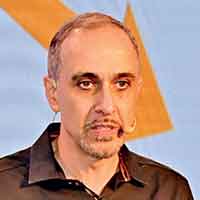
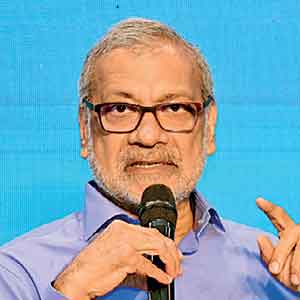
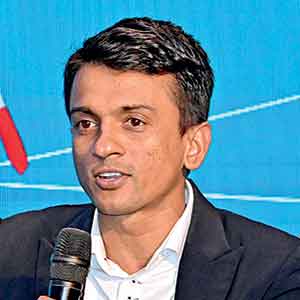
| Gevorg Sargsyan | Ajit Gunewardene | Dhananath Fernando | Randhula De Silva |
By Devan Daniel
Three years after pulling back from economic collapse, Sri Lanka is being forced to confront a more difficult question than stabilisation: why has growth underperformed for much of the past two decades despite the country’s strategic location, educated workforce, and longstanding advantages in trade and services?
That was the central theme that emerged yesterday at the public launch of the World Bank Group’s Country Partnership Framework (CPF) for Sri Lanka for 2026-2030, where business leaders, economists, and development practitioners argued that while the country has restored macroeconomic stability faster than many expected, deeper structural weaknesses continue to constrain investment, productivity, and competitiveness.
World Bank Group Country Manager for Sri Lanka Gevorg Sargsyan described the country’s post-crisis stabilisation as remarkable, noting that few observers believed three years ago that Sri Lanka could restore economic stability so quickly following the 2022 crisis.
Yet he cautioned that stabilisation should not be mistaken for recovery.
The crisis saw poverty rise from 11% to 27.5% within a year, inflation climb to around 70%, and roughly half a million jobs disappear.
Although conditions have improved substantially since then, poverty remains above 20%, while the country continues to grapple with outward migration and the loss of skilled talent.
“Sri Lanka has done remarkably well in stabilisation. But this is not a full recovery,” Sargsyan said.
The distinction matters because the country’s next challenge is no longer avoiding crisis but generating sustained growth.
Around 1 million young Sri Lankans are expected to enter the labour force in the coming years. However, under current economic conditions, only about one-third can expect to secure formal, quality employment, according to Sargsyan.
The World Bank official argued that the explanation lies not in a shortage of talent but in a series of structural weaknesses that have persisted for years.
Among them, foreign direct investment (FDI) remains one of the most significant.
Over the past two decades, Sri Lanka has attracted FDI equivalent to roughly 1% of GDP, a level far below that achieved by regional competitors such as Vietnam and Malaysia.
For Sargsyan, the concern extends beyond capital inflows.
FDI brings competition, knowledge, technology, access to international markets, and management expertise, all of which contribute to stronger productivity growth and economic dynamism.
A second concern is the steady decline in export competitiveness.
Exports as a share of GDP have fallen from around 40% to 20% over the past two decades, a striking reversal for a country whose economic history has been closely tied to trade.
The decline has occurred while many competing economies have become increasingly integrated into global production networks and export markets.
Yet perhaps the most significant concern raised during the discussion was productivity.
Sargsyan argued that sustained economic growth has never occurred without productivity improvements, yet Sri Lanka’s productivity performance has stagnated or declined while peer economies have continued to advance.
He pointed to examples ranging from construction costs that remain substantially higher than those of neighbouring countries to agricultural productivity gaps in key sectors such as coconut cultivation.
The implication was clear: without producing more output from the same resources, higher growth, rising incomes, and stronger competitiveness will remain elusive.
The discussion also highlighted the country’s underutilised workforce.
Despite women consistently recording strong educational outcomes, only around one-third participate in the labour force compared with approximately 70% of men.
Good Life X Founder and Chairperson Randhula De Silva argued that Sri Lanka’s labour market continues to operate around assumptions inherited from an earlier industrial era, failing to accommodate the realities of modern work and caregiving responsibilities.
As the country’s population ages, she said, care obligations increasingly fall on women, while rigid employment structures continue to limit workforce participation.
De Silva also pointed to a broader disconnect between education, innovation, and industry, arguing that talented graduates and promising innovations often struggle to find pathways into commercial activity.
“The ideas are there. Capabilities are there. There’s just one bridge, one road that’s missing,” she said.
If Sargsyan focused on the economy’s structural weaknesses, PickMe Chairman Ajit Gunewardene challenged some of the assumptions underpinning Sri Lanka’s growth strategy.
He argued that the country often treats investment promotion as a marketing exercise while failing to address the operational constraints faced by businesses already operating within the economy.
“We market Sri Lanka to investors before we have fixed Sri Lanka for existing businesses here,” Gunewardene said.
He contended that investors ultimately place greater value on predictability, reliability, and ease of doing business than on tax concessions or promotional campaigns.
Power disruptions, regulatory uncertainty, cumbersome approval processes, and bureaucratic inefficiencies impose costs that often outweigh the benefits offered through incentive packages, he said.
“Investors don’t select on tax holidays. They select on predictability, reliability, and ease of doing business.”
Gunewardene also highlighted what he described as a critical shortage of growth-stage capital, arguing that Sri Lanka’s financial ecosystem often supports startups at the earliest stages but provides few pathways for businesses seeking to expand beyond proof of concept and create jobs at scale.
Advocata Institute Chief Executive Officer Dhananath Fernando introduced a further dimension to the discussion by questioning whether economic transformation can be achieved primarily through identifying priority sectors.
Asked whether the sectors highlighted under the World Bank framework were the correct ones, Fernando initially responded in the negative before elaborating that the more important issue was not sector selection but economy-wide reform.
While he agreed that energy, logistics, tourism, and agribusiness were important sectors, he argued that deeper constraints stem from labour market rigidities, competition barriers, productivity weaknesses, and broader distortions affecting the entire economy.
In that sense, he suggested that policymakers often overestimate the importance of sector-specific strategies and underestimate the impact of economy-wide reforms.
Fernando also stressed the importance of preserving monetary stability, arguing that sustainable growth cannot occur without a stable macroeconomic foundation.
The World Bank Group’s Sri Lanka CPF is structured around improving the business environment, strengthening physical and digital infrastructure, expanding opportunities in sectors such as tourism and agribusiness, and enhancing resilience to economic and climate-related shocks.
The Framework places particular emphasis on ports and logistics, energy, tourism, and agribusiness, while the World Bank Group expects to provide approximately $ 2 billion in financing and mobilise more than $ 1.2 billion in private capital over the next five years.
– Pix by Sameera Wijesinghe


