Tuesday Oct 20, 2026
Tuesday Oct 20, 2026
Tuesday, 20 October 2026 02:12 - - {{hitsCtrl.values.hits}}
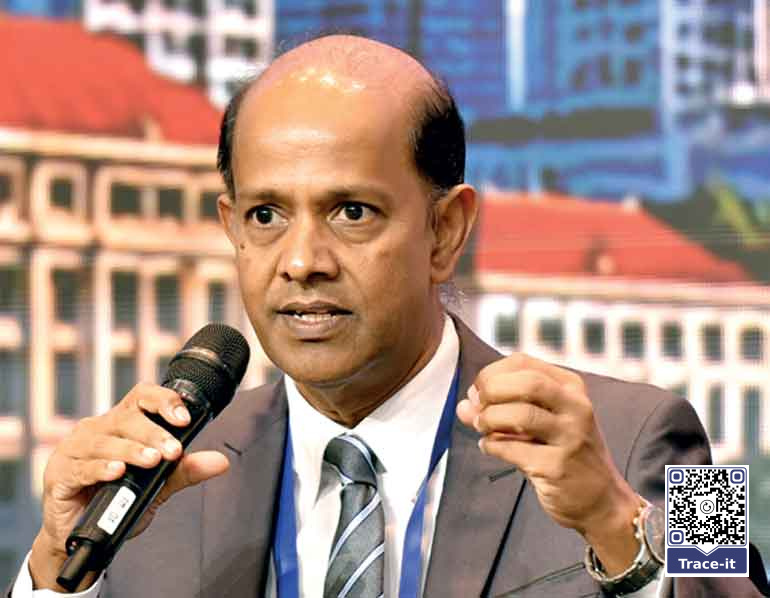
Director General and CEO Damitha Kumarasinghe — Pic by Ruwan Walpola
By Charumini de Silva
The Public Utilities Commission of Sri Lanka (PUCSL) is advocating a simple, transparent, and cost-based wheeling tariff to facilitate private power trading and support investment in energy-intensive sectors, with discussions on the pricing mechanism still at an early stage.
PUCSL Director General and CEO Damitha Kumarasinghe said the tariff should be straightforward to understand, affordable enough to encourage investment, and fair to transmission and distribution companies, covering their costs and providing a reasonable return.
“The wheeling cost should not be exorbitant to discourage investors. It has to be fair to the transmission and distribution companies also,” he said at the Sri Lanka Economic and Investment Summit 2026.
Kumarasinghe said discussions on the tariff had begun but had not progressed significantly, pending the gazetting of relevant legal provisions needed to move the process forward.
PUCSL pushes...
Wheeling allows electricity generated by one party to be transported through the power network for delivery to another customer, subject to applicable charges and regulatory arrangements. It could give businesses greater flexibility in procuring electricity and enable power generators and consumers to enter into supply agreements.
Kumarasinghe said investors should be able to secure power before committing capital to projects, rather than waiting for generation capacity to be developed after an investment decision. Ensuring sufficient electricity is available when businesses are ready to operate is particularly important for attracting new investment, including data centres and other energy-intensive industries.
He said wheeling could allow investors to enter into agreements with power companies to procure electricity in advance, while electricity markets could provide an additional mechanism for balancing supply and demand.
Kumarasinghe estimated that around 15% to 20% of electricity could potentially be traded through a market mechanism, allowing buyers to purchase power to meet their requirements. He said both wheeling and market-based trading options needed to be developed.
When asked about the timeline for wheeling prices, he said it will be finalised soon, but the electricity regulator needs the necessary regulations to go in.
The proposed approach would require a pricing structure that balances the interests of electricity consumers, generators, and network operators without making access to the grid prohibitively expensive.
The comments come amid wider calls from energy-sector stakeholders for regulatory certainty, bankable Power Purchase Agreements, and faster approvals to accelerate investment in renewable generation and related infrastructure.


