Monday Sep 14, 2026
Monday Sep 14, 2026
Monday, 14 September 2026 02:03 - - {{hitsCtrl.values.hits}}
 SJB MP Mujibur Rahman says 70% of Customs fines benefit officials, only 30% reaches Treasury
Alleged racket works via double fines: Valuation Dept. clears goods on payment, other units then raid same importers
Importers halting operations amid alleged harassment, hitting jobs and revenue
Says late Finance Minister Mangala Samaraweera had attempted to introduce new Customs Ordinance but was thwarted
Questions Govt.’s silence and promotion of ex-Customs Director General implicated in container release probe
Claims surface as Customs posts record revenue amid IMF’s Seventh EFF Review which will focus on reforms
|
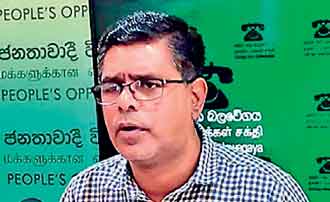
SJB MP Mujibur Rahman
|
The Opposition Samagi Jana Balawegaya (SJB) last week accused Sri Lanka Customs of running an organised extortion racket against importers, warning that unchecked harassment by officials was driving micro, small and medium enterprises (MSMEs) out of the import trade and threatening jobs, incomes, and tax revenue.
Speaking in Parliament, SJB MP Mujibur Rahman said imports had declined steadily in recent months as importers, particularly MSMEs, faced sustained harassment from Customs officials, and questioned why the Government remained silent over this longstanding issue.
He said large enterprises providing employment to thousands, as well as smaller importers employing 100-200 people each, were being subjected to what he described as “draconian” treatment, undermining a sector that is a significant contributor to jobs, incomes, and the wider economy.
Rahman detailed how Customs fines are distributed once imposed: 50% goes into a rewards scheme for Customs officials, 20% to the Sri Lanka Customs Welfare Fund, and only 30% to the Treasury. He said fines range from Rs. 100 to Rs. 500 million, with roughly 70% of proceeds channelled back to Customs officials rather than the State.
While acknowledging that some importers deliberately undervalue goods to avoid paying fair duties, Rahman said the process that followed amounted to double jeopardy.
He explained that Sri Lanka Customs’ Valuation Department inspects consignments and imposes an on-the-spot fine for under-invoicing before releasing the goods, after which other Customs and Excise units raid the same importers’ warehouses and outlets and impose a second round of fines, without any action being taken against the officials who released the goods in the first instance.
“This is extortion. You pay a fine and take your goods, and then pay another fine when officials raid your premises,” Rahman said, adding that modern technology made detecting under-invoicing straightforward, yet enforcement remained skewed towards repeat penalties rather than prevention.
He said there was “a mafia in Customs that needs to be broken” and asked whether the National People’s Power (NPP) Government, elected on a pledge to eradicate corruption, would act to reform Customs and the Excise Department, recalling that the late Finance Minister Mangala Samaraweera had previously attempted to introduce a new Customs Ordinance.
Rahman said genuine importers acting in good faith were being summoned by Customs in the morning but had their statements recorded only late in the evening, and were pressured to amend invoices and accept Customs rulings on officials’ terms, under threat of having warehouses and business premises sealed.
He said importers who escalated complaints to senior Customs officials were simply told to comply with field officers’ instructions, and that most avoided seeking legal recourse for fear of further delays and inspections on subsequent shipments.
He further noted that the President’s Secretary had previously served as a Director at Sri Lanka Customs and was well acquainted with these practices, questioning why the Government remained silent.
Rahman also raised the release of 320 containers without proper inspection, an incident investigated by a Presidential Commission that held the then Customs Director General accountable for abuse of authority.
He said it was “disturbing” that the same official had since been promoted to Additional Secretary, and asked how someone facing serious findings of misconduct could be elevated, given that the NPP had raised similar allegations while in Opposition.
Rahman called on the President and the Finance Minister to act immediately to clean up Customs, warning that with inflation near 8% and the import sector stagnating, continued dysfunction would add to the economic burden on ordinary citizens.
The allegations come as an International Monetary Fund (IMF) mission is in Colombo for the Seventh Review under the ongoing Extended Fund Facility (EFF) program, which is focused on growth-related reforms.
A 2023 IMF Governance Diagnostic Assessment found that Sri Lankan revenue administration has a reputation of being highly prone to corruption and rent-seeking, a perception it said had progressively worsened given the impunity enjoyed by officials engaged in unethical conduct.
The assessment identified Customs and tax administration as highly exposed to corruption, citing the absence of effective performance monitoring and sanctioning systems, as well as limited progress on digitisation that keeps interaction between officials and taxpayers high.
It noted that promotions across revenue departments were driven largely by seniority rather than merit or integrity, and that with more than 2,000 staff each at Customs and the Inland Revenue Department, no corruption cases against officials had been reported in recent years; a 2021 Customs Department report had listed only 11 preliminary and two formal disciplinary cases still under investigation.
The IMF recommended dedicated Internal Affairs units in each Department to refer allegations to the Public Service Commission and the Commission to Investigate Allegations of Bribery or Corruption (CIABOC).
The scrutiny of Customs comes even as the Department posts record collections. Sri Lanka Customs recorded its highest-ever annual revenue of Rs. 2,557.535 billion in 2025, a 64.2% year-on-year (YoY) increase from Rs. 1,553 billion, exceeding a revised target of Rs. 2,241 billion.
For 2026, Customs has set a lower target of Rs. 2,206.995 billion, reflecting an expected decline in car imports, but has already collected Rs. 1,852.5 billion in the first eight months of the year, 28.5% above the period’s target and around 25% higher than the same period last year. August alone saw collections of Rs. 219.3 billion against a target of Rs. 190.3 billion, a 15.3% overshoot.
Officials attribute the gains to a rebound in import volumes as reserves stabilise and import controls ease, alongside tighter monitoring of under-invoicing and misdeclaration.
The performance has made Customs one of the Treasury’s top revenue sources this year, providing support to the State’s fiscal targets under the IMF-backed program even as questions mount over the integrity of its enforcement practices.