Friday Oct 02, 2026
Friday Oct 02, 2026
Wednesday, 18 March 2026 00:00 - - {{hitsCtrl.values.hits}}
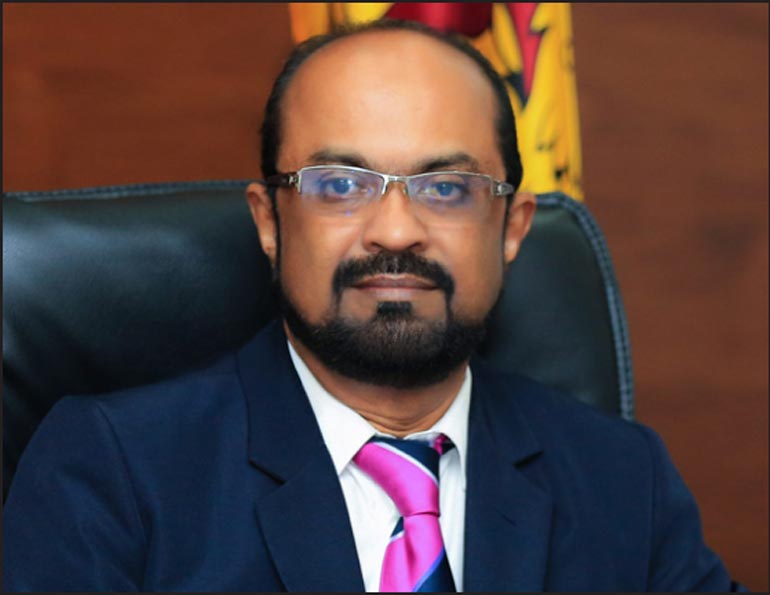
Energy Minister Kumara Jayakody
Global shipping disruptions, rather than fuel availability or foreign exchange, have emerged as the primary risk to Sri Lanka’s energy security despite stocks being sufficient into May, Energy Minister Kumara Jayakody told Parliament yesterday, underscoring the constraints posed by the escalating Middle East conflict.
Making a special statement in response to Opposition Leader Sajith Premadasa, the Minister said inventories and confirmed shipments remain adequate under normal consumption, while efforts are under way to expand supplier options and secure additional cargoes.
He said 92 Octane Petrol stocks are sufficient until 23 April, 95 Octane Petrol until 10 May, Diesel until 12 April, and Super Diesel until 10 May.
“We have analysed the daily impact and are making an effort to expand our fuel suppliers. Discussions are ongoing with other oil-producing countries to secure supplies, and proposals from new suppliers are being reviewed,” Jayakody said.
He said tenders for crude oil supplies had been received and would be opened and reviewed yesterday, while a committee has been appointed to secure alternate emergency supplies.
The Minister said Sri Lanka is also reaching out to secure supplies linked to the International Energy Agency’s planned release of reserves, but warned that logistics have become the binding constraint. “There is oil and we have the dollars, but there is no shipping vessel to make the delivery due to higher insurance premiums,” he said.
He described the situation as an external shock beyond the Government’s control. “This is not our war, we are only victims. All we can do is monitor developments daily and adjust our strategy when needed,” he said, adding that it is unrealistic to make firm forward projections under current conditions.
On the economic impact of rising fuel prices, Jayakody said the Energy Ministry had provided the necessary data to the Finance Ministry to assess the implications for inflation and the wider economy, noting that it falls outside his Ministry’s remit.
He also defended the QR-based fuel quota system, stating that allocations had been scientifically determined based on the emergency situation.
Premadasa questioned whether the Government had undertaken scenario-based planning despite early warning signs of escalation in the Middle East. “We admit we cannot predict what will happen, but were there any scenario-based plans given the indications of a flare-up?” he asked.
He also raised concerns over the quota system, noting that frequent buying and selling of vehicles had left some consumers unable to register due to system glitches, and queried whether existing allocations are sufficient.
Premadasa further asked whether Sri Lanka had engaged the International Energy Agency following its announcement of a 400 million barrel release, and warned of a potential electricity crisis, citing the Public Utilities Commission of Sri Lanka’s concerns over declining coal-based generation.
Responding, Jayakody rejected suggestions that the situation could have been anticipated with precision. “If we could predict the war, we would have been running on QR quotas since the 1980s,” he said, while also questioning what previous Governments had done to strengthen fuel storage infrastructure.
He added that even major oil producers have been compelled to adjust domestic prices. “Even Saudi Arabia increased domestic fuel prices, so how can we avoid adjustments,” he said.
On electricity supply, the Minister said the Government will take all possible measures to avoid disruptions but did not rule out the possibility of power cuts. “There may be a situation where we would have to impose power cuts, but we are doing everything we can to avoid that and ensure economic activity is not disrupted,” he said.
He also noted that the duration of the conflict remains uncertain. “Even those who started the conflict cannot predict when it will end,” he said, calling for cooperation across political parties to manage the crisis.
Addressing Parliament later, Justice Minister Harshana Nanayakkara said the nature of the crisis differs from past episodes. “In the past, energy crises emerged because we did not have foreign exchange to purchase fuel. Today, there are global fuel stocks, and we have the foreign exchange, but global supply chains have broken down,” he said.

