Wednesday Nov 25, 2026
Wednesday, 25 November 2026 05:56 - - {{hitsCtrl.values.hits}}
Individuals and companies that make payments of Rs. 500,000 or more in cash outside approved banking channels can face a sharp rise in their tax bills, a tax expert said. He was clarifying recent television comments by Inland Revenue Department (IRD) Commissioner Sudath Gunathilake. Clips of the interview have been circulating on social media and have caused a stir and raised several concerns.
Gunathilake said cash transactions exceeding Rs. 500,000 could result in higher tax liabilities. This included payments for land, property and vehicles.
“A common misconception is that paying Rs. 500,000 or more in cash is a criminal offence or invalidates a commercial contract. In reality, Section 10(2A) imposes a strict financial penalty through the tax system,” KPMG Sri Lanka Principal and Head of Tax and Regulatory, Attorney-at-Law Suresh Perera explained to Daily FT.
Under the provision, such payments are disallowed in full as tax-deductible expenses and cannot be counted as part of an asset’s acquisition cost, Perera said. A company paying the standard 30% corporate income tax rate that settles a Rs. 1 million bill in cash would add Rs. 300,000 directly to its tax bill.
For an investor who buys land for Rs. 90 million in cash and later sells it for Rs. 100 million, the IRD disregards the purchase price. Capital Gains Tax is then charged on the entire Rs. 100 million sale value rather than the Rs. 10 million profit. Businesses also lose capital allowances, the annual tax deduction for depreciation, on machinery or vehicles bought with cash above the limit.
|
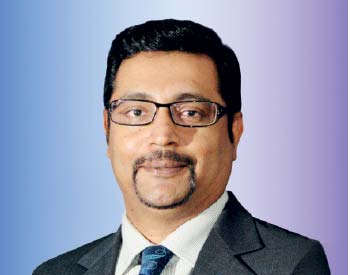
KPMG Sri Lanka Principal and Head of Tax and Regulatory Suresh Perera
|
Splitting payments does not get around the rule either. “Taxpayers cannot bypass the rule by breaking a single bill into smaller cash vouchers,” Perera said. Payments to the same recipient that total Rs. 500,000 or more within a single day, or across several instalments for a single transaction or event, are added together and disallowed in full.
Taxpayers can protect their deductions and asset cost claims by paying through one of six approved methods. These are account payee cheques crossed “Account Payee Only”, as open or bearer cheques do not qualify, account payee bank drafts, credit cards and debit cards.
Electronic bank transfers also qualify, whether through the Common Electronic Fund Transfer Switch (CEFTS), the Sri Lanka Interbank Payment System (SLIPS), Real Time Gross Settlement (RTGS), or online and mobile banking. The sixth method is a direct cash deposit into the recipient’s bank account. Payments made to or by the Government of Sri Lanka, State institutions, banks and licensed financial institutions are exempt.
The deposit option was added only this year. “The original 2023 law created an unexpected hurdle: businesses that deposited physical cash over the counter directly into a supplier’s bank account risked tax disallowances, even though the transaction left a clear bank trail,” Perera said.
Parliament fixed this in June 2026 through the Inland Revenue (Amendment) Act, No. 11 of 2026, which explicitly recognises direct deposits into a recipient’s account as a valid payment method. The change applies retrospectively from 8 May, 2023, as explained in IRD Notice SEC/PN/IT 2026/02.
Budget 2027, presented to Parliament on 12 November, builds on that reform. Under a proposal set to take effect on 1 April, 2027, the Commissioner General of Inland Revenue (CGIR) will accept a formal certificate from an “approved accountant” or “authorised person”. The certificate will confirm that high-value payments went through approved banking channels, giving third-party verification of compliance with Section 10(2A).
“Until now, proving compliance with the five-lakh rule relied heavily on post-filing tax audits by IRD officers. This often left businesses facing prolonged uncertainty over whether legitimate expenses would be questioned years later,” Perera said.
“By shifting frontline verification to independent accounting professionals, the Budget 2027 proposal aims to speed up tax assessments, reduce audit bottlenecks and curb disguised cash transactions,” he added.
Under the Inland Revenue Act, an approved accountant for all companies must be a member of the Institute of Chartered Accountants of Sri Lanka (CA Sri Lanka). The same applies to individuals and partnerships with an annual turnover exceeding Rs. 100 million. For individuals and partnerships with a turnover of Rs. 100 million or less, a CA Sri Lanka member or a Fellow Member of AAT Sri Lanka qualifies. The CGIR will also be empowered to designate additional authorised persons and set the official certificate format ahead of the 2027/28 year of assessment.
Perera said Sri Lankan tax law placed no general limit on settling business expenses in cash before 2023. Section 10(2A) was inserted into the Inland Revenue Act, No. 24 of 2017 on 8 May, 2023, as part of wider fiscal reforms to bring the informal cash economy into the tax net.