Tuesday Oct 06, 2026
Tuesday Oct 06, 2026
Friday, 21 August 2026 00:00 - - {{hitsCtrl.values.hits}}
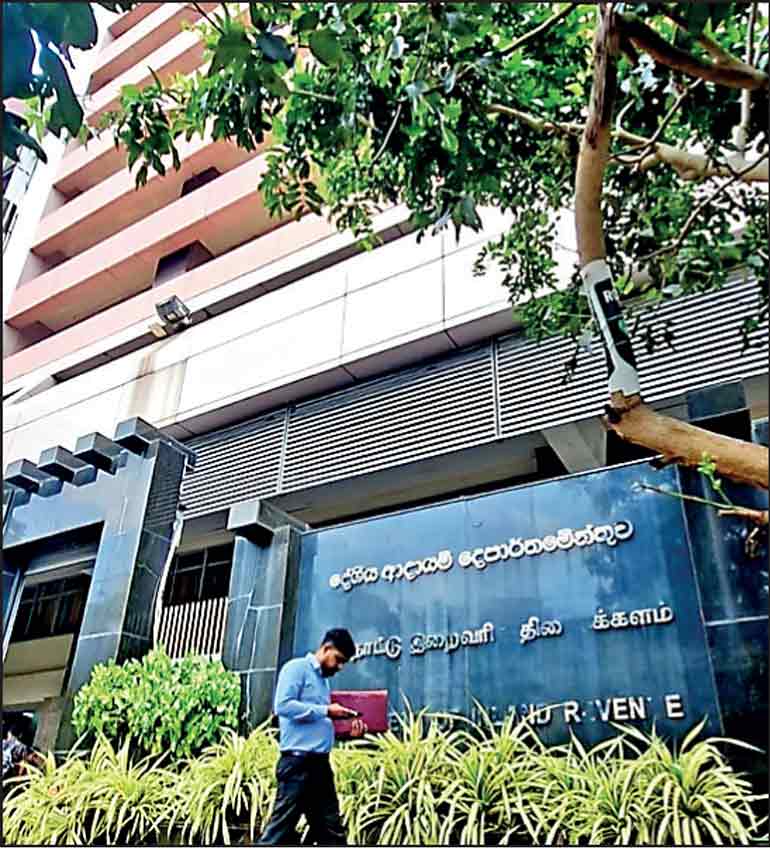
The Committee on Public Finance (CoPF) has exposed a series of unresolved technical and implementation roadblocks in the Inland Revenue Department’s (IRD) planned digital point-of-sale (POS) and real-time Value Added Tax (VAT) invoicing system, with officials acknowledging that full onboarding is expected to take two years despite the Government’s push to accelerate tax digitalisation.
The scrutiny revealed that key elements required for an islandwide rollout, including final software and hardware requirements, compatible devices, integration with existing business systems, engagement with POS service providers, security safeguards and arrangements for smaller businesses, remain under development or discussion.
The IRD told the CoPF, Chaired by Rauff Hakeem as stand-in, that it could issue the required Gazette notification only after receiving the POS specifications covering software and hardware requirements from the Digital Economy Ministry. Once the Gazette is issued, VAT-registered taxpayers would have three months to comply, including obtaining the required POS facility and issuing invoices through it.
However, during detailed questioning, CoPF members challenged whether the underlying system was sufficiently advanced for that statutory timetable to translate into practical implementation.
A representative involved in the digital work told the Committee that requirements were still needed from the Finance Ministry and revenue authorities before software requirements could be settled and devices matching the required technology and price parameters identified.
MP Ravi Karunanayake argued that a process still at the basic stakeholder and requirements stage could take two years to implement.
The IRD subsequently outlined its current approach, under which it is working with the Digital Economy Ministry and GovTech and beginning implementation at a minimum level before moving towards a full e-invoicing system. An IRD official said the Department expected to onboard all taxpayers over a two-year period.
The exchange highlighted a distinction between the pilots already under way and the considerably broader system envisaged by CoPF: real-time electronic capture of VAT transactions across the tax base, including wholesale and retail businesses.
According to figures presented to the Committee, Sri Lanka had 36,656 registered VAT taxpayers as at 30 June 2026, excluding 371 taxpayers registered for VAT on financial services. The IRD also put the number of registered corporate taxpayers at 139,000.
The CoPF questioned why digitalisation was proceeding through a relatively small number of entities rather than using the existing VAT-registered population as the starting base.
The IRD said 15 apparel-sector companies and five tea exporters had been onboarded, while 380 tea-producing entities were connected through tea brokers. Work was in progress to onboard five wholesale and retail companies, 27 other export-oriented companies and 170 other VAT-registered companies.
Committee members drew particular attention to the wholesale and retail sector, arguing that manufacturers and exporters were already comparatively visible to the tax administration, while a larger revenue gap could lie further down the transaction chain.
The CoPF also questioned whether simply requiring a POS machine would achieve the intended objective unless every device could be securely identified, tied to a location and connected to the IRD for real-time transmission.
Karunanayake said the objective should be an online VAT system rather than a POS arrangement that still allowed taxpayers discretion over which transactions were entered. He cited information before the Committee that Colombo had about 2,400 restaurants but only 125 paying VAT, arguing that the tax administration needed to broaden the base rather than concentrate enforcement on taxpayers already within the system.
The IRD said its ultimate objective was real-time invoice-data collection and that minimum standards would have to apply across businesses using different systems, ranging from enterprise resource planning systems to taxpayers still issuing invoices manually.
Officials said the Department had already piloted application programming interface (API) integration to enable businesses to transmit invoice records directly to the IRD system in real time. The initial work involved exporters, including apparel companies and tea-sector businesses, before expansion towards retail.
But the CoPF repeatedly pressed officials on how the system would deal with the less sophisticated segment of the economy, including businesses without established ERP systems, reliable connectivity or the technical capacity of larger companies.
The Committee also raised the need for offline transaction recording during electricity or connectivity failures, with officials indicating that offline invoice-recording capability would form part of the minimum device specifications.
Another unresolved issue was the ecosystem of private POS and software providers that would ultimately have to connect businesses to the IRD.
CoPF members urged the authorities to begin consultations with service providers early, warning that they could otherwise become an implementation bottleneck. They noted that businesses already use numerous POS, accounting and inventory systems and that providers would need sufficient time to adapt their products to IRD requirements.
Officials said GovTech would handle stakeholder consultation and that authorities had also consulted taxpayers and industry representatives.
The Digital Economy Ministry side also pointed to security and load-testing requirements for an island-wide rollout. Officials said the legitimacy of devices, attempts to circumvent registration and cyber-security risks would have to be addressed, including through the Sri Lanka Computer Emergency Readiness Team (SLCERT). The existing IRD system would also require updating.
The CoPF additionally highlighted the cost burden on smaller businesses that may have to purchase equipment or upgrade their systems. The IRD said concessions were still being discussed, including possible tax treatment for the acquisition of equipment, but no final incentive structure was presented to the Committee.
The Committee urged the authorities to consult small retailers and their associations rather than limiting engagement to larger taxpayers, noting that compliance costs could have a disproportionate impact on smaller enterprises.
The CoPF also called for the eventual system to be “faceless,” arguing that reducing discretionary human intervention was essential both for revenue collection and to limit leakage.
The Committee also stressed the need for a public awareness program before mandatory implementation, particularly because businesses would have to invest in equipment and alter invoicing practices.

