Friday Oct 16, 2026
Friday Oct 16, 2026
Monday, 27 April 2026 00:00 - - {{hitsCtrl.values.hits}}
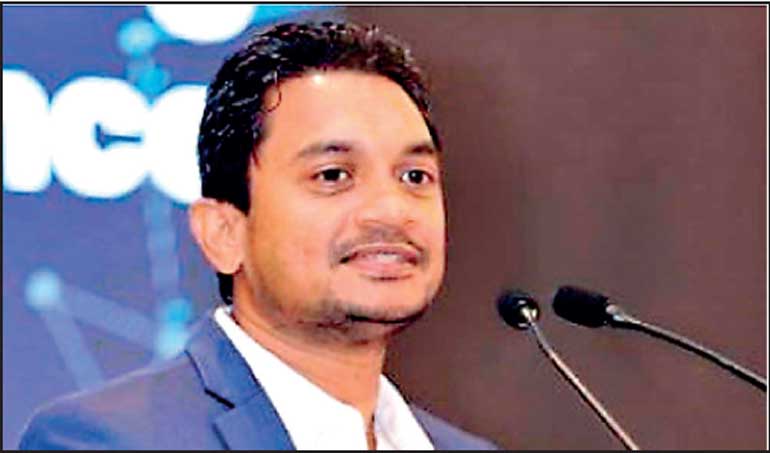
Industry and Entrepreneurship Development Deputy Minister Chathuranga Abeysinghe
Industry and Entrepreneurship Development Deputy Minister Chathuranga Abeysinghe has pointed to “negligence and vulnerability in Treasury payments” following the $ 2.5 million cyber breach linked to a Government debt transaction, framing the incident as part of broader systemic weaknesses in public sector processes.
In a Facebook post, Abeysinghe said the breach reflected longstanding deficiencies in administrative systems rather than an isolated failure, noting that inefficiencies in Government services continue to expose operations to risk and fraud.
“We all know Government services are inefficient and vulnerable to risk and fraud; it may take many years to fix such through the use of digital transformation. We have started, but it will take some time,” he said.
Referring directly to the Treasury incident, he said: “Now the negligence and vulnerability in the Treasury payment.”
Abeysinghe placed the breach alongside a series of recent operational issues, including delays in curriculum book printing, Customs clearance bottlenecks under fast-track processes, and complications in coal procurement, arguing that all stem from process and capacity gaps within the State sector.
“All four counts to deficiency in the process or people in Government services and these need to improved, many more will get exposed,” he said.
He added that while the Government remained accountable, addressing such structural weaknesses would require sustained reforms and institutional changes.
“Whilst acknowledging we are accountable it needs lot of efforts to streamline the system,” he said.
The Deputy Minister also defended the Government’s broader economic management, stating that despite external shocks in 2025, including “Trump tariffs and Ditwa,” Sri Lanka had recorded “a significant economic performance in 2025.”
The $ 2.5 million breach has intensified scrutiny over the integrity of Treasury payment systems at a time when Sri Lanka is navigating a critical phase of fiscal consolidation and debt restructuring, with investor confidence closely tied to the credibility of public financial management.
The Daily FT last Friday reported that the Treasury sought to reassure creditors that external debt servicing would continue despite the breach, which was linked to a bilateral repayment and exposed vulnerabilities during a transitional phase in public debt management.
Treasury Secretary Dr. Harshana Suriyapperuma said authorities remained engaged with creditors and had taken steps to avoid disclosures that could compromise ongoing investigations, while maintaining that the Government’s ability to service debt was not at risk.
The incident, involving funds due to Export Finance Australia, was traced to manipulated communication channels, with investigations ongoing into whether internal control lapses or procedural weaknesses contributed to the diversion.
The episode has drawn attention to verification processes within the External Resources Department and the risks associated with the transfer of public debt management functions from the Central Bank of Sri Lanka to the Treasury, a period described by officials as “vulnerable” due to overlapping responsibilities and evolving controls.


