Thursday Oct 01, 2026
Thursday Oct 01, 2026
Friday, 19 June 2026 00:00 - - {{hitsCtrl.values.hits}}
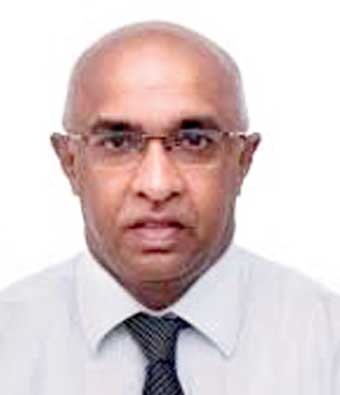 |
| Chairman Dr. Pradeep Perera |
The National System Operator (NSO) expects to end the forced curtailment of renewable energy generation next year as battery energy storage system (BESS) projects are integrated into Sri Lanka’s electricity network, NSO Chairman Dr. Pradeep Perera told the Committee on Public Finance (CoPF) this week.
The NSO is the newly created entity that manages and operates the electricity grid after the Ceylon Electricity Board (CEB) split into four.
The commitment comes amid growing criticism from renewable energy developers over the repeated shutdown of solar and wind power generation during weekends and public holidays despite favourable generation conditions.
Appearing before the CoPF alongside officials from the Energy Ministry, Public Utilities Commission of Sri Lanka (PUCSL), Treasury, and power sector institutions, Dr. Perera acknowledged concerns over the continued curtailment of renewable energy, particularly during periods of low electricity demand.
The issue has become one of the most contentious in Sri Lanka’s power sector. The utility has repeatedly instructed solar and wind power producers to reduce output or suspend generation, citing grid stability concerns arising from low demand and high renewable energy generation.
Developers have argued that the restrictions have resulted in significant financial losses and the wastage of low-cost clean energy.
Earlier this year, the CEB faced allegations that renewable energy curtailment had caused losses of around Rs. 2 billion to the sector. In April, the CEB requested large-scale rooftop solar system owners to disconnect their systems for 10 days, citing grid stability concerns during a period of low demand and elevated solar generation.
The matter drew sharp scrutiny from CoPF Chairman Dr. Harsha de Silva, who recounted observing wind turbines standing idle despite strong winds and kite surfers operating nearby, only to learn that generation had been curtailed under official instructions.
“We know it is a problem and we are working very hard to stop that,” Dr. Perera told the Committee. “Once we have the batteries in the system, we will be able to stop the curtailment. Hopefully, next year, there won’t be any curtailment. I mean, forced curtailment.”
Committee members questioned why renewable energy producers continued to face restrictions despite the country’s stated objective of increasing the share of renewable energy in the electricity mix.
Officials told the Committee that renewable sources, including large hydro generation, accounted for approximately 62% of total electricity generation in 2025.
Dr. Perera said the sector was proceeding with large-scale battery storage investments intended to improve grid flexibility and absorb excess renewable generation.
A tender for a 160 MW BESS has already been awarded and equipment delivered, while a further 250 MW battery storage tender is expected to be launched.
The discussion also highlighted concerns over Sri Lanka’s relatively high electricity costs. Dr. de Silva noted that local manufacturers faced a competitive disadvantage against regional peers, with electricity remaining one of the largest cost components for the industry.
PUCSL officials said the regulator continues to encourage greater renewable energy deployment and additional capacity additions over the medium term as part of efforts to lower system costs.
During the proceedings, officials also noted that under the new electricity tariff-setting framework introduced through sector reforms, the authority to determine renewable energy tariffs now rests with the PUCSL rather than the CEB.
The planned deployment of battery storage is expected to play a key role in reducing renewable energy curtailment, improving grid flexibility, and supporting Sri Lanka’s transition towards a larger share of renewable generation.

