Wednesday Nov 11, 2026
Wednesday Nov 11, 2026
Wednesday, 11 November 2026 00:00 - - {{hitsCtrl.values.hits}}
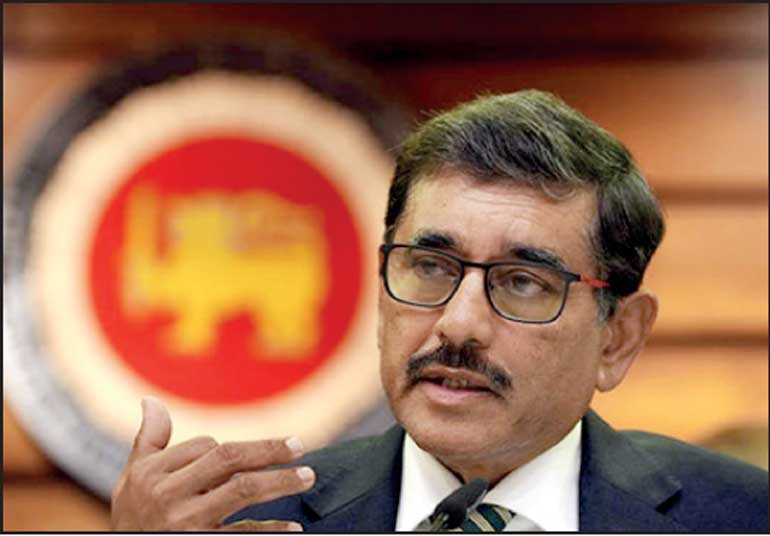
CBSL Governor
Dr. Nandalal Weerasinghe
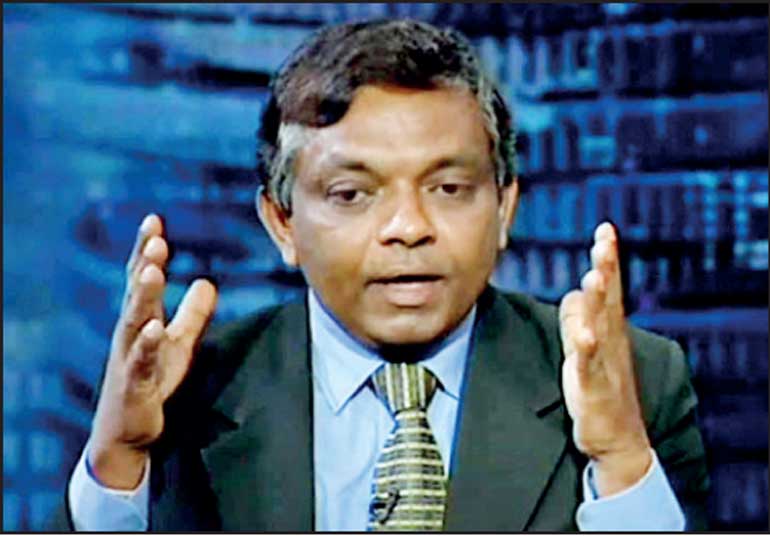
Monetary Policy Board Member Prof. Priyanga Dunusinghe
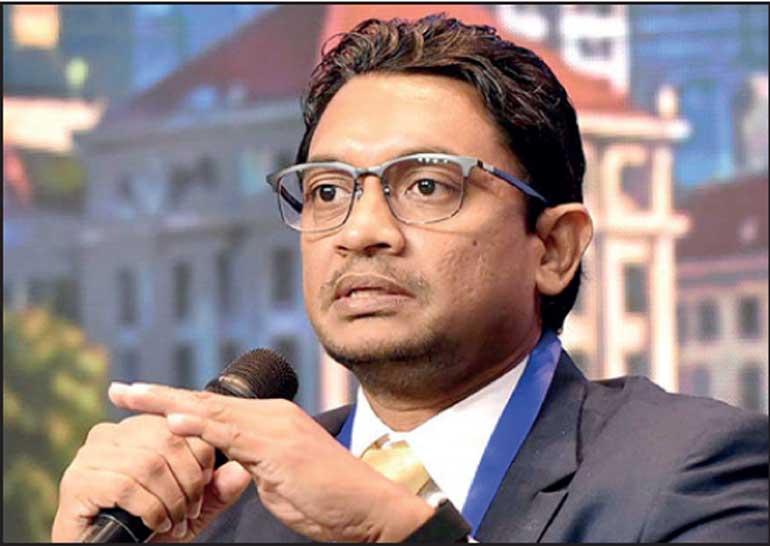
Industry and Entrepreneurship Development Deputy Minister Chathuranga Abeysinghe
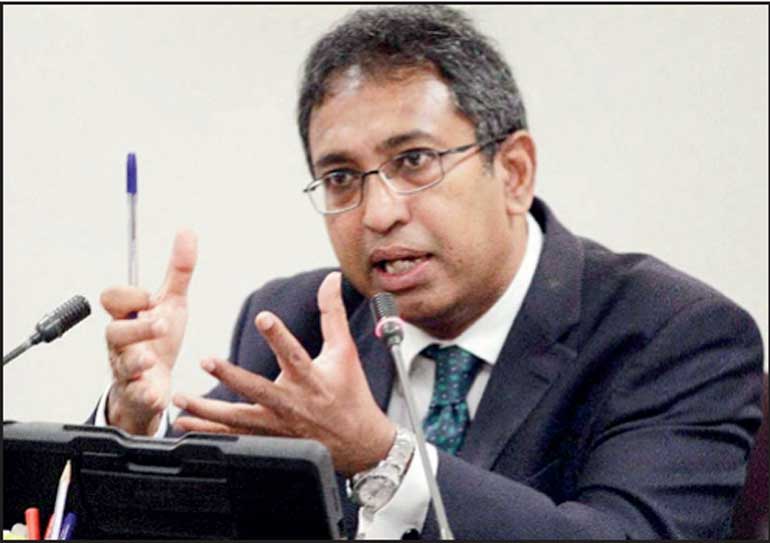
CoPF Chairman SJB MP
Dr. Harsha de Silva
Sri Lanka’s ability to move beyond its current growth potential will depend less on monetary policy and more on Parliament’s willingness to drive politically difficult structural reforms, Central Bank Governor Dr. Nandalal Weerasinghe told lawmakers, drawing support from both Government and Opposition representatives at a Parliamentary Committee on Public Finance (CoPF) meeting.
Pushing back against the expectation that the Central Bank should deliver higher economic growth, Dr. Weerasinghe argued that the monetary authority could help the economy operate closer to its existing productive capacity, but could not independently expand that capacity.
He placed the responsibility for raising the country’s potential growth rate on elected representatives, saying reforms spanning trade, investment, customs, land markets and labour would be necessary to move the economy towards sustained growth of 6%-7%.
The exchange, which brought together Central Bank officials, a Government Deputy Minister and Opposition lawmakers, also exposed a broader recognition that Sri Lanka’s growth constraints cannot be addressed through monetary expansion or short-term fiscal stimulus alone.
Importantly, CoPF Chairman and Opposition Samagi Jana Balawegaya (SJB) MP Dr. Harsha de Silva welcoming the Government’s reform direction and acknowledging that the need for structural change should transcend party politics.
Dr. Weerasinghe said the distinction between actual growth and potential growth was central to understanding the Central Bank’s mandate. “Central Bank cannot enhance the potential of the growth. Central Bank can only do to make the country grow at the potential,” he said.
Dr. Weerasinghe said the International Monetary Fund (IMF) estimated Sri Lanka’s potential growth at around 3%, while the Central Bank considered it higher, at approximately 4%-5%.
He said the monetary authority’s role was to use monetary policy to keep economic activity broadly aligned with that potential, easing policy when growth fell below it and tightening when the economy overheated.
However, raising potential growth itself required a different set of interventions, which fell outside the Central Bank’s mandate. “Potential to go up to 6, 7%, we have to have other reforms that can expand the capacity for the country to grow,” he said.
Listing the areas requiring attention, he identified trade and investment policy, customs administration, ease of doing business, land markets and labour market reforms as essential to expanding productive capacity.
“Those cannot be done by the Central Bank. That’s why elected authority here is to do all these reforms. Then only country’s potential can grow up to 5 to 6, 7 percent,” Dr. Weerasinghe said.
He cautioned, however, that the 7% potential growth scenario was an illustration of what structural reforms could eventually make possible, rather than an established assessment of Sri Lanka’s current capacity.
“I don’t think right now any scientific study in Sri Lanka saying our potential growth is 7%,” he said, reiterating that the Central Bank’s own estimate was around 4.5%.
Dr. Weerasinghe also pointed to a structural imbalance in the economy, warning that the contraction of the tradable sector alongside the expansion of the non-tradable sector had persisted for approximately two decades.
“Tradable sector has been shrinking, non-tradable sector has been expanding for the last 20 years, steady basis. That has to be turned around. That is the future of this country,” he said.
Without reversing that trend, he warned, Sri Lanka would continue to face the need to bridge the resulting external financing gap through borrowing.
Central Bank Monetary Policy Board Member and University of Colombo Professor of Economics Prof. Priyanga Dunusinghe endorsed the Governor’s assessment, arguing that sustainable growth required improvements in productivity, human capital, technological capability and competitiveness.
He said Sri Lanka, as an upper-middle-income economy, needed to place greater emphasis on innovation, workforce capabilities and productivity-enhancing investment.
Prof. Dunusinghe identified trade liberalisation, a more conducive investment environment and labour market reforms among the changes needed to unlock the country’s longer-term growth potential.
“Only then we can basically tap the growth potential by enhancing the productivity, then the labour force participation, and attracting foreign direct investments. So if we fail to do that, certainly we will not be able to enhance our growth potential, and we will continue to be around four to five percent,” he said.
Drawing on established research into the determinants of long-term economic growth, he said productivity, human capital formation and trade openness were among the factors determining sustained improvements in per capita income.
He distinguished between temporarily accelerating economic activity through injections of capital and raising the economy’s underlying capacity to grow.
“In a very short time, by injecting some capital, either the Government putting some capital, or maybe creating some, I mean the money creation, we will be able to increase the growth rate, say five to six percent in the short run, but you cannot sustain,” he said.
Prof. Dunusinghe warned against treating monetary or fiscal expansion as a substitute for structural improvements, pointing to the risks of creating unsustainable economic conditions.
“Artificially we can create some, you know, inject some money into the economy, but you cannot sustain that, only end up with the disaster,” he said.
He said the policy priority should instead be to strengthen productivity, technology and human capital, enabling growth to be sustained rather than temporarily accelerated through stimulus.
Responding to the discussion, Industry and Entrepreneurship Development Deputy Minister Chathuranga Abeysinghe outlined several initiatives being pursued by the Government, arguing that the combination of reduced Government borrowing, greater private-sector access to credit and structural reforms would determine whether available financing translated into productive investment.
He said the key question was how much of the credit available to the private sector would be channelled into long-term investment and how much foreign capital Sri Lanka could attract.
The Deputy Minister cited the implementation of the trade policy, the development of 11 economic zones and Government investment in infrastructure as measures intended to facilitate industrial expansion beyond Colombo.
He also pointed to support for the small and medium enterprise sector and changes in education as components of the wider reform programme.
On development financing, he said the Ministry of Finance was making approximately Rs. 100 billion in low-cost capital available to the market, describing the initiative as having worked well during the year.
“I think the Minister of Finance is now our development finance bank because they are putting about 100 billion low-cost capital into the market and which has worked very well this year,” he said.
Abeysinghe argued that these interventions, alongside reforms in sectors such as agriculture and fisheries, would contribute to the growth the private sector was expected to deliver.
“I think Central Bank has a role to keep the economy afloat and the fiscal and the reforms in each of the ministries like agriculture, fisheries will bring this growth for us,” he said.
He also referred to the role of the IMF and World Bank programmes in advancing the reform agenda, arguing that the changes under way were not isolated initiatives but part of a broader effort to address longstanding structural weaknesses.
CoPF Chairman and SJB MP Dr. Harsha de Silva welcomed the convergence of views on the necessity of structural reforms, saying the country needed to move beyond the political divisions that had repeatedly obstructed economic change.
He said the need for reforms should not be viewed through the prism of which political party proposed or implemented them.
“So, I think reforms, whether we belong to party A, party B or party C, we have to agree that we need to grow the non-tradable sector in this country if you have to get out of this hole, right? And reforms will have to be done, right? So, I’m glad that, you know, everybody is on the same page in terms of reform,” Dr. de Silva said.
He welcomed the willingness across the political spectrum to acknowledge the need for change, noting that previous attempts at reform, including trade reforms, had faced resistance. “I’m honestly glad because for a long time in this country, reforms were rejected. I’m really glad that everybody is on the same page,” he said.

