Monday Nov 16, 2026
Monday Nov 16, 2026
Monday, 16 November 2026 05:18 - - {{hitsCtrl.values.hits}}
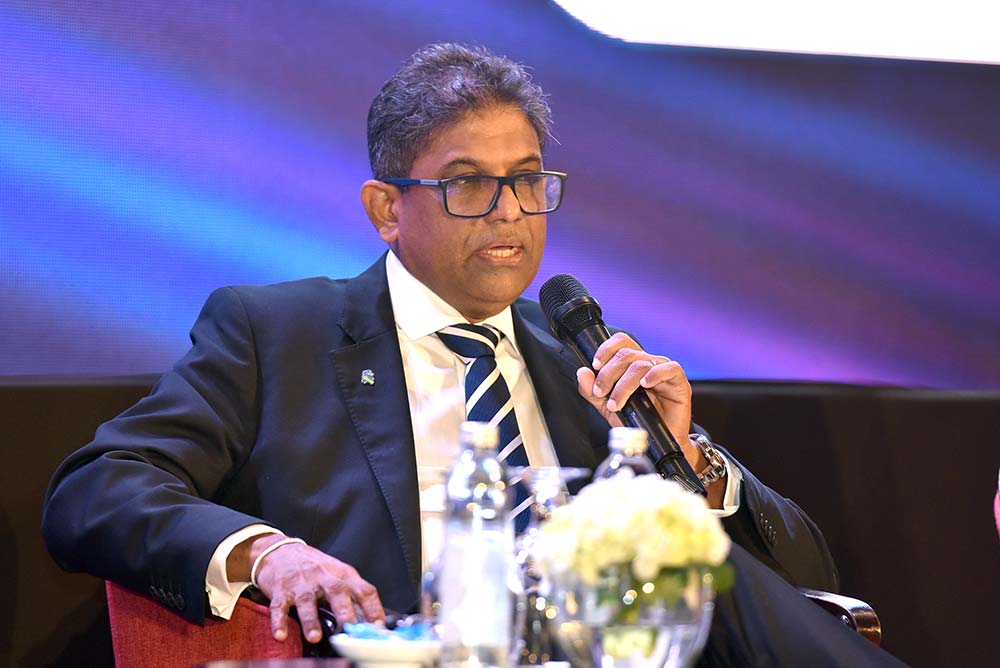
Standard Chartered Bank Sri Lanka CEO Bingumal Thewarathanthri
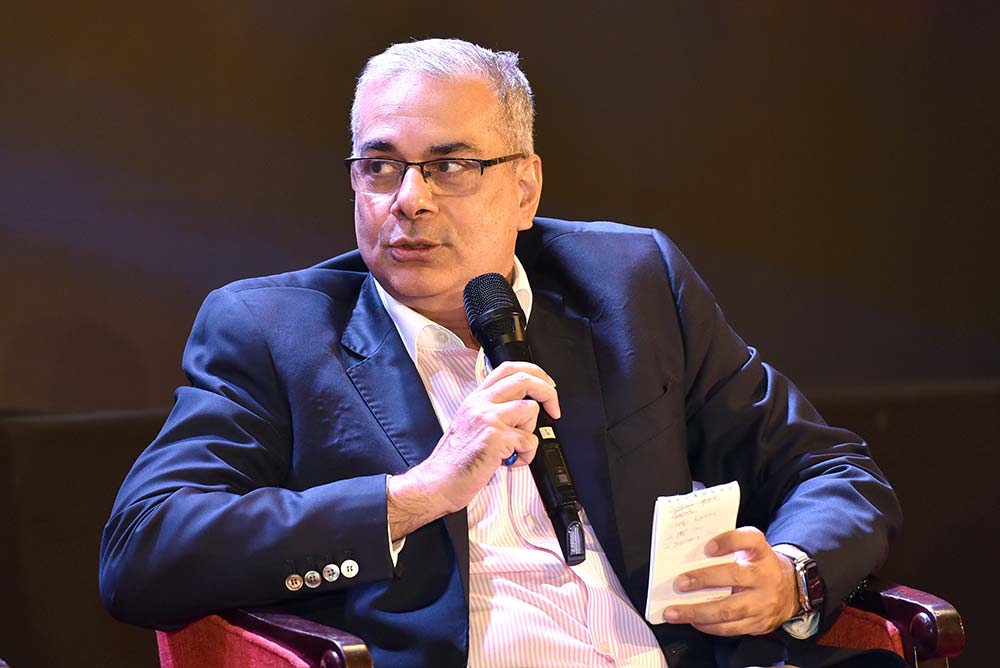
Advocata Institute Chairman Murtaza Jafferjee
By Charumini de Silva
The chorus for continuity of an International Monetary Fund (IMF) program is growing judging by sentiments expressed by two business and thought leaders at the Daily FT-Colombo University MBA Alumni Association post-Budget forum on Friday.
Advocata Institute Chairman Murtaza Jafferjee, a panellist at the forum, called for Sri Lanka to pursue an 18th IMF program, after the current $ 2.9 billion four-year Extended Fund Facility (EFF) concludes in March 2027.
He said that an arrangement would provide a crucial financial safety net against an increasingly volatile global environment, even as the economy recovers.
In responding to a question at the post-Budget Forum, Jafferjee recalled that he had once toasted at a forum with the Treasury Secretary in attendance, that the 17th IMF program should be Sri Lanka’s last.
“I completely reverse my toast, not because we are in trouble, but because the world around us has turned nasty,” Jafferjee said, at the Forum, where Treasury Secretary Dr. Harshana Suriyapperuma was also in the panel following his keynote.
Jafferjee pointed out that the rising global borrowing costs, with US 10-year Treasury yields reaching 5%, would shape the rates at which Sri Lanka can borrow.
“Borrowing from the IMF is much cheaper,” he said, adding that an arrangement with the Fund would act as a confidence signal to international credit markets.
Jafferjee also said it will provide priority access to technical assistance, which remains fundamental to Sri Lanka’s institutional and economic development.
Another panellist, Standard Chartered Bank Sri Lanka CEO Bingumal Thewarathanthri, was also supportive of a new IMF program given external uncertainties in the future, but was vary over some espousing the need for IMF for monitoring the country.
Thewarathanthri said a future program with the IMF depends on Sri Lanka’s comfort in managing a ‘black swan’ event.
“If there is a prolonged crisis in West Asia, we might have to be in a program. In normal conditions, the country could discuss something like a short-term Stand-By-Agreement (SBA), but it must shed the idea that we need the IMF to monitor us,” which he called a ‘bad psychology to have.’
He credited citizens and policymakers delivering ‘beyond expected results’, but cautioned that any new program must reflect domestic economic and social realities, as a large share of the population remains vulnerable despite improvements in macroeconomic indicators.
Thewarathanthri also said past IMF-related pushback, such as on property tax, shows that conditions have to fit the country.
Treasury Secretary Dr. Suriyapperuma said, the Government signalled its approach in the Budget speech and has appointed a high-level committee to examine the options and the engagement modalities available to make recommendations.
“The approach will rest on information and data, including the level of reserves built so far and projected reserves accumulation and all of this will be factored in when the committee’s report is finalised,” he added.
When asked about criticism that strong macro numbers are not being felt by households, with poverty and purchasing power complaints rising, Dr. Suriyapperuma said the Government had to intervene twice this year because inflation is closely tied to the energy prices and Sri Lanka is dependent on imports.
–Pix by Upul Abayasekara and Ruwan Walpola


