Tuesday Sep 15, 2026
Tuesday Sep 15, 2026
Saturday, 7 March 2026 00:43 - - {{hitsCtrl.values.hits}}
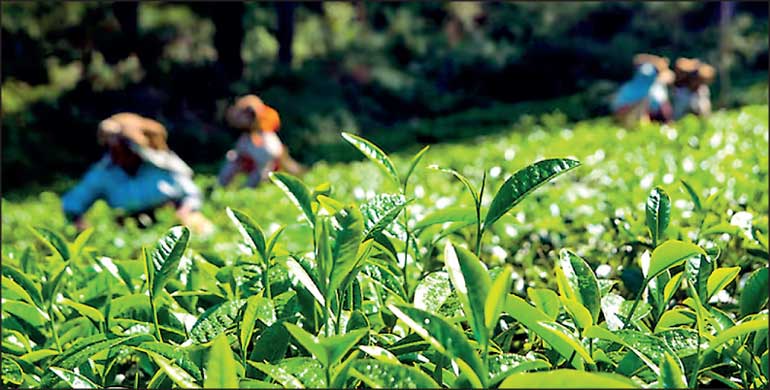
Sri Lanka’s tea industry is facing severe disruptions as the ongoing military conflict in the Middle East has effectively halted shipments to one of its largest export markets, with exporters estimating revenue losses of between $ 10 million and $ 15 million per week.
Tea Exporters Association said exporters currently hold confirmed orders from buyers across the region, but are unable to fulfil them due to logistical challenges, shipping suspensions and escalating war risk in key maritime routes.
The Middle East accounts for around 52% of Sri Lanka’s tea exports, with much of the supply originating from the country’s low-grown tea producing regions that are largely cultivated by smallholder farmers.
According to 2025 export statistics, Sri Lanka shipped about 125 million kilograms of Ceylon tea to the Middle East, generating an estimated $ 750 million in revenue. Key markets include Iraq, Iran, Libya, Türkiye, Saudi Arabia, Syria and the United Arab Emirates.
Tea exporters said the main shipping routes to these markets normally pass through the Strait of Hormuz and the Red Sea via the Suez Canal. While there has been no formal blockade of the canal, major global shipping lines have suspended operations in these routes due to war risk following the outbreak of the conflict.
As a result, tea exports to the region have almost come to a standstill. Shipping companies halted services to the region shortly after hostilities began, while several seaports in the Middle East were temporarily closed during the early stages of the crisis.
Although a few shipping lines resumed limited operations from March 4, freight charges have surged sharply, increasing by around $ 1,800 for a 20-foot container and about $ 3,000 for a 40-foot container. At the same time, existing insurance coverage obtained by exporters has become invalid due to heightened war risk.
Exporters also point to the lack of regular and scheduled vessels departing from Colombo to Middle Eastern destinations, further complicating supply arrangements.
The disruption has begun to affect the domestic tea trade as well. Exporters are facing significant cash flow constraints because payments for shipments already dispatched to the region have been delayed amid the unstable situation.
This has limited exporters’ ability to purchase tea at auctions. At this week’s Colombo tea auction, overall prices declined by around Rs. 50 per kilogram, while low-grown tea prices fell by approximately Rs. 75 per kilogram.
Industry stakeholders warn that if the situation continues for several more weeks, buyers may reduce purchases due to the difficulty of moving shipments overseas, which could directly impact the incomes of thousands of smallholder tea farmers who depend on the low-grown sector.
Despite the current challenges, Sri Lanka’s tea export earnings showed growth earlier this year. In January 2026, the country earned $ 121.8 million from tea exports, up from $ 112.7 million registered in January 2025, reflecting a 5% increase. February figures are yet to be released, but are expected to be on par with or slightly higher than last year’s performance.
However, the disruption to shipments in March is expected to affect both export volumes and earnings, although the exact impact remains uncertain.
The conflict could also complicate Sri Lanka’s longstanding tea trade with Iran. Data indicates that Sri Lanka has settled about 95% of its outstanding debt to Iran through tea supplies under the “Tea for Oil” barter arrangement. Even if the conflict subsides, exporters say it may be difficult to continue shipments to Iran unless a new mechanism is established, given existing United States sanctions that restrict direct trade outside the barter system. Iran imports roughly 11 million kilograms of Sri Lankan tea annually under this arrangement.
The crisis and its implications for the tea industry were discussed with the Plantation and Community Infrastructure Minister during a meeting held on 4 March.
Industry stakeholders have collectively requested Government support to ease the financial strain on exporters, including assistance to address cash flow pressures and consideration of absorbing part of the sharply increased freight and insurance costs.
They have also urged authorities to intervene in securing the outstanding payment of about $ 50 million due for tea shipments already supplied to Iran under the barter mechanism.


