Tuesday Nov 10, 2026
Tuesday Nov 10, 2026
Tuesday, 10 November 2026 00:54 - - {{hitsCtrl.values.hits}}
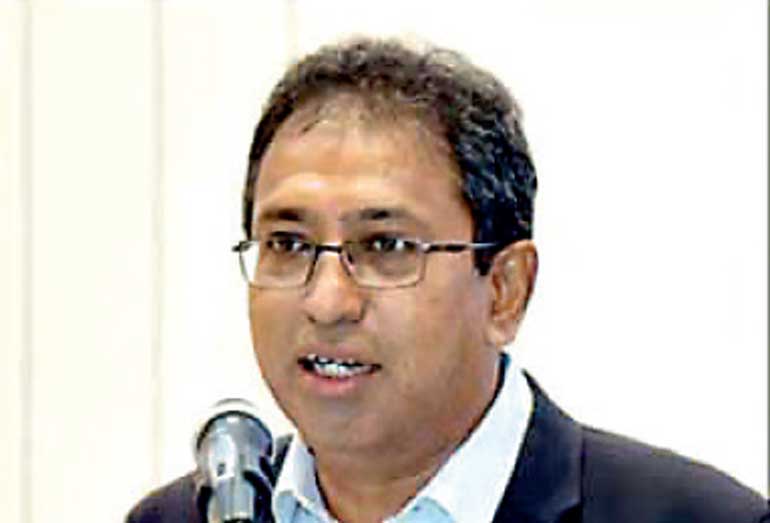
CoPF Chairman SJB MP
Dr. Harsha de Silva
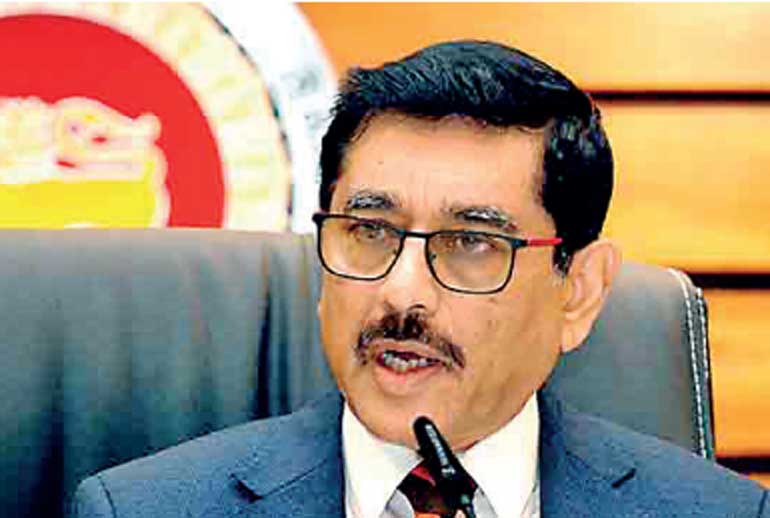
CBSL Governor Dr. Nandalal Weerasinghe
The Central Bank of Sri Lanka (CBSL) has barred the Ernst & Young (EY) partners who audited National Development Bank (NDB) from carrying out any further banking audits and forced the lender to reconstitute its Board audit committee, after a Rs. 13.6 billion fraud ran for three years before being uncovered once the 2025 accounts had been certified.
“We have already taken action against the auditors,” Director of Banking Supervision R. R. de Silva Jayatillake told the Committee on Public Finance (CoPF), chaired by SJB MP Dr. Harsha de Silva, on 5 November. “The partners involved cannot continue doing banking audits. We have also got the bank to reconstitute the Board audit committee.”
The reconstitution of the committee and other Board
committees was notified to the Colombo Stock Exchange, officials told the Committee, a disclosure Dr. de Silva said had passed largely unnoticed.
Jayatillake said the regulator had required the bank to submit a rectification timeline, was monitoring progress against it, and was conducting spot examinations.
The findings of the forensic audit were also being used to assess the fitness and propriety of individuals and to decide whether further orders or restrictions were needed.
The auditors flagged the fraud with an asterisk rather than a formal qualification or an emphasis of matter. Members were told those who carried out the fraud were largely compliant with reporting requirements and gave regulators, and possibly the auditors, the run around.
Dr. de Silva pressed the Director on whether the Central Bank was satisfied with the forensic audit carried out by Deloitte, a report the committee has not been given. “You shared some basic points,” he said. Jayatillake replied that the exercise was a forensic audit and that relevant third parties had been interviewed.
Sri Lanka Accounting and Auditing Standards Monitoring Board (SLAASMB) Chairperson E. H. Mohotty told the committee her board’s separate inquiry into auditor conduct was complete and had been referred to the Attorney General on 15 October, 2026, for a view on legal action.
“What SLAASMB looked at is purely on the auditing standards and how well the auditor performed the duties based on the auditing standards,” she said. Asked whether she could disclose the findings, she said: “I think it is not.”
“That means it is scary,” Dr. de Silva said. He added that the Deloitte exercise had looked at NDB’s transactions rather than at the audit firm.
Central Bank Governor Dr. Nandalal Weerasinghe said the Bank Supervision Department was working through the SLAASMB report to establish what action could follow. “Basically, they have identified certain individuals,” he said. “They have to look at whether the bank has taken actions against those individuals through the forensic audit.”
He said the regulator was willing to set out in detail the supervisory changes made across the sector since the fraud. “I think we can share in detail what Bank Supervision as a regulator has done to strengthen the process, not only at NDB but also other banks, based on the learning of this incident,” Dr. Weerasinghe said.
Banks have been directed to tighten reconciliation of suspense accounts, he said. “Broader actions, I think we can share with you. That’s not an issue.”
Dr. de Silva said the opacity around specific enforcement was difficult to defend in a regulated financial sector. “I don’t think this can be completely confidential, and it is good to have some sort of transparency,” he said. “I’m not saying give names, but what action you have taken, so that people would feel safe that their money is safe.”
The committee would accept material on confidential cover and proceed on the Attorney General’s advice, he said.
The Central Bank moved against NDB in early April, ordering restrictions on dividends, discretionary payments and branch expansion to protect the bank’s stability, issuing a regulatory statement to assure liquidity and publishing press notices on the institution’s condition. It then required the bank to commission the external forensic audit.


