Tuesday Sep 15, 2026
Tuesday Sep 15, 2026
Thursday, 15 January 2026 00:00 - - {{hitsCtrl.values.hits}}
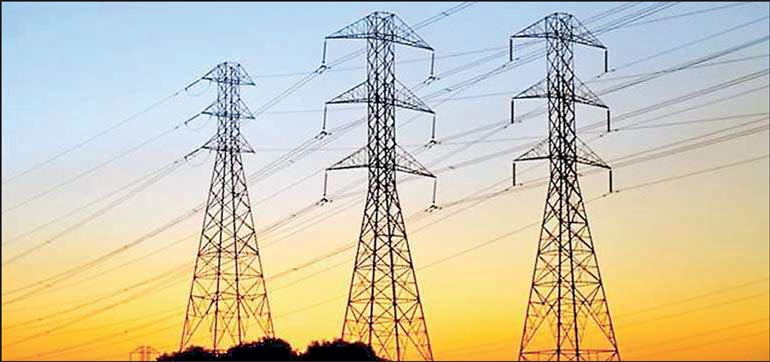
The Central Bank of Sri Lanka (CBSL) has said urgent reforms to the Ceylon Electricity Board (CEB) and the wider power sector are necessary to safeguard macroeconomic stability, reduce fiscal risks, and ensure long-term energy security, according to its December 2025 Annual Economic and Social Infrastructure Digest.
The CBSL said the continuation of cost-reflective electricity pricing beyond the International Monetary Fund (IMF) program is necessary to restore the CEB’s financial position and reduce its dependence on the banking sector.
“Continuation of cost reflective pricing policy beyond the IMF program is essential to ensure the financial viability of the CEB, pay off its legacy debt, and reduce the over-reliance on the banking sector,” the report said.
It said untargeted energy subsidies pose material fiscal risks, noting that such risks had previously materialised during the economic crisis.
“Energy subsidies provided by the Government outside the national Budget create substantial fiscal risks, which could eventually materialise as evidenced during the recent economic crisis,” the CBSL said, adding that cost-reflective pricing is required “to prevent such fiscal risks that could jeopardise overall macroeconomic stability.”
The report said a forward-looking tariff-setting framework is needed to reduce uncertainty for businesses and households.
“Transitioning to a forward-looking, cost-reflective tariff mechanism, underpinned by more transparent methodologies, regular and timely adjustments, and improved forecasting, is important to reduce sharp volatilities in electricity tariffs that could create economic uncertainties for businesses and individuals,” it said.
The CBSL said support for vulnerable groups through direct income transfers would be more economically efficient than untargeted energy subsidies. It noted that the removal of subsidies has contributed to increased renewable energy adoption.
“Recent growth in renewable energy generation and renewable capacity additions could be partly attributed to the removal of energy subsidies through the implementation of cost reflective pricing mechanism,” the report said, noting that households and the private sector have increasingly shifted towards self-generation using renewable sources.
Despite these developments, the Central Bank said Sri Lanka’s electricity tariffs remain high compared to regional economies, affecting competitiveness.
“Sri Lanka’s electricity tariffs are generally high compared to regional economies, undermining the country’s competitiveness,” the report said, pointing to the continued reliance on costly thermal power generation despite the country’s renewable energy potential.
While above-average rainfall supported hydropower generation in 2024 and parts of 2025, the CBSL said reliance on favourable weather conditions carries risks.
“Such favourable conditions would be risky to rely on consistently as the country remains highly vulnerable to weather and climate-related risks,” it said, calling for faster integration of non-conventional renewable energy and diversification of generation sources.
The report said average electricity generation in 2024 comprised 32.3% hydropower, 13.9% fuel-based generation, 32.6% coal, and 21.2% non-conventional renewable energy. A similar seasonal pattern continued through 2025, with Cyclone Ditwah contributing to higher reservoir levels towards the end of the year.
The Central Bank said inefficiencies in the national grid continue to affect reliability despite gradual reductions in transmission and distribution losses.
“Inefficiencies in the national grid are reflected by the scheduled and unscheduled power outages,” the report said, noting the need for grid modernisation, battery storage systems, pump storage facilities, and improved grid flexibility.
On institutional reforms, the CBSL said restructuring the CEB is central to improving governance and operational performance.
“Restructuring the CEB along with targeted reforms through amendments to the Electricity Act is expected to enhance transparency and improve operational efficiency of the sector,” the report said.
Under the Electricity Act of 2024 and the Sri Lanka Electricity (Amendment) Act, No. 14 of 2025, the CEB is to be unbundled into four State-owned entities responsible for generation, transmission, distribution, and system operations. The Central Bank said the framework is intended to attract private investment, improve competition, and support financial sustainability, alongside the preparation of a National Electricity Policy and National Tariff Policy.
The report also traced the impact of tariff decisions on CEB finances. Electricity tariffs were reduced by an average of 21.9% in March 2024 and 22.5% in July 2024, followed by a further reduction of 20% in January 2025, despite rising dependence on higher-cost thermal generation.
“The consecutive tariff reductions combined with rising generation costs imposed a significant strain on the CEB’s financial performance in the first quarter of 2025,” the CBSL said.
Although the CEB recorded a profit of Rs. 148.6 billion in 2024, compared to Rs. 61.2 billion in 2023, losses were recorded in the first half of 2025. A 15% upward tariff revision in June 2025 improved monthly profitability thereafter, in line with the reform agenda agreed with the IMF.


