Saturday Nov 21, 2026
Saturday, 21 November 2026 00:17 - - {{hitsCtrl.values.hits}}

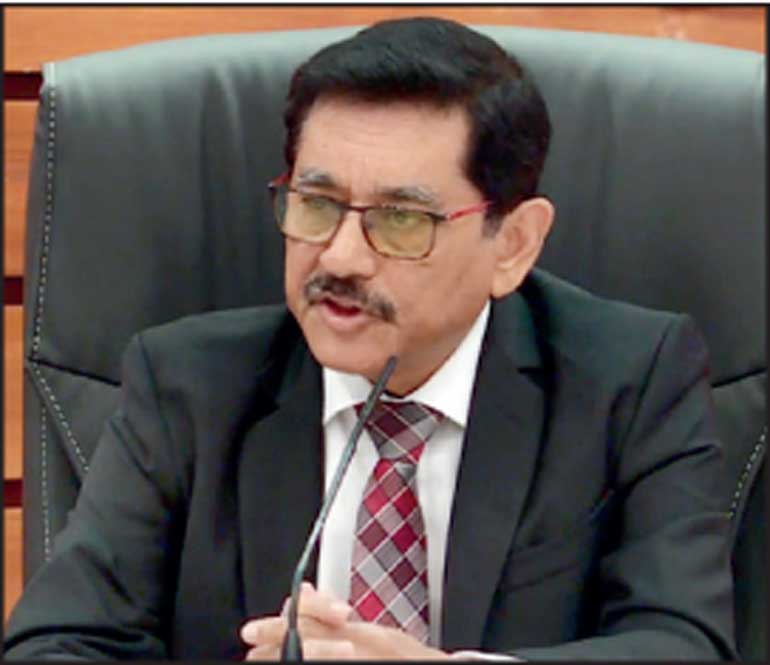
Governor
Dr. Nandalal Weerasinghe

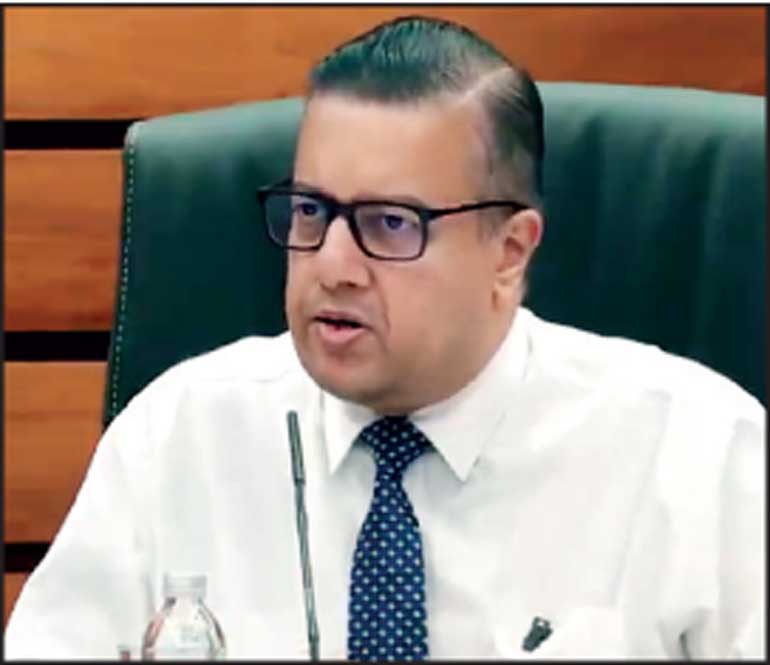
Senior Deputy Governor Dr. Chandranath Amarasekara

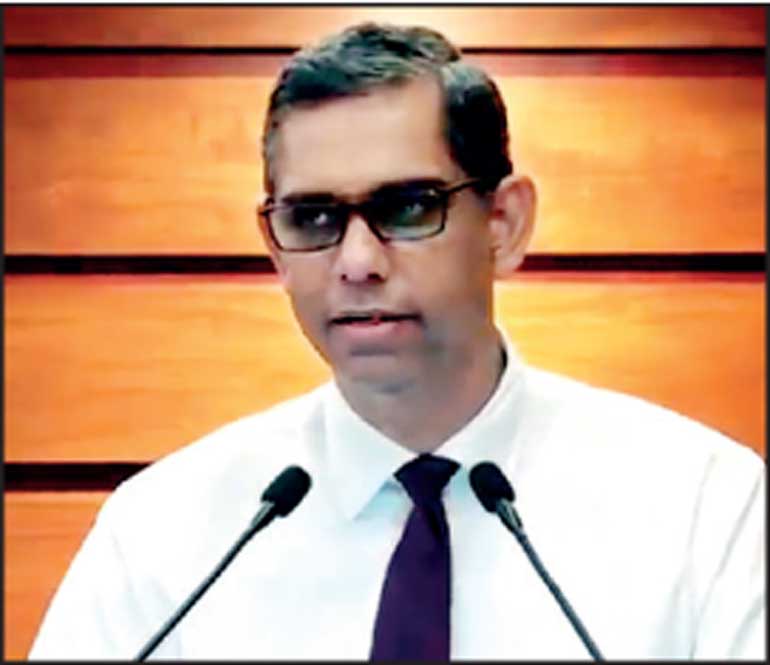
Economic Research Department Director
Dr. Lasitha Pathberiya
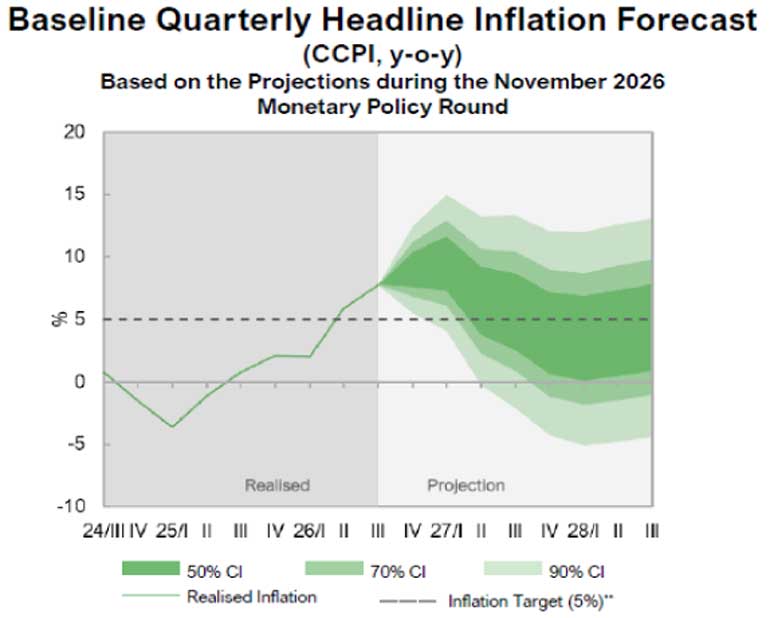
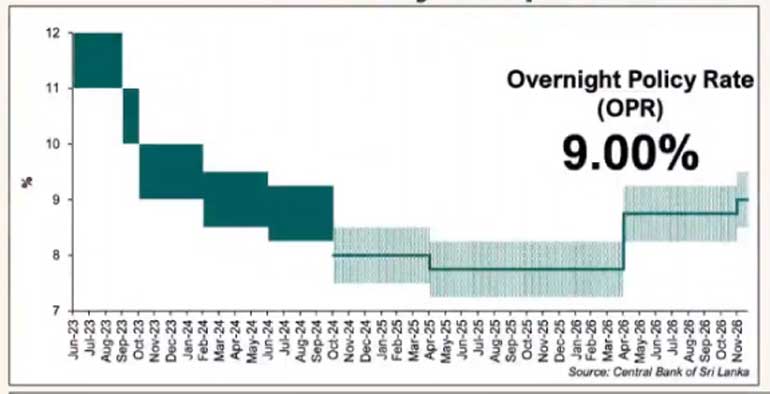
The Central Bank of Sri Lanka (CBSL) yesterday defended raising its key policy rate by 25 basis points to 9%, the highest since July 2024. It said the move would anchor inflation expectations, with headline inflation projected to reach 9% by end-November and stay elevated in the near term.
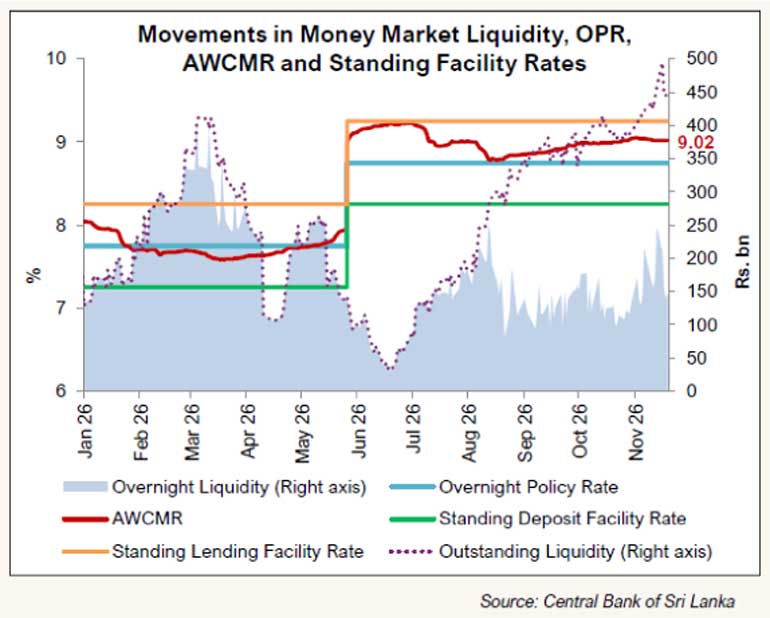
The Monetary Policy Board took the decision at its sixth and final review for 2026 on Thursday. It raised the Overnight Policy Rate (OPR), the CBSL’s main tool for signalling its monetary policy stance, from 8.75%. The Standing Deposit Facility Rate (SDFR) and the Standing Lending Facility Rate (SLFR) set the floor and ceiling for overnight interbank borrowing and are linked to the OPR with predetermined margins of ±50 basis points. They rose to 8.50% and 9.50%, respectively.
The Board also raised the Statutory Reserve Requirement (SRR) by one percentage point to 3%, from the reserve maintenance period starting 9 December. The SRR increase will permanently take about Rs. 150 billion out of the money market. The move is the second tightening this year, after the Board raised the OPR by 100 basis points in May.
“The ongoing conflict in the Middle East has lasted longer than expected,” the CBSL said. High global energy prices and rising food prices have kept pushing up domestic inflation, which reached 8.3% year-on-year in October. Core inflation also rose as higher energy and food prices spilled over. The CBSL said global energy prices have eased somewhat recently, but the second-round effects of earlier increases are expected to keep pressure on prices in the near term.
Economic Research Department Director Dr. Lasitha Pathberiya said headline inflation had climbed from 2.2% in March, while core inflation, which excludes volatile items, rose to 5.6% in October. He said the composition of inflation was now the bigger worry. “What matters most in this particular review is food and non-alcoholic beverages. You can see the spillovers from energy to food as well as services,” he said.
The CBSL’s latest projections show inflation could stay higher for longer than previously forecast before returning to the 5% target in the second half of 2027. Inflation expectations one year ahead have risen recently, although medium-term expectations remain anchored around the target.
“In view of the elevated inflation outlook in the near term, the Board was of the view that a further tightening of the monetary policy stance would be required to minimise the risk of de-anchoring inflation expectations,” the CBSL said.
Governor Dr. Nandalal Weerasinghe said inflation had overshot the CBSL’s own forecasts. When the Board tightened in May, it expected inflation to stay below 8% and return to target in the first half of 2027. “But now it appears to remain at a higher level for longer than what we expected. That could have an impact on anchoring inflation expectations,” he said.
Inflation has risen this far even with fiscal support from fuel subsidies this year, Dr. Weerasinghe said. Journalists noted that a Rs. 40.65 billion diesel subsidy runs until end-December and asked what the CBSL had assumed for fuel prices from January. He said the Bank could not confirm those figures. Its projections rest on broad assumptions under which inflation stays around 9% for the next several months.
The Governor acknowledged that higher rates can do little about price increases that come from imported energy costs. “In the short term, what we do currently may not have a significant impact on inflation, but it will have a small signalling effect and help anchor inflation expectations,” he said. The hike is therefore aimed less at current prices than at stopping households and businesses from building a higher inflation rate into their wage demands and pricing decisions.
“There could be different reasons for inflation, but whatever the cause, it will erode the purchasing power of people,” Dr. Weerasinghe said.
He suggested the tightening may not last long. The Board will be guided by data on whether inflation returns as expected or faster. “Once we clearly see inflation is on the downward path, then we can go into an easing cycle again,” he said.
The CBSL also moved to curb the liquidity that is fuelling credit. The SRR is the share of customer deposits that commercial banks must keep with the Central Bank, so money held under it cannot be lent out.
Senior Deputy Governor Dr. Chandranath Amarasekara said the normal SRR was 4%, and it was cut to 2% in 2023 to support liquidity in the banking system. Until 8 December, Sri Lanka will have the lowest SRR it has ever had. “You can think of this as SRR normalisation,” he said.
Dr. Pathberiya said the surplus came mainly from the CBSL’s foreign exchange purchases. The CBSL bought around $ 1.7 billion from the market up to October and continued to buy substantially in November. “We see the outstanding liquidity around Rs. 450 billion, and also overnight liquidity at higher levels,” he said.
The CBSL said the build-up could slow the moderation in credit expansion it wants to see. Until now it has absorbed the surplus temporarily through overnight, short-term and long-term auctions. Dr. Amarasekara said the SRR hike was the next step in normalising liquidity since the crisis.
Dr. Weerasinghe said the CBSL used the instrument sparingly. “SRR is not a traditional, conventional instrument to use for monetary policy purposes. That’s why we have not been using it quite regularly,” he said. “This is a good opportunity for us to use this instrument to absorb liquidity on a permanent basis.”
At around Rs. 450 billion, the surplus would still be around Rs. 300 billion after the SRR drain. That leaves the CBSL enough room to keep credit flowing while limiting excess lending. “Even if we take Rs. 150 billion, we have flexibility to inject more liquidity to be able to maintain short-term interest rates,” Dr. Weerasinghe said.
Critics call the SRR a tax on banks and ask why the CBSL has not issued long-term securities of its own or sold dollars to the Treasury for rupees. Dr. Weerasinghe dismissed CBSL securities. “That would be a competing instrument in the market. We don’t see a reason to do that,” he said.
He said the CBSL holds a large stock of Government securities that will become marketable next year, and another official said they will become plain fixed-rate instruments from March. For now, he said, the SRR is the best instrument because so much structural liquidity has built up. Once those securities are marketable, the CBSL could sell them outright to absorb liquidity.
The CBSL said the external sector has held up despite global uncertainty. Its net foreign exchange purchases, made while the Government was servicing its debt, lifted gross official reserves to around $ 7.1 billion by end-October, including the swap facility from the People’s Bank of China. The rupee remained broadly stable.
Dr. Weerasinghe said the CBSL is committed to selling dollars to the Government when it needs them. If the Government bought dollars in the market itself, he said, it would add a large buyer and create volatility, citing petroleum imports worth about $ 4 billion last year.
The CBSL said it would assess incoming data and emerging risks and stands ready to act to stabilise inflation around the target, while supporting the economy to reach its potential over the medium term.