Tuesday Oct 13, 2026
Tuesday Oct 13, 2026
Wednesday, 27 May 2026 00:00 - - {{hitsCtrl.values.hits}}
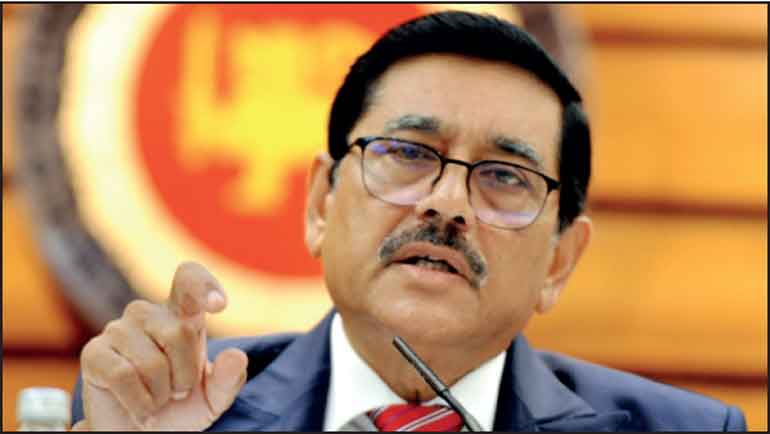
CBSL Governor Dr. Nandalal Weerasinghe
- Pic by Lasantha Kumara
By Charumini de Silva
The Central Bank Governor Dr. Nandalal Weerasinghe yesterday projected strong confidence in Sri Lanka’s economic resilience, insisting that the latest 100 basis point policy rate hike was a proactive measure to safeguard macroeconomic stability and sustain the country’s recovery momentum amid rising global uncertainties.
Addressing the post-Monetary Policy Review meeting media briefing, Dr. Weerasinghe said the economy remained fundamentally stronger than during the 2022 crisis period, underpinned by improved foreign reserves, exchange rate stability, easing inflation and stronger fiscal performance.
“The decision must be viewed in the context of preserving stability and ensuring that the recovery remains sustainable despite emerging external risks,” he said, noting that the economy had continued to expand at close to 5% growth during the first half of the year, broadly maintaining the growth trajectory seen over the past two years.
Despite the tightening measures, Dr. Weerasinghe maintained that the economy was still expected to grow within the Central Bank’s previously projected 4%-5% range this year, although growth was now likely to settle toward the lower end of the forecast.
“It is still too early to fully assess the impact on the second half of the year. However, our current assessment is that growth could remain within that range, though possibly toward the lower end rather than the upper end,” he said.
The Central Bank yesterday announced raising policy interest rates to 8.75% from 7.75%, following the Monetary Board Review on Monday, the sharpest increase in three years that contain mounting inflationary and external sector pressures triggered by the ongoing Middle East conflict and strengthening domestic demand conditions, after assessing evolving conditions and outlook on the domestic and global fronts.
“The economy is now in a much more comfortable position compared to the height of the economic crisis in 2022 with improved external reserves, greater exchange rate stability, easing inflationary conditions and a stronger fiscal position,” he stressed.
However, Dr. Weerasinghe acknowledges the recent escalation of tensions in the Middle East had altered the outlook and introduced fresh risks to inflation, imports and foreign exchange stability.
“Overall, the external sector, fiscal sector and economic growth trajectory had been moving in the right direction until the recent external shock stemming from the Middle East conflict began affecting the economy,” the Governor said.
The Central Bank’s move comes amid rising global oil price volatility and renewed pressure on the rupee, with inflation already accelerating from around 2% earlier this year to 5.4% last month.
“This hike will help stabilise exchange rates and inflation,” Dr. Weerasinghe said, adding that the policy response was intended to prevent second-round inflation effects and contain inflation expectations before they became difficult to change.
CBSL Deputy Governor Dr. Chandranath Amarasekara clarified that inflation was expected to remain just below 6% in the immediate term before rising temporarily and then moderating back toward the target range of 5%.
“Given uncertainties surrounding global oil prices, projections remain subject to change. However, tighter monetary policy, alongside cost-reflective fuel and electricity pricing, should help dampen demand-driven inflationary pressures,” he added.
The Monetary Board’s latest action signals growing concern within the Central Bank over both imported inflation risks and signs of stronger domestic demand, particularly through rising credit growth and import expansion.
“If we had not seen risks of inflation moving significantly above target, we would not have tightened monetary policy at this stage,” Dr. Weerasinghe said.
He noted that, apart from the supply-side shock linked to global energy markets, broader indicators of economic activity pointed to strengthening demand conditions in the economy.
“The policy tightening is also aimed at curbing excess demand in the economy. This does not mean the economy is moving into contraction; rather, it is intended to moderate demand growth and prevent overheating, particularly in inflation and the external balance,” he explained.
The Governor also indicated that recent policy measures had already helped ease pressure on the exchange rate, with authorities expecting further stabilisation in coming months.
“We have already seen some stabilisation in the currency following the measures taken so far and we expect these conditions to improve further,” he said.
He added that the Central Bank remained prepared to deploy additional policy tools if necessary to address future instability or excessive demand pressures, particularly those linked to imports and foreign exchange demand.
Responding to questions on the assumptions used for global oil prices in the latest projections, Dr. Weerasinghe said the Central Bank had relied on prevailing international forecasts, which suggested some moderation in oil prices after their recent spike.
“Our projections are based on global forecasts, which currently indicate some moderation in oil prices going forward,” he said.
Deputy Governor Dr. Amarasekara said the banking system continued to maintain excess liquidity despite the Central Bank beginning overnight liquidity absorption operations from end-April.
He noted that the Central Bank had also introduced short-term liquidity absorption auctions ranging from three to seven days, although market participation had so far remained limited.
Dr. Amarasekara said banks continued to access the Central Bank’s standing facilities mainly due to temporary liquidity mismatches within the financial system.
“We encourage banks to transact among themselves through the call money and repo markets, but the standing facilities are available for any bank that requires access,” he said.

