Tuesday Sep 15, 2026
Tuesday Sep 15, 2026
Friday, 6 February 2026 01:38 - - {{hitsCtrl.values.hits}}
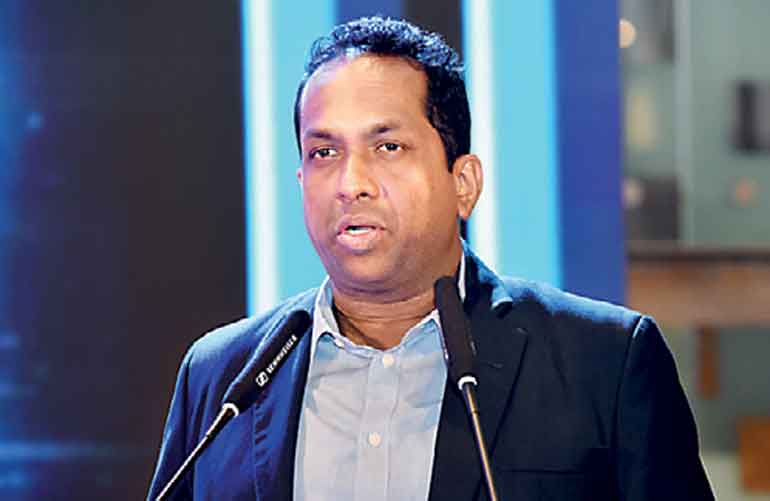
Head of Research Sanjeewa Fernando – Pic by Shehan Gunasekara
Sri Lanka’s primary equity market is expected to enter a more supportive phase for Initial Public Offerings (IPOs) in 2026, with regulatory reforms, improved market performance, and accommodative monetary conditions strengthening the case for listings, according to Asia Securities.
The investment house said IPO activity revived during 2024 and 2025 after several subdued years, alongside a recovery in equity prices following the 2022 crisis. The Colombo Stock Exchange (CSE) was among the stronger-performing markets in Asia during this period, improving secondary market liquidity and valuation benchmarks for prospective issuers.
Asia Securities said the outlook for 2026 is underpinned by operational reforms at the exchange. At a recent awareness session for corporate finance advisers, the CSE announced plans to introduce a digital listing portal during the year and committed to completing reviews within seven working days once minimum listing requirements are met, compared with materially longer approval timelines in the past.
These initiatives align with the Securities and Exchange Commission’s (SEC) 10-year capital market development roadmap, which aims to increase listings from private sector firms and State-Owned Enterprises (SOEs) to expand market capitalisation, improve free float, and broaden investor participation.
On funding conditions, Asia Securities said expectations of low to moderate interest rates through 2026 strengthen the relative appeal of equity financing. With policy rates having peaked in 2023 and inflation pressures easing, equity offers permanent capital without the cash flow strain associated with debt servicing, particularly for investments with long payback periods.
The firm cited recent IPO outcomes as evidence of improved market receptiveness. Cable Solutions Ltd., which listed in August 2024 at Rs. 7.50 per share, has since traded above Rs. 15, more than doubling within just over a year of listing. The issue was managed by Asia Securities Investment Banking.
Asia Securities said equity funding also improves balance sheet strength by lowering gearing ratios, often reducing future borrowing costs and dependence on bank credit. It added that public listings strengthen governance frameworks and support succession planning, particularly for founder-led and family-owned businesses, by formalising board structures, disclosures, and ownership transferability.
The IPO outlook is being reinforced by broader macroeconomic stabilisation, Asia Securities said, citing improvements in fiscal performance and debt sustainability.
Presenting the firm’s macro outlook at a recent investor forum, Asia Securities Head of Research Sanjeewa Fernando said Government revenue has recovered to above 15% of GDP, a level required to secure key governance-related concessions under Sri Lanka’s restructured debt program.
“Revenue-to-GDP has now moved to around 15% plus, which is critical under the restructured debt framework to qualify for certain concessions,” Fernando said.
He said Sri Lanka has outperformed International Monetary Fund (IMF) program targets, noting that 2025 marked the third consecutive year of a primary surplus.
“For 2026 and 2027, external debt settlement obligations do not exceed $ 2.5 billion per year. This represents a significant reduction from pre-restructuring levels and materially improves debt sustainability,” he said.
Fernando said the improvement is reflected in the interest expense-to-tax revenue ratio, a key metric monitored by credit rating agencies as Sri Lanka emerges from default.
On growth capacity, he said Sri Lanka’s investment-to-GDP ratio stands at around 27%, comprising private sector investment of about 23%, foreign direct investment of around 1%, and public investment of roughly 3%.
“Historically, sustaining growth above 6% requires an investment-to-GDP ratio of about 30% to 31%, which highlights the need to raise capital formation,” Fernando said.
He added that private sector credit conditions have improved, with credit growth exceeding Rs. 200 billion per month from mid-2025, while Government borrowing from the domestic market declined. Private sector credit-to-GDP has risen to around 31.3% without signs of excess leverage.
Fernando said maintaining fiscal discipline under the Public Finance Management Act and Debt Management Act, while increasing investment, will be critical to sustaining the recovery and supporting capital market development.


