Monday Sep 14, 2026
Monday Sep 14, 2026
Monday, 6 April 2026 00:00 - - {{hitsCtrl.values.hits}}
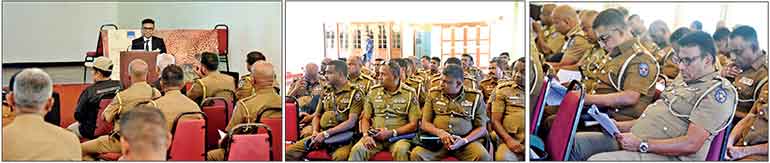
An awareness and capacity-building program on wildlife crime prevention, with a special focus on the Sri Lankan leopard (Panthera pardus kotiya), was successfully conducted on 20th March at the Dimbula Athletics and Cricket Club, Radella.
The session was organised under the ongoing Multi-Regional Leopard Research and Conservation Project implemented by the Wildlife and Nature Protection Society (WNPS), in collaboration with LOLC. It brought together senior officers representing 28 Police stations across the Nuwara Eliya and Kandy districts, underscoring the growing importance of law enforcement in conservation efforts within multi-use landscapes.
The Central Highlands present a unique conservation challenge, where increasing habitat loss and fragmentation, depletion of natural prey, and use of snares continue to threaten leopards inhabiting these landscapes majority outside formally protected areas. The session therefore focused on strengthening the capacity of Police officers to identify, prevent, and respond to wildlife crimes, while fostering closer coordination with conservation stakeholders.
Wildcats Subcommittee Co-Chair Prof. Enoka Kudavidanage, highlighted the ecological and economic significance of leopards as apex predators, emphasising their role in maintaining ecosystem balance and supporting nature-based tourism. She also outlined the current conservation challenges in the Hill Country and presented ongoing interventions under the WNPS–LOLC project.
Chinese Academy of Sciences Xishuangbanna Tropical Botanical Garden (XTBG) Postdoctoral Fellow Dr. Sanjaya Weerakody shared key research findings on leopard mortality trends over the past 17 years revealing concerning patterns, including the disproportionate loss of mature male individuals and the increasing prevalence of snaring as a primary cause of death highlighting an urgent need for targeted enforcement.
Attorney-at-Law Charaka Jayaratne provided an in-depth overview of the legal provisions under the Fauna and Flora Protection Ordinance, with particular attention to offences related to snaring. He discussed how Police can take more proactive and effective action, identifying gaps in current approaches and suggesting practical measures to strengthen enforcement outcomes.
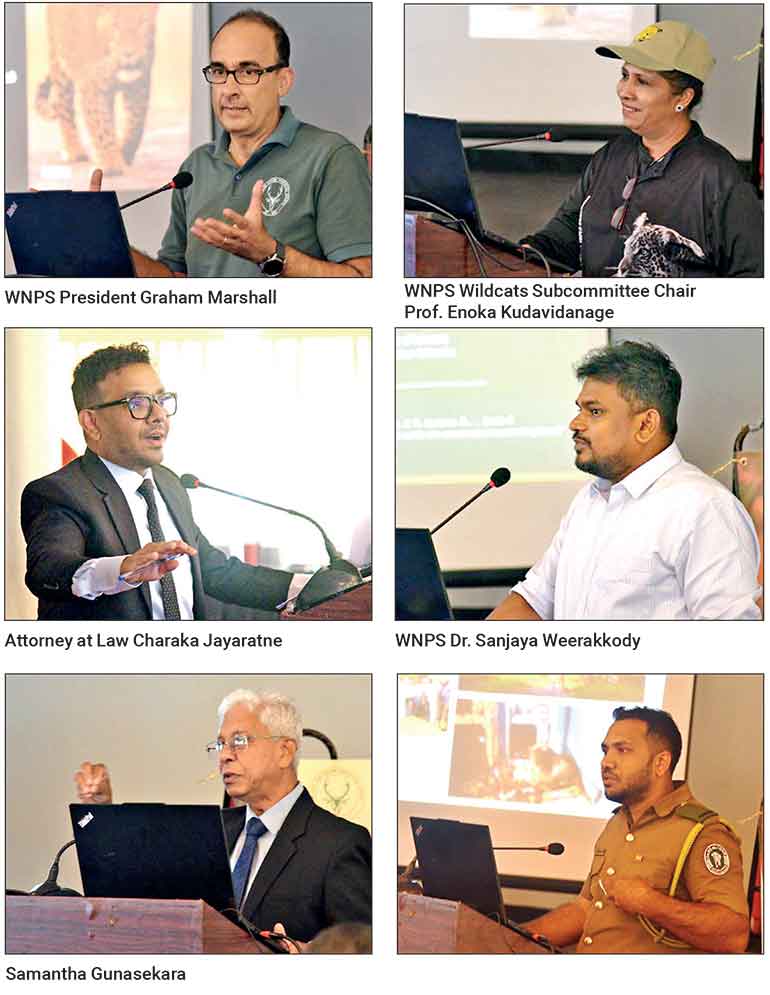
Adding further perspective, Customs former Deputy Director and Marine Environment Protection Authority (MEPA) Chairman Samantha Gunasekara, spoke on the broader context of illegal wildlife trade in Sri Lanka. Drawing from past cases and recent observations, he highlighted emerging trends and risks associated with wildlife trafficking.
Representing the Department of Wildlife Conservation, Ranger Srinath Dissanayake of the Hakgala Wildlife Range shared recent cases on leopard deaths and rescue operations recorded in 2025. He emphasised on personal observations, importance of timely intervention, and strong collaboration between field officers and the Police to mitigate human–wildlife conflict and prevent avoidable losses.
An interactive discussion followed, allowing officers to raise questions, clarify procedures, and exchange experiences while sharing their feedback as well. This dialogue contributed to reinforcing the value of strategic engagement between the Police, the Department of Wildlife Conservation, and conservation partners while strengthening inter-agency understanding and highlighting the need for coordinated responses during leopard-related incidents.
The session commenced with opening remarks by WNPS President Graham Marshall, who expressed appreciation for the participation of the Sri Lanka Police and reiterated the critical role of law enforcement in safeguarding biodiversity beyond protected areas.
WNPS Past President and WNPS LOLC Project Head Spencer Manuelpillai, Project Coordinator GIhani Hettiarachchi, Regional Centre Coordinators, Thilanka Dissanayake and Attorney-at-Law Malaka Palliyaguruge were also present as part of the WNPS team.
WNPS extended its sincere appreciation to all officers who participated for their commitment and active engagement. Supported by LOLC, these initiatives form part of a broader effort to strengthen practical conservation through collaboration, knowledge sharing, and effective enforcement in Sri Lanka’s Hill Country.




