Monday Sep 14, 2026
Monday Sep 14, 2026
Saturday, 3 January 2026 00:00 - - {{hitsCtrl.values.hits}}
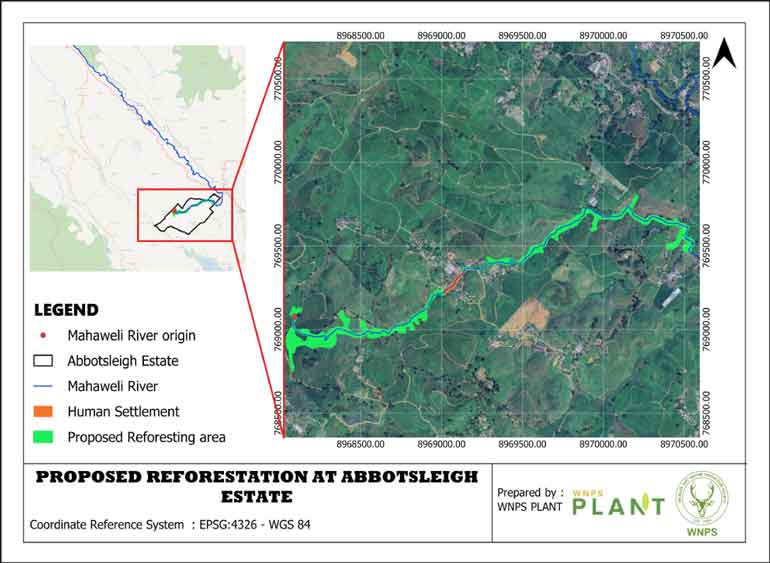
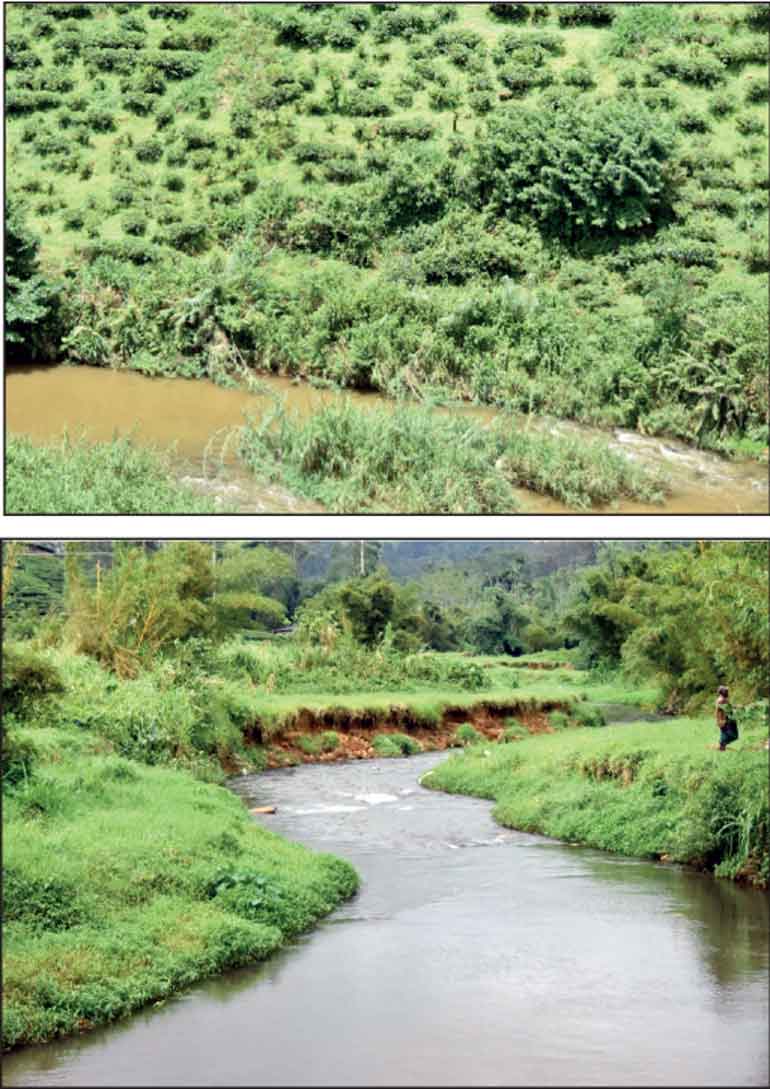
Determined to work to turn the tide one step, one acre at a time, The Wildlife and Nature Protection Society’s Preserving Land and Nature (PLANT) initiative announced a strategic land partnership with Hatton Plantations PLC (HPL) to restore riparian ecosystems along the source locations of two of Sri Lanka’s most critical river systems in the Central Highlands. Under a newly signed Memorandum of Understanding (MOU), PLANT and HPL will collaborate to reforest and rehabilitate riverbanks along 24 kilometres bordering the Kelani River at the Dickoya Estate and the Mahaweli River’s Hatton Oya tributary spanning the Abbotsleigh, Strathdon, Shannon, and Carolina estates. These efforts will help stabilise slopes, reduce sedimentation, enhance biodiversity, and strengthen climate resilience in lower landscapes including some areas that sustained acute damage in the recent cyclonic disaster. This long-term effort aims at enhancing Forest corridor networks in the endemic-rich southwestern Sri Lanka.
A timely response to climate-driven impacts in the Central Highlands
Cyclone Ditwah recently struck Sri Lanka, unleashing extreme rainfall, floods, and landslides across the island. The Highlands suffered heavy casualties, massive infrastructure damage, and prolonged access constraints, while flooding of the Kelani and other rivers compounded the crisis. This event highlighted the vulnerability of hill-country communities to landslides and slope failures.
The Mahaweli River, Sri Lanka’s longest, historically supplies over 40% of the nation’s electricity and its basin spans nearly one-fifth of the island. Hatton Oya, a headwater tributary, drains steep montane terrain where riparian vegetation is critical for bank stability, sediment control, and buffering baseflow during intense precipitation. Scientists warn that Kelani Basin flood frequencies and damages are rising due to intensified rainfall and land-use pressures. Non-structural mitigation: riparian buffers, floodplain zoning, and riverbank reforestation, is increasingly recognised as essential. Restoration along Kelani and Mahaweli is nationally significant: reforested margins reduce peak flows, curb reservoir siltation, safeguard hydropower reliability, and protect irrigation schemes vital for agriculture. These nature-based solutions complement emergency works, embedding long-term resilience into river corridors.
Building on a proven corridor model
This partnership strengthens PLANT’s corridor-restoration model, first implemented to create a 9 km forest corridor along Maskeliya Oya, restoring over 125 acres of riparian forest and reconnecting habitats from Peak Wilderness Sanctuary down-valley. Supported by multi-stakeholder funding and community stewardship, the model proved private-sector land partnerships can drive ecological restoration in plantation landscapes. By restoring native riparian forests along major river systems, it reduces disaster risks by stabilising riverbanks, limiting runoff, and improving floodplain function during extreme rainfall. Forested corridors act as natural buffers, curbing downstream flooding and supporting biodiversity, while ensuring long-term stewardship by plantations, donors, and local communities.
Hatton Plantations PLC (HPL) reinforces this vision through strong ESG commitments: conserving 250 hectares of biodiversity-rich land, implementing rainwater harvesting, and advancing reforestation and soil health programs. Social initiatives include health, sanitation, education, and childcare, while governance emphasises transparency and compliance. The MOU unites PLANT’s ecological expertise with HPL’s land access and sustainability investments to accelerate nature-positive outcomes along critical river margins.
A call to action in the wake of Cyclone Ditwah
The recent devastation exposed the vulnerability of Sri Lanka’s Central Highlands, emphasising the vital role riparian forests play in stabilising slopes and protecting rivers. Restoration and landscape management are now essential for water security, biodiversity, and the resilience of communities and industries. Hatton Plantations PLC (HPL), as a land custodian, is committed to supporting this initiative with full resources. WNPS PLANT, the habitat-restoration arm of Sri Lanka’s oldest conservation organisation, works with private landholders to create ecological corridors, reforest degraded areas, and protect biodiversity, including endangered species. With 34 sites under its care and active research and community engagement, PLANT exemplifies science-led restoration and long-term stewardship.
This partnership between WNPS PLANT and Hatton Plantations PLC is a powerful start, but the challenge is far greater than any single initiative. Sri Lanka needs government action and multiple initiatives, but also more plantation companies, corporate leaders, and individual investors to step forward and commit to restoring waterways and forest corridors. Every contribution, whether land, resources, or expertise, helps rebuild the natural infrastructure that protects our nation’s lifelines. Together, fragile landscapes can be changed back into resilient ecosystems, thereby ensuring that Sri Lanka’s rivers, which occupy a special place in our nation’s history, continue to sustain life and livelihoods for generations to come. Our rivers were never feared, only loved, and need to remain that way for eternity.




