Friday Sep 18, 2026
Friday Sep 18, 2026
Tuesday, 17 March 2026 00:11 - - {{hitsCtrl.values.hits}}
 |
 |
 |
 |
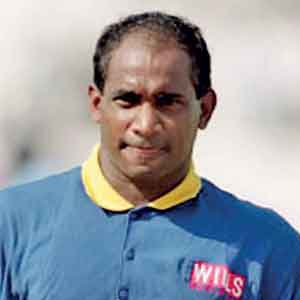 |
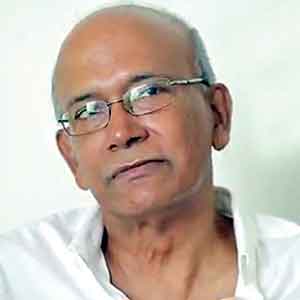
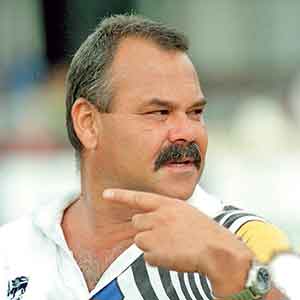
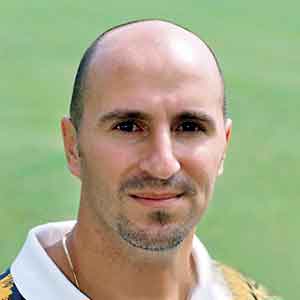
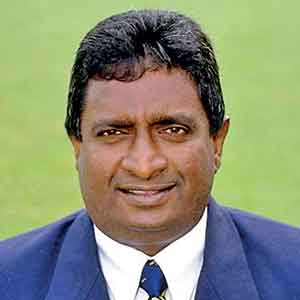
| Ana Punchihewa | Dav Whatmore | Alex Kountouris | Duleep Mendis | Sanath Jayasuriya |
By Sa’adi Thawfeeq
Today, 17 March, marks a red-letter day in Sri Lanka’s cricket history when the Cricket World Cup was won.
This landmark victory has been the greatest achievement in Sri Lanka’s history as a cricket nation, and even 30 years later it still remains so.
Much has been written about the players who created history for the country in 1996 by winning the ICC Cricket World Cup, but far less has been said about the people behind them who helped make it happen.
Today marks the 30th anniversary of that historic World Cup win when Sri Lanka beat Australia by seven wickets at the Gaddafi Stadium in Lahore.
The writer who covered that famous victory for the Daily News spoke to the people behind the scenes, without whose efforts the win would never have materialised.
Ana Punchihewa - Board of Control for Cricket in Sri Lanka President
What stands out in my memory is the problem of trying to get the matches played in Sri Lanka. Australia and West Indies announced that they would not come due to security concerns, and Kenya also showed reluctance. I remember rushing off to a PILCOM meeting asking how we could solve this. PILCOM was the Pakistan-India-Lanka Committee, which was formed to coordinate the organisation of the World Cup.
With wins in the quarter-final (against England) and the semi-final (against India), the team grew stronger. I also became more confident as the tournament went on. In some ways it was a roller coaster ride to the final. The snowball got bigger as it rolled down the mountain.
The growing fear among the opposition was the way we approached the first 15 overs. You could feel it
Sir Clyde Walcott was very helpful. He was the ICC Chairman and we both worked together to make this come true. A meeting was held in Calcutta to decide on the outcome of the World Cup. Sir Clyde said that he was one vote short and asked for the meeting to start at around 7.30 in the morning. When the counting took place, New Zealand had not yet arrived. We won the vote to say that the World Cup would continue. New Zealand were very upset. Sir Clyde said, “You were not here during the voting.”
It was out of that meeting that the Combined India-Pakistan team came into being and played a match at the Khettarama Stadium. I do not know who came up with the idea. Only then was the situation sorted out. Otherwise, the entire World Cup would have been in a mess.
Dav Whatmore - Head Coach of Sri Lanka team
Being my first World Cup experience, I was nervous. We went through a period when teams did not come, and then India and Pakistan players came and showed the world that it was safe in Sri Lanka. Then came the very first match against Zimbabwe at the SSC. As each match came and went, I was on the edge of my seat. We smacked Kenya for 300-plus but they started hitting back. There was never any calmness, only nervousness.
The turning point was the game in India. We got walkovers against Australia and West Indies, then we beat Zimbabwe and Kenya. We were undefeated, so the first real test was against India in New Delhi. We had a big win. The way in which we won it, chasing more than 270, was a turning point.
With wins in the quarter-final (against England) and the semi-final (against India), the team grew stronger. I also became more confident as the tournament went on. In some ways it was a roller coaster ride to the final. The snowball got bigger as it rolled down the mountain.
The growing fear among the opposition was the way we approached the first 15 overs. You could feel it. Those two boys (Sanath and Kalu) did well even though they did not come off in the semi-final and the final. But we had enough quality in the batting to overcome that, so it was not a problem. The conditions suited us. The spinners played a big part and we batted very deep. One of the differences was that we had spin all-rounders.
For me it was a wonderful victory, but it did not sink in immediately. At first it felt like just another series of matches we had won. After a day or two it began to sink in. I never thought my career was going to take off. In fact it went the other way. A few months later I felt that I was not wanted. I said we should work harder because other teams were going to catch up, and that led to a ban on the press. It backfired on the BCCSL, so I left.
It happened to President Ana Punchihewa as well. He presided over the biggest win in Sri Lanka’s cricket history and two weeks later he was gone. It has never happened anywhere in the world where a President is removed after his country has won a World Cup. Very sad.
Whatmore on Alex Kountouris - Physiotherapist
He was a wonderful addition. He joined us in 1995 in Australia. We were looking for a good physio and we were touring Australia at the time. I had just finished four years at the Victorian Institute of Sport. Through that and the program manager Spencer and Dr. Frank Pyke, they got together and recommended Alex. That is when it all started in late November 1995.
He fitted in nicely. He was born in Cyprus and grew up in Australia. His work ethic was wonderful and his knowledge was deep. I remember him saying right at the start that there were many existing injuries that he could not immediately fix. We first had to deal with those injuries because there were too many of them.
A few months later I felt that I was not wanted. I said we should work harder because other teams were going to catch up, and that led to a ban on the press. It backfired on the BCCSL, so I left. It happened to President Ana Punchihewa as well. He presided over the biggest win in Sri Lanka’s cricket history and two weeks later he was gone. It has never happened anywhere in the world where a President is removed after his country has won a World Cup
He worked almost through the evenings and nights to ensure the boys were ready to perform the next day. The fitness of the boys played a big role in that victory. The way he prescribed training was remarkable. After the World Cup he even went to Australia for a course to increase his knowledge in fitness training.
His temperament was such that he did everything that was asked of him. It was a very good result for everyone and the players remained very fit. Alex is now a Professor and works with Cricket Australia. All the State physios report to him.
Duleep Mendis - Manager and Chairman of Selectors
One thing that stands out is the new strategy we adopted with the opening pair. It started in 1995 on the tour of Australia. We began in Perth, which is normally where Australia gives teams their baptism. Kalu was batting well but not keeping wickets well. We wondered how to deal with it. We always believed that when one aspect of a player’s game improves, the other also follows.
Kalu was batting in the middle order then, but because he was batting well we thought of opening with him and Sanath, who was already opening. We gave them a free hand to score as many runs as possible. The first two or three attempts were not very successful but we felt it was beginning to work, so we continued.
Not many people knew what we were planning. After the Australian tour we put that plan into practice at the World Cup the following year. By the time the other teams realised what was happening, the tournament was already over. That strategy took everyone by surprise.
Because of that opening pair we got the start we wanted and the other teams were wondering how to stop it. Players like Aravinda and Gura (Asanka Gurusinha) also batted well at different stages. Aravinda was outstanding. Arjuna also did a brilliant job as captain. The bowling supported them, but the main factor was the opening pair.
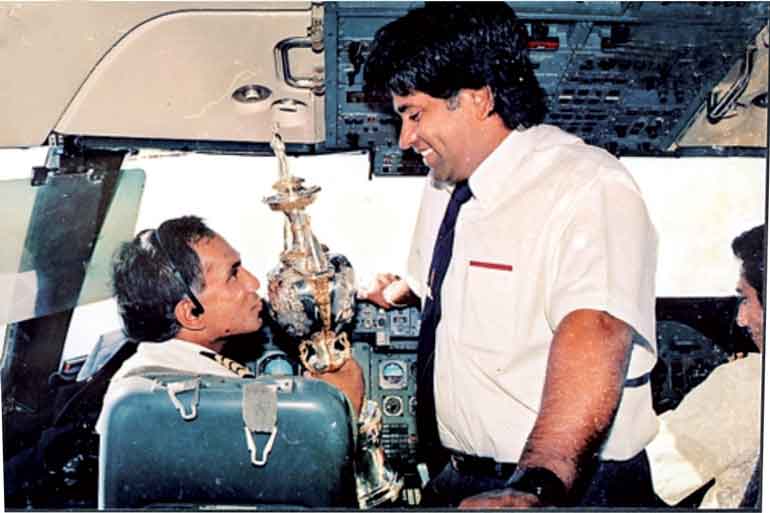
Sunil Wettimuny with Captain Arjuna Ranatunga and the World Cup
Dav and I spoke about it first and then Arjuna (Ranatunga). That is how the idea came about. Fortunately we had the 1995 Australian tour to test the combination. It was a strategy that continued to work even after the World Cup. A few teams such as New Zealand later tried similar tactics with players like Mark Greatbatch, but not as an opening pair.
Although I was the manager, we did not look at our roles individually. Dav, myself, Arjuna and Aravinda all worked together. Arjuna and Aravinda had great knowledge of the game. If everyone in a team pulls in different directions it will never work.
There was a big change after 1996. Many countries came forward, sponsors became interested and the outlook of cricket changed completely. Winning a World Cup by a small country like ours was one of the greatest things that could have happened. It changed the perception of Sri Lankan cricket.
Many times after that Sri Lanka reached World Cup finals and semi-finals. We were always in contention. Teams feared facing us because they knew the brand of cricket we played.
Sanath Jayasuriya – Player of the Series
We were worried whether we would even be able to play in the World Cup when Australia and West Indies refused to come to Sri Lanka. There was some doubt at that time when we returned after the opening ceremony in India. We were disappointed that they did not support us when it was needed.
But India and Pakistan joined together to play a match in Sri Lanka to show that it was safe to play cricket. That gave us strength and determination. We should never forget that. Not only us but future cricketers must remember it in our history.
At that time the world did not know the kind of cricket we played. The opposition was confused about what was happening. Only we knew the type of game we were playing. We never took a step backwards. Duleep and Dav gave us a lot of confidence.
We did not doubt ourselves. At times we used our heads to outwit the opposition. By the time we reached the quarter-final, semi-final and then the final, we felt that something special was going to happen.
To be part of that team, with players such as Aravinda, Arjuna and Asanka, were the best years of my life. I never thought I would play alongside players of that calibre. We played like a family and it helped immensely. We made the most of the talent we had.
Every day I learnt something new from them. Aravinda was a master player who never showed pressure. Arjuna was excellent at planning. When you are with players like that you learn a lot and it makes you stronger. Later, when I became coach, I shared those experiences with the present team.
To be part of that team, with players such as Aravinda, Arjuna and Asanka, were the best years of my life. I never thought I would play alongside players of that calibre. We played like a family and it helped immensely. We made the most of the talent we had
The first 15-over strategy was introduced by Duleep, Aravinda and Arjuna. We also discussed it with Davy. They believed they were not getting the best out of me in the middle order. I was already opening for CCC and they knew my capabilities. They asked me to try it and told me not to be afraid because they would support me.
There was a risk because I could have lost my place if it failed. But I took the risk and it worked. Before the Australian tour I had opened for Sri Lanka against Pakistan in 1994-95 when Roshan Mahanama was injured and I scored three fifties.
At that time I was not bowling much, but Duleep made me bowl. He pushed me hard during practice. In fielding, Duleep and Ranjit Fernando handled the training. Ranjit sir would come straight after work to conduct fielding practice. That was the commitment.
Alex also did a proper job. He monitored our diet and supervised physical training. We were physically fit and disciplined. All these small things helped us win the World Cup.
Sunil Wettimuny – Pilot who flew the World Cup champions home
I was fleet manager of the Air Lanka TriStar at that time. I could have selected myself to fly the aircraft, but I did not. The airline asked me to go because I was also a cricketer. It was their wish and I agreed. It was a special flight with eight Ministers and their families.
I had the option of selecting the pilot, but I left the decision to the airline. The operations manager told me that I should take the flight. I simply performed my duty as a pilot.
In the ordinary course of life, it was a once-in-a-lifetime opportunity to bring home a World Cup-winning team. But for me it was just part of my duty. Of course the happiness of bringing that team home remains with me, but it does not affect me anymore.
There was a big change after 1996. Many countries came forward, sponsors became interested and the outlook of cricket changed completely. Winning a World Cup by a small country like ours was one of the greatest things that could have happened. It changed the perception of Sri Lankan cricket
I have now retired and live in Bonn, Germany, spending my time meditating. I am no longer interested in my career or cricket. In my opinion it is no longer the same game. I lost interest when I was flying for Sri Lankan Airlines as T20 cricket became dominant. It is not the same cricket anymore. There are no gentlemen in the game. Even the bats have changed. You cannot compare past records with present ones. The technique of the game has been lost.
[Note: Sunil Wettimuny, a former Sri Lankan opening batsman, worked 45 years as an airline pilot, including 37 years for Air Ceylon, Air Lanka, SriLankan Airlines and Mihin Lanka, and eight years for other airlines before retiring at the age of 65 in 2014.]
Sri Lanka’s 1996 World Cup-winning squad:
Arjuna Ranatunga (Captain), Aravinda de Silva (Vice-Captain), Sanath Jayasuriya, Romesh Kaluwitharana, Asanka Gurusinha, Roshan Mahanama, Hashan Tillakaratne, Kumar Dharmasena, Chaminda Vaas, Muttiah Muralitharan, Pramodya Wickramasinghe, Ravindra Pushpakumara, Upul Chandana, Marvan Atapattu, Dav Whatmore (Head Coach), Duleep Mendis (Manager), Alex Kountouris (Physiotherapist).




