Wednesday Apr 08, 2026
Wednesday Apr 08, 2026
Wednesday, 8 April 2026 02:18 - - {{hitsCtrl.values.hits}}
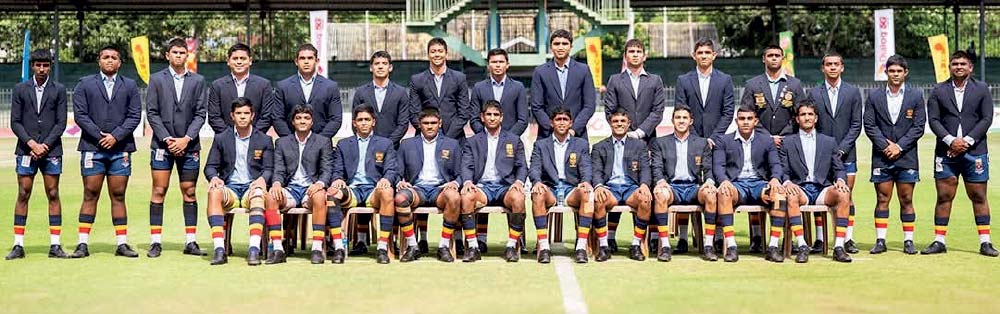


At an entirely unexpected level of speed, composure, temperament and quality, Trinity College Kandy dumbfounded the massive crowds that was present at the Sugathadasa Stadium last Saturday by astonishing them with the highest international standards of non-stop attacking rugby played by teens, setting an all-new benchmark for the rest of the schools to follow. Traditionally being famous for sporting inspiring, fast and open rugby, the institution rewrote history on the 4th day of April 2026, by spiralling itself to a novel height in its historic contribution to rugby in Sri Lanka. The carefully and meticulously composed symphony that Trinity performed in front of a live audience to near-perfection, will no doubt change and redefine the face of schools’ rugby in Sri Lanka, which is already at dizzy heights.
To all those who have read so far; the pure brilliance showcased by Trinity in this game cannot be described accurately and descriptively enough to do justice to the art of rugby that was performed flawlessly. Therefore, it is a MUST for all those who love, like or dislike rugby to watch this game, if you haven’t already. So please head over to thepapare.com or its YouTube channel to find the full replay of this encounter, in order to mesmerise yourself. You will not regret doing so.
Trinity’s bombardment of Royal airspace
Following is an excerpt from our quarter final forecast of the match between Royal and STC.
“This is because the Tuskers have mastered a sound defence system against ground attacks by both the opposition Backs and Forwards, that is inherently designed to choke the oppositions with spontaneous rush defence and swift drift defence. Aerial attacks have not been tested yet against them, but could be too premature for teams to have mastered the art of timing and spacing Crosskicks, Short Punts or Drop Goals.”
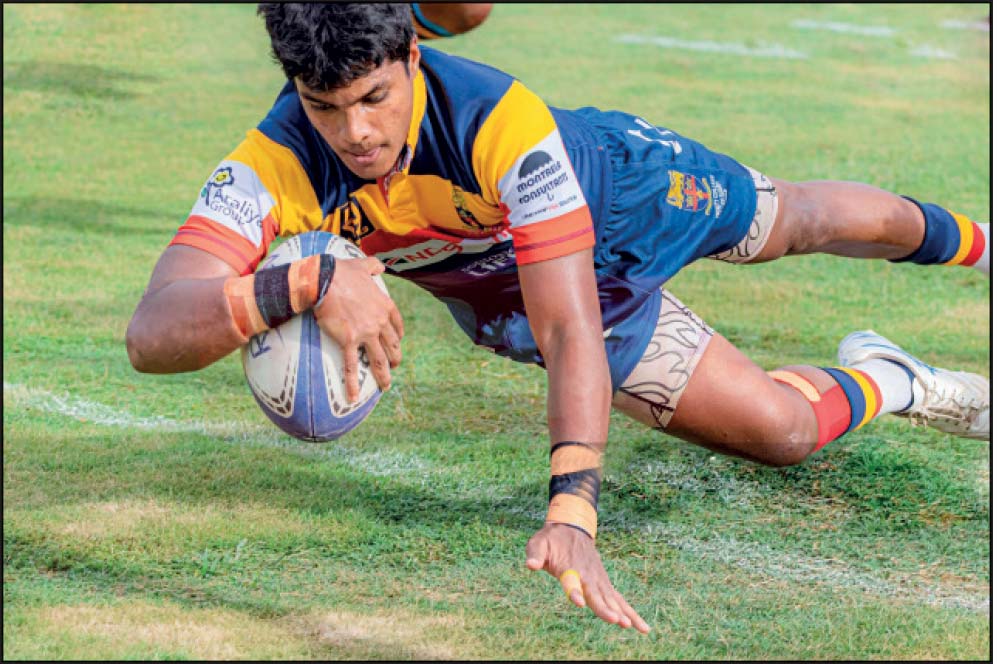
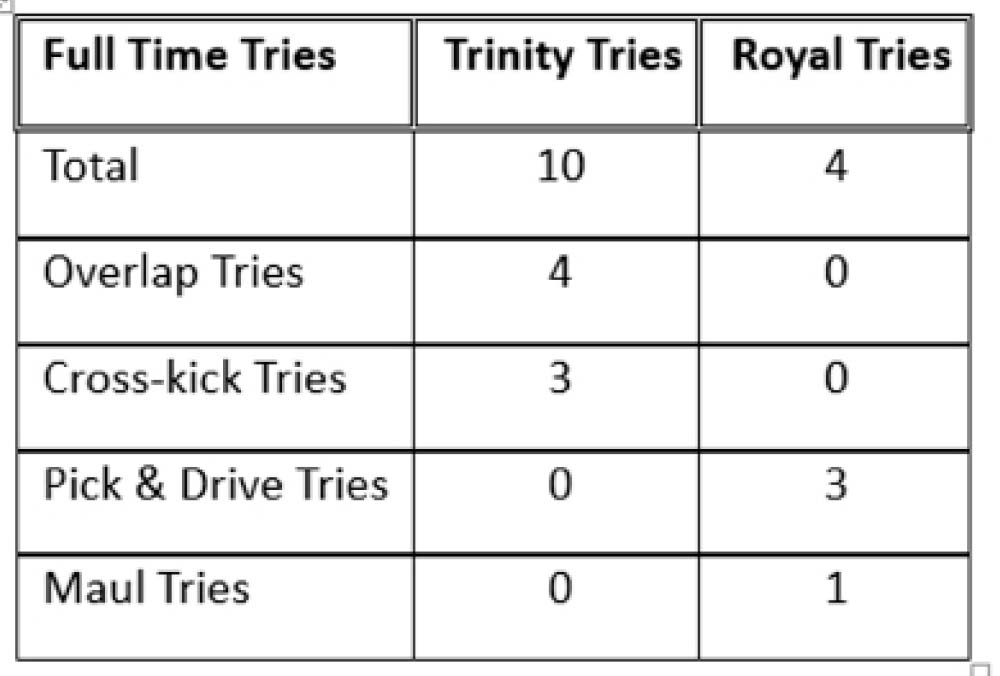
Although, neither STC nor Pathana were skilled enough to do it, the aforementioned aerial combat is exactly what the Trinity camp strategised and launched, but not at the standards of schools’ rugby, in which case Royal could have followed close behind. In summary, Trinity used Royal’s core strengths against them to perplex them and demolish their defences using short punts, grubbers and cross-kicks.
1. The ball was repeatedly chipped above the fast-rushing Tusker defence, and then collected from behind the first line of defence, without the need to engage physically to breach the defence
2. When adequate overlaps emerged while attacking inside the Royal 22, well-timed and precisely targeted cross-kicks earned some extra Tries for Trinity
3. All kicks originating from Trinity’s grid to the opposition’s courtyard were aggressively chased, in order to ensure that breakdowns occurred within a 5m radius, in case the ball was caught by Royal
All of the above were executed at sheer pace and precision, with almost no handling errors, that enabled Trinity Gonzales to convert even the half and quarter chances into Tries, which surged them past half a ton of points. Gonzales also proved way too fast for the comparatively slower Tuskers, which was prophesied in our forecast for this game.
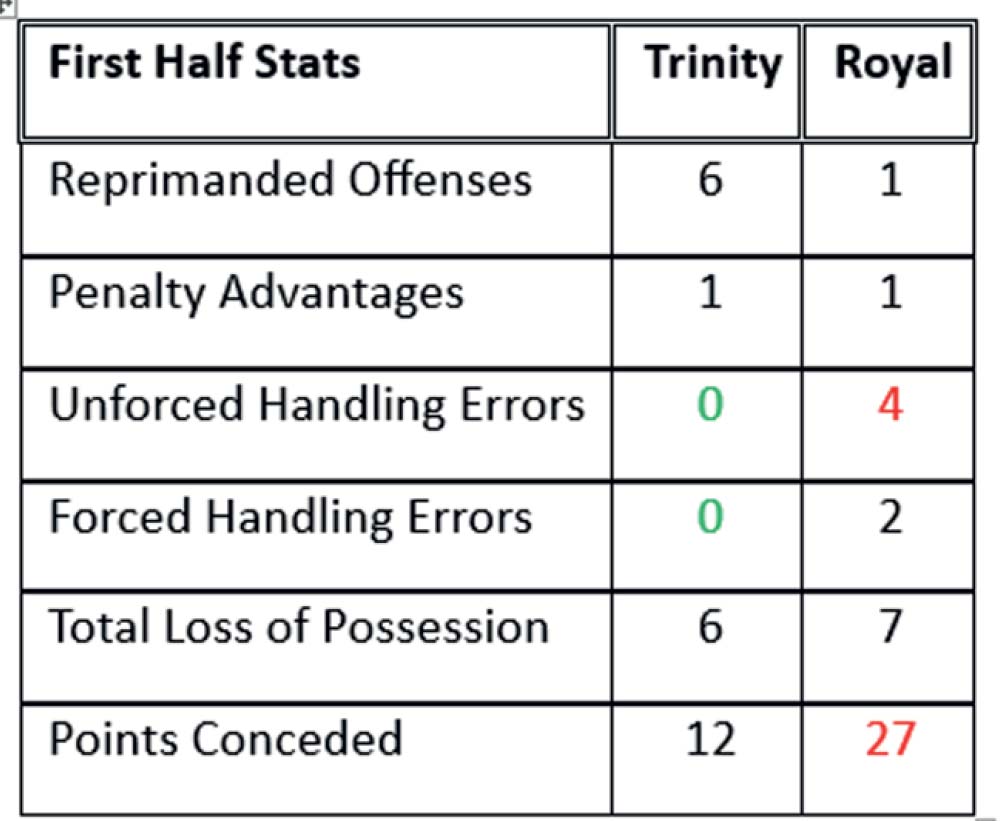
Royal was exemplary in their game discipline that echoes a reverent message to the Angels of heaven above, to be warned of severe competition from earth below, challenging their piety. If not for this, Trinity could have easily swelled up their Try tally in the former half. Although the “total loss of possessions” tally in the above stats is comparable, Royal literally dropped the ball in ball handling, that suppressed them from scoring a few Tries.
Three Tries were scored off Royal’s inefficiencies, while one opportunity was lost. Royal Tuskers could have been leading at half time, if not for these follies. Even if we consider the second bullet point above as an accident and not a folly, the scores could have been levelled at lemons.
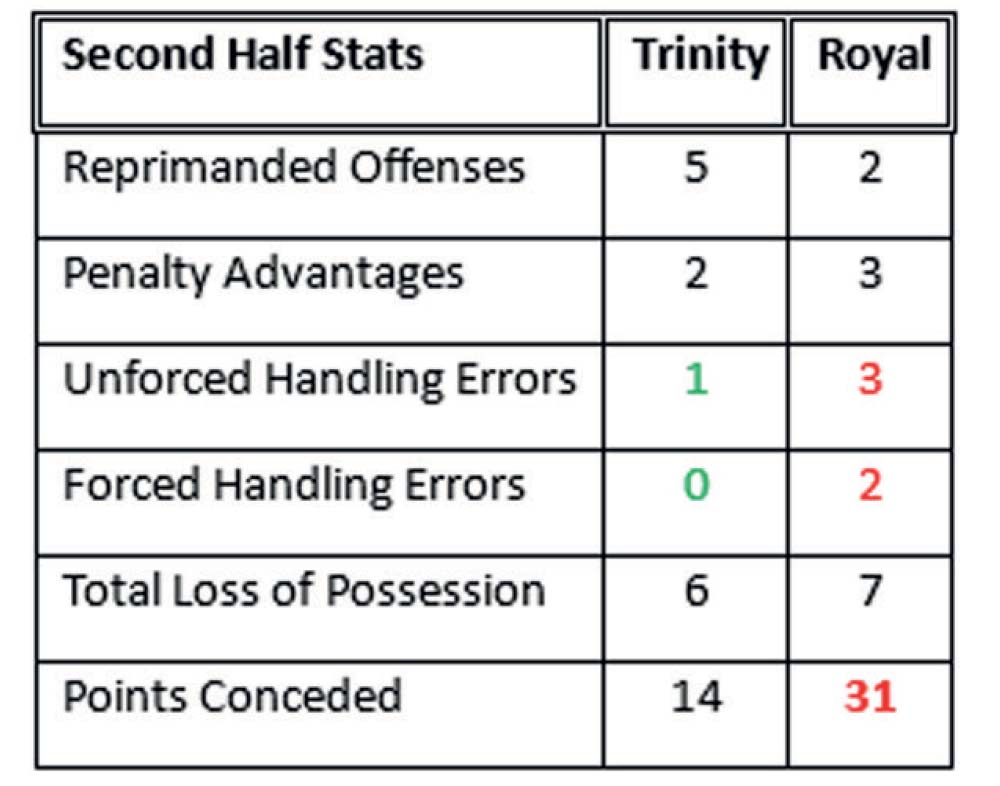
The “total loss of possession” in the above two tables do not include turnovers, and other mistakes leading to changes in possession. They are omitted to reduce clutter, as they have minimal impact on the final tally.
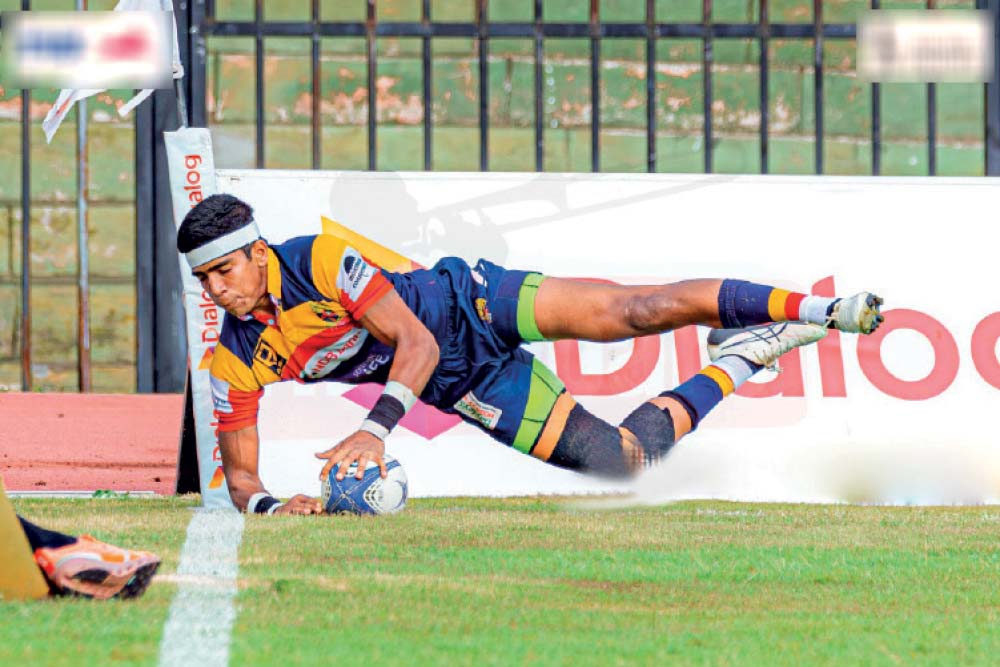
Two of the spectacular cross-kicks that resulted in Tries, and the gigantic 50-22 that arched from close to the Touchlines of Trinity’s 22, were accomplished by young Malik Rishard.
Tuskers to innervate
It’s not a typo of innovation; the intended word is innervate. Royal would have to make some adjustments to their attacking / defending strategy / formations, as other teams would be rubbing their palms gleefully looking forward to repeating what Trinity did. However, another vital focus should be to innervate, by tuning their muscle reaction time, in order to bridge the gap between Trinity time and Royal time. In other words, Trinity is able to execute more moves within the same time period than Royal, and this gap must be bridged, at least partially. It would be useful not only when Royal meets Trinity the next 3 times this season, but also when confronting teams like Zahira, who could move way faster than the Tuskers, and could hypothetically shower the same drone attacks on Royal airspace, hence improvement of the reaction time by even a fraction of a second could be of paramount importance.
This wasn’t the first time when such rapid rush defence was demolished by short punts. In the 2024/25 Clubs season, Havelock SC beat the high riding CR & FC with the same tactics, which was covered in this column with the title, “Along came a Saliya…”. Link to the article that describes similar countertactics used by Havies can be found at https://www.ft.lk/sports/Havelocks-SC-vs-CR-and-FC-Along-came-a-Saliya/23-772689.
While the Tuskers would be busy plotting their next moves to counter the counter tactics, let’s have a look at the line items where Royal came short this time, and what they should focus on.
Rugger made in Sri Lanka
The Trinity coaching unit headed by Fazil Marija deserves awards and special recognition for this magnanimous performance, and for proving that world class rugby can be made in Sri Lanka with 100% Sri Lankan talent, which serves as a hard slap on the face of any rugby pundit who believes that schools rugby can be elevated only by bringing down foreign coaches. When we have so many diverse coaching talents, in combination with their creative and masterminds, all we do is disrespect them by bringing down aliens.
Long-term planning, disciplined and tireless work, would certainly return bountiful results. The respective schools’ rugby administrations should work hand-in-hand with their coaching staff, with mutually agreed development plans, goals and periodic assessment of its progress; but what we see mostly is the lack of continuous commitment and progress tracking by the rugby support groups, that finally makes the head coach, the scapegoat for all failures. These administrations should remember that the ultimate objective is not only the school, but also the members of the coaching unit should progress and improve with each passing year, and this could be done only with mutual trust and respect, as the Trinity Scrummage has demonstrated to us today.
Result: Royal humbled by world class rugby raid 26-58
(Feedback are welcome: [email protected])



