Friday Sep 18, 2026
Friday Sep 18, 2026
Saturday, 14 February 2026 00:00 - - {{hitsCtrl.values.hits}}
By Kiron Shenoy
In the record books of Sri Lankan cricket, some milestones are written in ink that simply refuses to fade. While the modern era is defined by T20 pyrotechnics and rapid-fire scoring, a quiet but monumental record established nearly five decades ago continues to stand as a sentinel of resilience and “never-say-die” spirit.
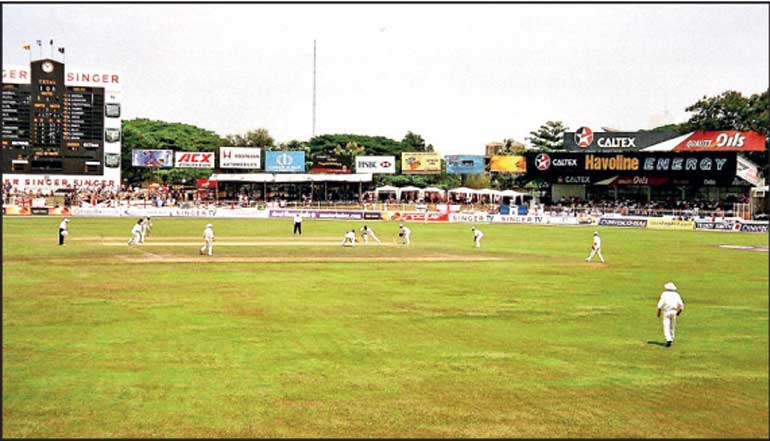
The year was 1979. The setting was the prestigious P. Sara Trophy, the bedrock of Sri Lankan First-Class cricket. The venue was the SSC Grounds at Maitland Place—a cathedral of the local game.
It was a match that, on paper, should have been a one-sided affair. The powerhouse Singhalese Sports Club (SSC) took the field boasting an intimidating lineup that included no fewer than eight National players. Opposing them was BRC Sports Club, who found themselves reeling as the SSC attack tore through their batting order.
When the ninth wicket fell, the end seemed imminent. But what followed was not a surrender; it was a masterclass in tail-end defiance that would etch the names Ranjit Rajapaksa and Asoka Vitharana into the annals of history.
158 runs of pure grit
Against an attack featuring the country’s finest bowlers, the duo of Rajapaksa and Vitharana began to build. What started as a move to save face transformed into a historic onslaught. As the sun beat down on Maitland Place, the pair moved the score along with a mix of clinical precision and daring stroke play.
By the time the final wicket finally fell, they had added 158 runs for the 10th wicket.
To put this in perspective, this stand remains the highest ever recorded for the final wicket in a First-Class or Major League match in Sri Lanka. Despite the evolution of the game, the advent of better equipment, and the increase in matches played, no pair has managed to eclipse this total in nearly fifty years of domestic cricket.
A call for formal r ecognition
While the story is a “gem of wisdom” often shared in the pavilions of Colombo, there is a growing movement to ensure this feat is officially canonised in the Sri Lanka Cricket (SLC) First-Class record books.
“Acknowledging such milestones is crucial for preserving the legacy of Sri Lankan cricket,” says the latest formal submission to the SLC Board. “It serves to inspire the current generation of cricketers to value every single wicket, proving that the game is never over until the final ball is bowled.”
For Ranjit Rajapaksa and Asoka Vitharana, that February weekend in 1979 wasn’t just about the runs on the board. It was about the psychological battle of two “tail-enders” standing tall against eight national giants.
As the letter for formal recognition reaches the desks of Sri Lanka Cricket at No. 35 Maitland Place—only a stone’s throw from where the record was set—fans and historians alike are hopeful that this 158-run epic finally receives the official status it deserves.
In a world of “flash-in-the-pan” heroes, the Rajapaksa-Vitharana stand remains a timeless reminder: the greatest wealth in sport is often gathered when the odds are most heavily stacked against you.




