Friday Sep 18, 2026
Friday Sep 18, 2026
Friday, 27 March 2026 04:21 - - {{hitsCtrl.values.hits}}
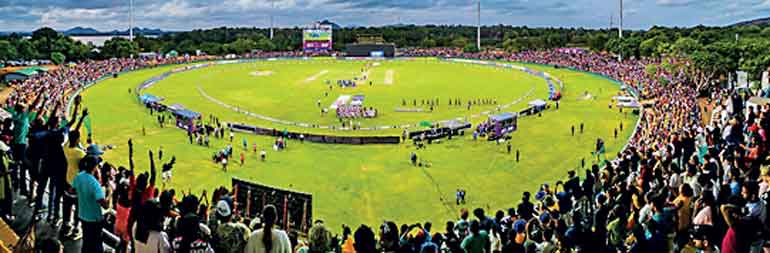
The 2024 Women's Twenty20 Asia Cup final between Sri Lanka and India being played at Rangiri Dambulla International Cricket Stadium
By Leonard Ratnayake
As we look back at its silver jubilee, the story of Rangiri Dambulla International Cricket Stadium is one of visionary leadership, record-breaking speed, and the tragic intervention of "petty politics" that left a national asset gathering dust for far too long. It was more than just a construction project; it was a strategic "climate-proof" investment. However, 25 years later, the stadium stands as a monument to both brilliant foresight and the devastating impact of political tribalism.
In the late 1990s, Sri Lankan cricket faced a recurring nemesis: the rain. International tours were frequently disrupted, and millions in revenue were lost as matches in Colombo were washed out by the unpredictable monsoon. Enter Thilanga Sumathipala, the then-President of Sri Lanka Cricket (SLC). Sumathipala’s vision was as bold as it was logical, if the wet zone couldn’t guarantee play, cricket must move to the dry zone, a move to take cricket to rural villages.
"Dry Zone" gamble to a magic in the making: 167 days to glory
Dambulla was chosen for its unique micro-climate. Situated in the rain shadow of the central highlands, it offered a sanctuary where the sun shone even when the rest of the island was drenched. Sumathipala’s goal was to create a world-class facility that could host matches year-round, ensuring that Sri Lanka remained a reliable destination for global cricket.
The construction, a 30,000-seat stadium completed in a blistering 167 days remains a feat of legendary proportions and with a miracle of logistics to host the visiting England team, the stadium had to be built in record time. Work continued around the clock. The transformation of a scrubland into an international arena was so rapid it was described as "magic."
However, the "limelight" of Dambulla became a double-edged sword. As Thilanga Sumathipala’s profile rose, so did the friction within the corridors of power. When Sumathipala moved into national politics and subsequently lost his seat at the SLC, the stadium was treated not as a national asset, but as a political monument to be erased. In an act of sporting sabotage, the ground was largely abandoned for years. While fans in Colombo watched matches get washed away by rain, Dambulla sat bone-dry and empty. The irony was palpable. To further distance themselves from Sumathipala’s legacy, the SLC invested in new stadiums in Pallekele and Suriyawewa. Yet nature provided the ultimate verdict: the abandonment rate due to rain at these new venues remained high, while Dambulla’s climate proved, time and again, to be the superior alternative.
A sleeping giant awakes: The cost of political sabotage
For years, the stadium was relegated to a regional training centre, its world-class floodlights and pristine pitch reserved for domestic practices rather than international spectacles. Yet, the enthusiasm of the people of Dambulla never wavered. Whenever a match was held, the stands were packed.
The beauty of Dambulla extends beyond the boundary rope. For fans traveling from Colombo and across the island, a trip to the stadium is a pilgrimage through the rustic heart of Sri Lanka. The sight of the floodlights glowing against the backdrop of the Dambulla rock remains one of the most iconic vistas in world cricket.
Twenty-five years later, the Dambulla International Cricket Stadium stands as a testament to what is possible when vision meets determination. It also serves as a cautionary tale of how political rivalry can hinder national interests.
The "Dambulla Magic" and the revolution of women’s cricket
Despite the years of neglect, the ground’s inherent "magic" could not be suppressed. It has always been a lucky charm for Sri Lanka. Most recently, the stadium became the stage for one of the greatest chapters in the nation's sporting history: The Women’s Asia Cup 2024.
In a historic final held under the Dambulla lights, the Sri Lankan Women’s team, led by the legendary Chamari Athapaththu, stunned the cricketing world by defeating India. The atmosphere was electric, proving the crowds from Dambulla and those who travelled from Colombo showed that the appetite for cricket in the dry zone is unparalleled, while other venues might have struggled with the shifting weather, Dambulla provided a perfect, uninterrupted platform for high-stakes cricket.
Dambulla is the "Oasis of Sri Lankan Cricket." To ignore it is to ignore logic itself. As we celebrate 25 years, the message to the authorities is clear: sport must transcend politics. The recent success of the women’s team has proven that when you play in Dambulla, the "magic" returns, the fans follow, and Sri Lanka wins.




