Monday Aug 17, 2026
Monday Aug 17, 2026
Monday, 17 August 2026 02:06 - - {{hitsCtrl.values.hits}}
 Golf is a game in which history is measured not merely in years, but in names engraved on silver, in trophies passed from champion to champion, and in traditions carried faithfully from one generation to the next.
Few institutions illustrate this better than the world's Royal golf clubs.
From Scotland and England to Ireland, Canada, Australia, Africa and Asia, the Royal clubs represent a remarkable international fraternity of golfing institutions that have received the privilege of the “Royal” designation. Their histories encompass some of the earliest surviving traditions of organised golf, and many possess trophies and championships that have been contested for generations.
Among this distinguished family stands the Royal Colombo Golf Club, whose history reaches back to the introduction of golf to Ceylon in 1879 and whose 105th Club Championship will be contested from 15 to 23 August 2026.
The occasion provides an appropriate moment to examine the history of Royal golf clubs worldwide—and, in particular, the extraordinary story of their club championships and perpetual trophies.
The Royal tradition
The designation “Royal” in golf is not simply an honorary description adopted by a club. In the historic British tradition, it represents a privilege granted by the Crown.
The resulting family of Royal clubs is remarkably diverse.
At one end of the historical spectrum stands Royal Blackheath, whose traditional history reaches back to 1608. At another are more recent recipients of Royal status, including Royal Port Moresby, which received the designation in 2012, and Royal Balmoral, whose Royal status was approved in 2025.
The Royal Malta Golf Club provides an interesting insight into the international nature of this fraternity. When Royal Malta celebrated its 125th anniversary in 2013, it hosted approximately 140 visiting golfers and supporters representing 35 Royal Golf Clubs from countries including Australia, Canada, New Zealand, South Africa and the United Kingdom.
The Royal designation therefore represents not simply a collection of historic clubs, but a worldwide golfing family.
 The Royal Clubs — A worldwide historical family
The Royal clubs encompass an extraordinary geographical spread.
The published historical lists themselves require careful interpretation because some Royal clubs have merged or ceased using the designation, while newer clubs have subsequently been granted Royal status.
That evolution is itself part of the history of Royal golf.
The oldest trophy among the Royals
When comparing the Royal clubs, one trophy stands out dramatically.
At Royal Musselburgh Golf Club in Scotland is the famous Old Club Cup, dating from 1774.
Royal Musselburgh regards it as the oldest golf trophy still competitively played for. The significance of the trophy is not simply that it has survived for 252 years; it is that it remains connected with competitive golf today.
This distinction is crucial.
But a trophy that has survived for centuries and continues to be contested represents something altogether different: a living sporting tradition.
Royal Musselburgh therefore provides the benchmark against which the championship traditions of the other Royal clubs can be measured.
The oldest club is not necessarily the oldest championship
One of the most fascinating discoveries in comparing Royal clubs is that the age of a club and the age of its Club Championship are not necessarily the same thing.
Royal Blackheath is traditionally associated with a history going back to 1608, potentially making it one of the oldest golf clubs in the world. Yet it would be misleading to claim that its present Club Championship has been contested continuously since 1608 without documentary evidence establishing that uninterrupted succession.
The same principle applies elsewhere.
A club may have existed for 150 or 200 years while its present championship was established considerably later.
Consequently, any serious comparison must distinguish between:
That distinction is fundamental to understanding the Royal golfing heritage.
Where does Royal Colombo stand?
To understand the importance of Royal Colombo, it is necessary to distinguish between three different dates: the birth of the club, the beginning of its competitive tradition, and the granting of Royal status.
Golf was introduced to Ceylon in 1879, with the early Colombo golfers playing on Galle Face Green. The club subsequently developed its permanent home at what became the Ridgeway Links, and in 1928 King George V granted the club the privilege of using the Royal prefix.
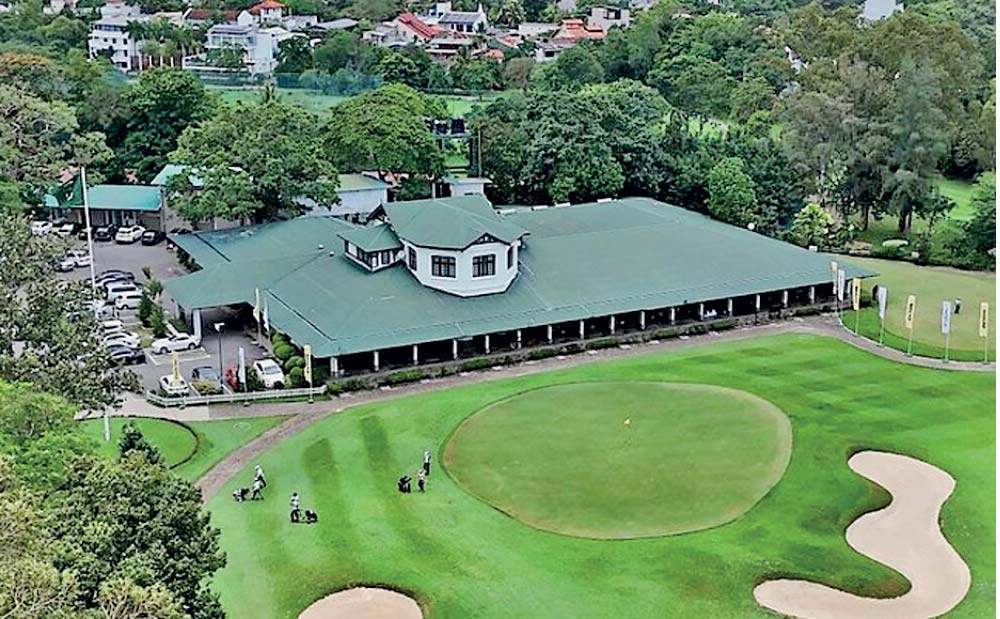
Royal Colombo is consequently considerably older as a golfing institution than its Royal designation might suggest.
Indeed, the Club's competitive history reaches back even further. The Club's historical record identifies a competitive trophy dating from 1887, while in 1888 the Calcutta Golf Club presented a silver medal to Colombo. The Calcutta Medal, a permanent challenge medal, remains part of Royal Colombo's historic trophy tradition.
That is an extraordinary legacy.
It means that Royal Colombo's competitive golfing traditions pre-date its Royal designation by approximately four decades.
The Royal Clubs and their trophies
The comparison of the Royal clubs also reveals a fascinating culture of perpetual trophies.
Golf has always had a special relationship with trophies.
Unlike many professional sports, where trophies may belong permanently to an event or organisation, golf clubs have traditionally created challenge trophies and medals that pass from champion to champion.
And throughout the Royal family, historic trophies preserve the names of players who may otherwise have disappeared from living memory.
In this respect, a perpetual trophy is more than silverware.
It is an archive.
Royal Colombo and the Royal Musselburgh benchmark
The comparison between Royal Colombo and Royal Musselburgh is particularly interesting.
Royal Musselburgh's competitive trophy tradition reaches back to 1774.
Royal Colombo's documented competitive trophy tradition reaches back to 1887, with the Calcutta Medal following in 1888.
The difference is approximately 113 years.
Yet both clubs demonstrate the same fundamental principle:
That distinction gives the Royal clubs their special character.
A heritage shared by the Royal Clubs
The history of the Royal golf clubs is ultimately a history of continuity.
Royal Musselburgh carries the memory of 1774.
Royal Blackheath carries a tradition reaching into the earliest history of golf.
Royal Liverpool, Royal Dornoch, Royal Melbourne, Royal Sydney, Royal Adelaide, Royal Montreal and the other historic clubs preserve their own remarkable competitive traditions.
And Royal Colombo carries the story of golf in Ceylon and Sri Lanka from 1879 into the twenty-first century.
The Royal designation connects these institutions, but their trophies and championships give them individual identities.
Its own moments when a young golfer defeated an established champion, when a veteran produced one last great performance, or when a family name appeared again on a trophy generations after it first became famous.
That is the romance of Royal golf.
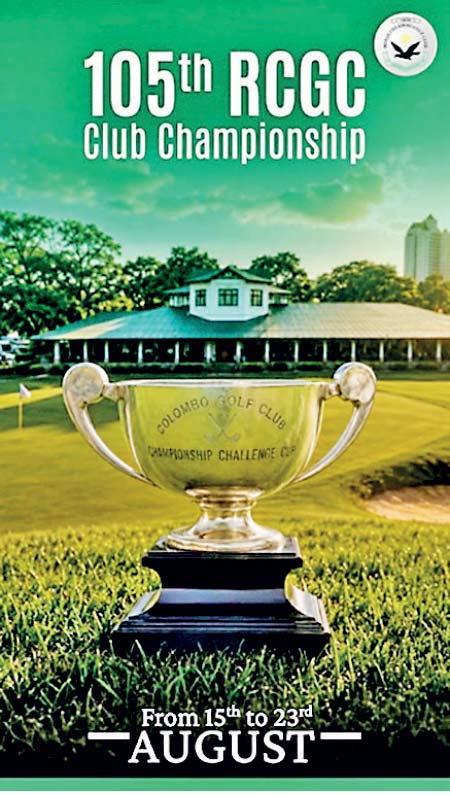 The Royal Colombo’s 105th Club Championship
Against this international background, the Royal Colombo Club Championship takes on a special significance.
Historical accounts identify 1914 as the year in which the Club Championship was instituted, with R. J. Elliot recorded as the first champion.
The competition has subsequently become one of the most prestigious events in the Club's annual calendar.
And so, the story now arrives at August 2026.
The first two rounds, on 15 and 16 August, are qualifying rounds played off gross scores. The leading 16 players then enter the match-play stages, with the competition proceeding through the pre-quarter-finals, quarter-finals and semi-finals.
The present format is particularly demanding.
Finally comes the ultimate examination:
One player will eventually walk away with the title.
But he will also inherit something much greater.
He will inherit a place in the history of one of Sri Lanka's oldest sporting traditions and within the international family of Royal golf clubs.
The living legacy of golf
As the Royal Colombo Golf Club prepares to host its 105th Club Championship, it is worth remembering that the greatest golf clubs are not simply custodians of buildings, courses and trophies.
Every generation inherits something from the one before it—and leaves something for the generation that follows.
 The record of Pin Fernando – A record that may never be broken
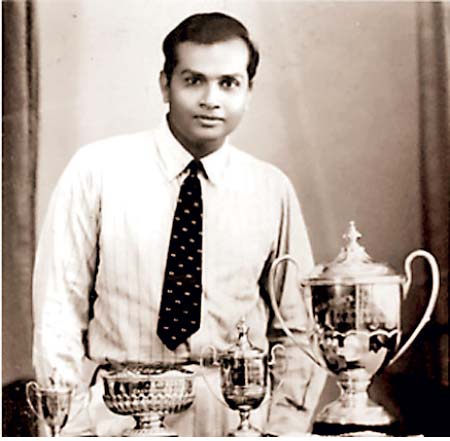
No history of the Royal Colombo Club Championship can be written without beginning with the late Pin Fernando.
At the summit of the Championship's history, he stands with a remarkable 19 victories, that remains as the benchmark against which every subsequent champion is measured.
Nineteen Club Championship victories represent far more than golfing ability. They represent an extraordinary capacity to remain competitive across different generations, opponents and playing conditions, and to repeatedly produce the performances required to survive the unique pressures of match play.
“Pin Fernando's 19 titles are the record that every future champion will inevitably measure himself against.”
Rusi Captain — The record's closest challenger
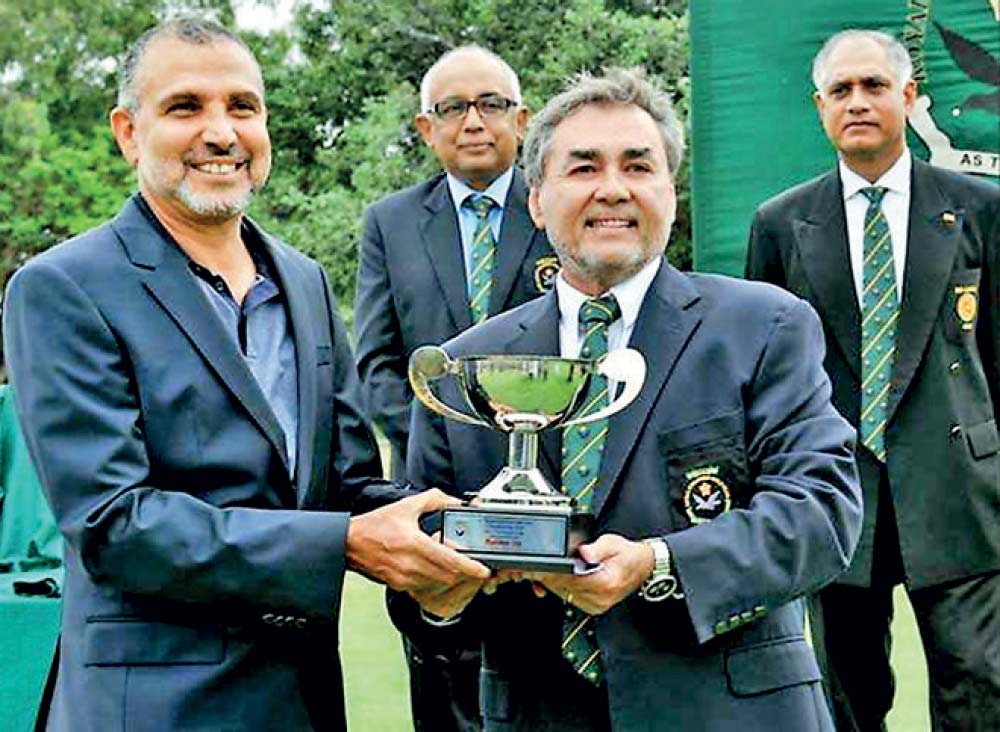
Closest to the late Pin Fernando's extraordinary record is Rusi Captain, a current member of the Club and one of the most decorated golfers in Royal Colombo history. Captain has won the Championship 14 times, placing him firmly in second place on the all-time list.
Rusi Captain's longevity is particularly remarkable. His name has appeared repeatedly in championship reports spanning decades, and he has remained a formidable match-play competitor even against considerably younger golfers. His 14 victories place him in a rare category—not simply as a multiple champion, but as a golfer whose name has become synonymous with the Royal Colombo Club Championship.
The contrast between Fernando's 19 victories and Captain's 14 illustrates just how difficult it is to establish sustained dominance in this competition.
A father and son in the Roll of Honour
The Fernando name has a further place in the Championship's history.
In a remarkable continuation of the family legacy, Priath Fernando, son of Pin Fernando, won the Royal Colombo Club Championship in 1979—the centenary year of the Club.
His victory added another special chapter to the Fernando family's association with Royal Colombo and its most coveted golfing title.
 The youngest generation
The Championship has also repeatedly demonstrated that experience is not an absolute requirement for greatness.
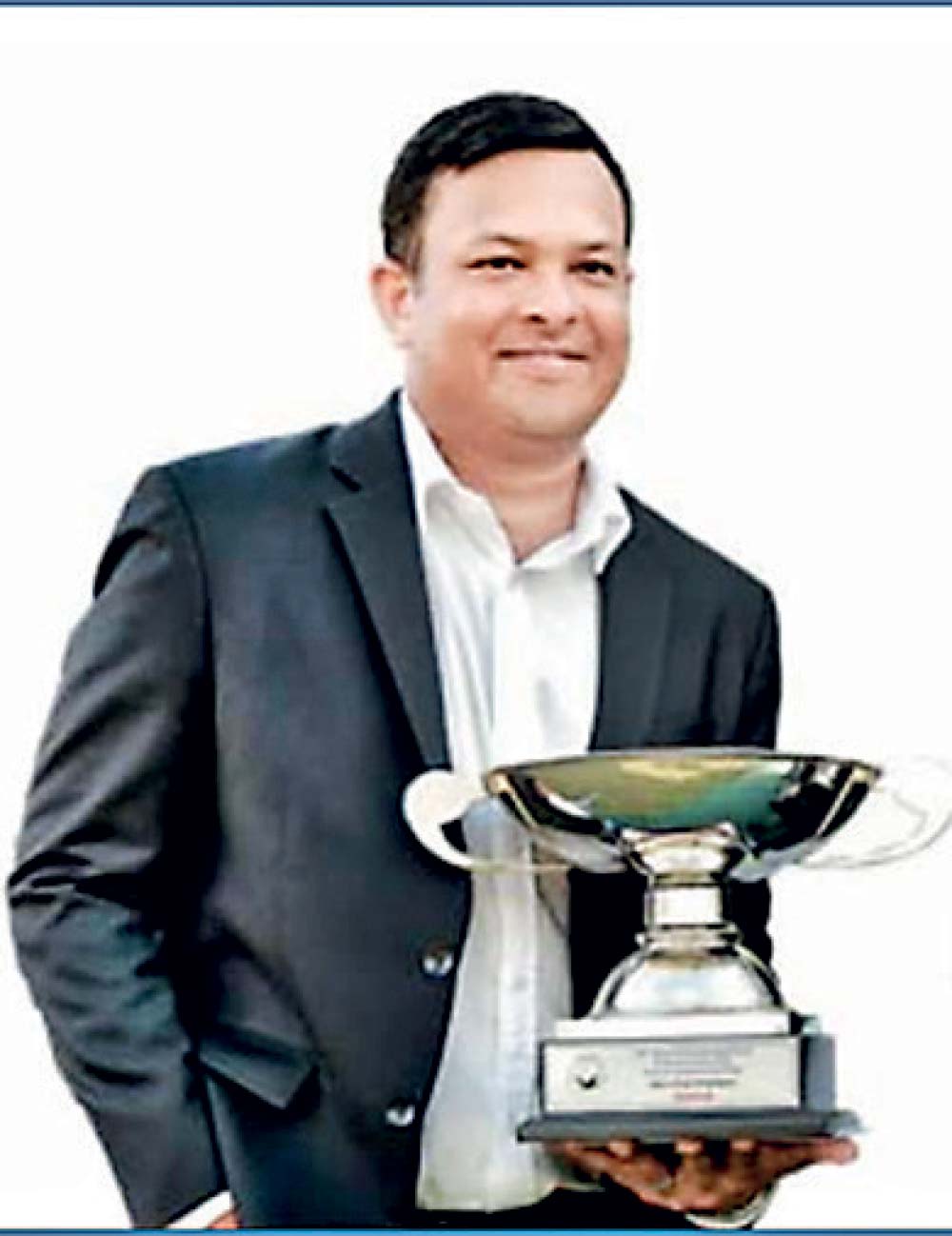
One of its most remarkable stories is that of Amrith De Soysa.
If Pin Fernando represents the enduring excellence of experience, Amrith De Soysa represents the extraordinary potential of youth.
In 2001, De Soysa won the Club Championship as a teenager, defeating the vastly more experienced Rusi Captain in the final.
His achievement was remarkable not merely because of his age, but because of the quality of the opponent he defeated.
De Soysa subsequently established himself as one of the most successful champions of the modern era, winning the title on five occasions: 2001, 2013, 2014, 2015 and 2022.
In 2024, he went on to serve as Captain of the Royal Colombo Golf Club, bringing another distinguished chapter to a golfing journey that had begun with his historic success as a young player.
His progression from young champion to Club Captain is a fitting illustration of how the Royal Colombo Championship connects generations.
“It is stories such as this that transform a championship roll of honour from a list of names into a living history of the Club”.
It is important, however, to recognise that the Championship's long history has produced many multiple winners. The names that follow Fernando mentioned here are largely champions of the more recent past, but they form only part of a much longer tradition of golfers who have won the Championship on more than one occasion.
Among those distinguished multiple champions are Rusi Captain (14), Amrith De Soysa (5), Pheroze Billimoria (4), Mithun Perera (4), K. Nandasena Perera (3), Sachin De Silva (3), Yannik Kumara (3) among , Sohli Captain (2), Dr. Chelliah Thurairaja (2), and many others, represent different generations of golfers who have contributed to the Championship's history.
The Championship as a record of Sri Lankan Golf
The importance of the Royal Colombo Club Championship extends beyond the competition itself.
Its roll of honour provides an extraordinary record of Sri Lankan golf.
The competition has repeatedly provided the stage upon which established champions have encountered the next generation.
That is why the Championship has remained relevant.
It has never been frozen in the past.
It has continuously renewed itself.
A Championship of generations
Perhaps the most remarkable feature of the Royal Colombo Championship is the way in which generations overlap.
Names such as Pin Fernando, Sohli Captain, Dr. C. Thurairaja, Rusi Captain, Pheroze Billimoria, Amrith De Soysa, late K. Nandasena Perera, Mithun Perera, Sachin De Silva and Yannik Kumara, among others are not merely historical references.
They are the standard.
The young golfer entering the qualifying rounds today competes on the same historic stage on which the champions of previous generations established their reputations.
Every player entering the 2026 Championship knows that somewhere in the history of the Club stands Pin Fernando's 19 victories.
Behind him stands Rusi Captain's 14.
Then come the many multiple champions whose periods of success defined different eras.
And beyond them are the hundreds of players whose names appear only once on the roll of honour—but whose victory gave them something that no subsequent tournament can take away:
they became a Royal Colombo Club Champion.
A new name awaits
On 23 August 2026, another name will be added to that history.
The identity of the next champion is not yet known.
But the significance of his victory is already assured.
He will become part of a championship tradition that reaches back more than a century at Royal Colombo and forms part of the much wider historical tapestry of the world's Royal golf clubs.
From the Old Club Cup of Royal Musselburgh in 1774 to the Calcutta Medal tradition at Royal Colombo from 1888, from the great Scottish and English Royal clubs to the Royal clubs of Australia, Canada, Africa and Asia, the story is ultimately the same.
The 105th Royal Colombo Club Championship is therefore not simply another tournament.
It is the continuation of a story that began generations ago—and which, on 23 August 2026, will acquire another name.
A new chapter is about to be written!




