Friday Sep 18, 2026
Friday Sep 18, 2026
Friday, 29 May 2026 03:24 - - {{hitsCtrl.values.hits}}
Review By Tyrone Smith
There are victories, and then there are statements so thunderous that they echo long after the final whistle has dissolved into memory. Trinity College’s savage dismantling of Isipathana was precisely such a declaration, a performance forged not merely in brilliance, but in endurance, violence of intent, defensive heroism, and an almost terrifying refusal to yield momentum even when adversity arrived in waves.
Yet for a fleeting opening quarter, the script appeared willing to flirt with uncertainty. Isipathana burst from the blocks with all the menace and fluidity for which they are admired.
The opening 10 to 15 minutes belonged emphatically to the Green Machine. They carried with confidence, attacked expansively, and forced Trinity momentarily onto the defensive perimeter. Their early score seemed to validate the emotional fervour that had accompanied the build-up to the contest, and for a brief spell, one sensed the Pathanians believed they could overwhelm the defending champions through pace and continuity. But champions do not panic.
They absorb, they calculate.
And then they devour.
What followed thereafter was a remorseless exhibition of championship rugby from Trinity College, a side that appears increasingly capable of suffocating opponents not only with skill, but with psychological inevitability. Once the Lions settled into rhythm, Isipathana were gradually dragged into waters too deep and currents too violent for even their celebrated running game to survive.
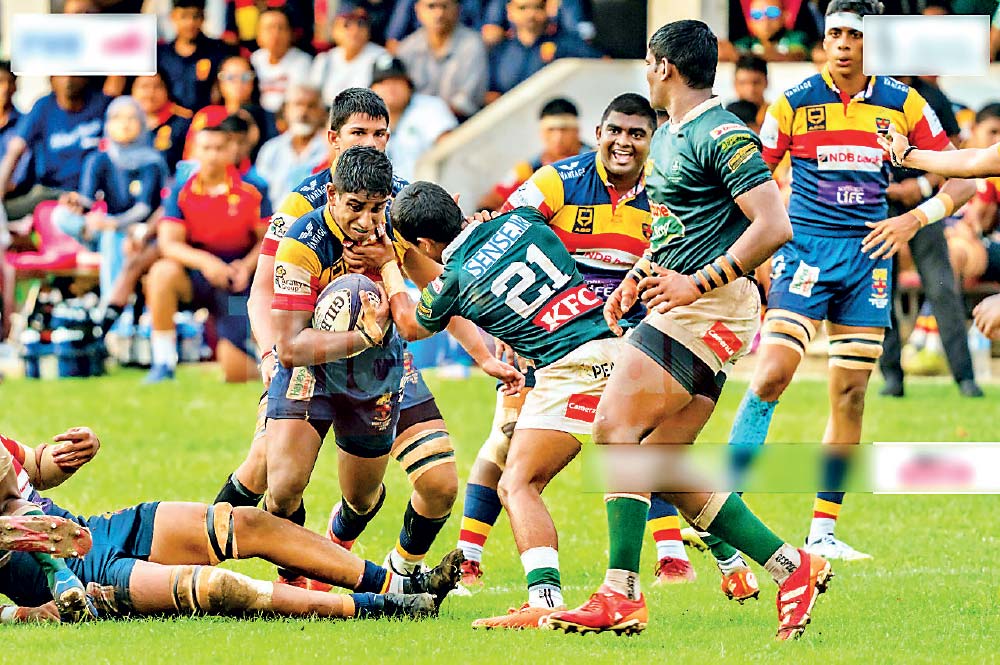
The defining feature of Trinity’s triumph was unquestionably their defensive effort, which bordered at times on the superhuman. The collisions were savage, the line speed relentless, and the commitment around the breakdown utterly uncompromising.
Pathana, dangerous as ever with ball in hand, found themselves hounded from every conceivable angle, their runners met not by hesitation but by red, gold, and blue jerseys arriving with frightening physical authority.
Most astonishing of all was the manner in which Trinity achieved this while repeatedly handicapping themselves through indiscipline. Four yellow cards in a single contest would ordinarily dismantle the structure and composure of most schoolboy sides. At one stage Trinity were reduced to 13 players, defending desperately with two men in the bin, and in cumulative terms, they effectively played 40 of the 70 minutes with only 14 men on the field.
Yet paradoxically, it was during these periods of numerical disadvantage that the Lions appeared most ferocious.
Their physical defence became almost primal in its resistance. Every tackle carried emotional force. Every turnover felt stolen through sheer willpower. Isipathana attacked bravely and often, but the physical punishment exacted upon them gradually began to corrode their fluency. Their once celebrated continuity faltered into stuttering phases, possession was repeatedly surrendered under pressure, and promising movements dissolved beneath Trinity’s suffocating aggression.
And then came the tries.
Six of them.
Not ordinary scores fashioned from attrition or opportunism, but vintage Trinity specials infused with imagination, acceleration, and devastating execution. The Lions repeatedly unleashed Garryowen to magnificent effect, launching towering contestable kicks that had Pathana trapped in vice-like grips time and time again. The chase was relentless, the pressure suffocating, and the recovery work ruthless. Isipathana simply could not settle beneath the aerial bombardment, and each towering kick seemed to further destabilise their rhythm and composure.
Indeed, had the Lions displayed greater restraint and avoided their avalanche of penalties, the margin might have assumed even more intimidating proportions. Several attacks of breathtaking quality were denied their full reward, while Trinity’s usually reliable place kicking strangely deserted them at crucial moments. Possessing three efficient kickers, the Lions nevertheless appeared unexpectedly off the boil from the tee, with three of the six possible conversions drifting astray.
Yet even those missed opportunities could not dilute the grandeur of the performance.
And amidst all the thunderous collisions and ruthless competition, there emerged one final aspect of the afternoon deserving the highest praise imaginable: the magnificent sportsmanship displayed by Isipathana College, both on the field and upon the terraces.
Despite the disappointment of seeing their side overwhelmed by a rampant Trinity outfit, the Pathana supporters conducted themselves with a dignity and grace that elevated the occasion far beyond mere schoolboy rivalry. Every attempted kick at goal by Trinity was met not with jeering or distraction, but with a remarkable pin-drop silence from the Isipathana faithful. It was an extraordinary gesture of respect, discipline, and sporting culture — one that did immense credit to the traditions of the school.
Equally commendable were the Isipathana players themselves, who, despite enduring a physically punishing afternoon, continued to compete with admirable courage and commendable restraint. There was intensity without malice, aggression without ugliness, and rivalry without bitterness.
Bravo, Pathana.
Games shall always be won and lost. Titles will change hands, seasons will fade, and scoreboards will eventually gather dust. But this kind of gentlemanly conduct, displayed amidst fierce rivalry and immense pressure, shall linger in the collective memory long after the tries themselves are forgotten.
As for Trinity, the Lions did not merely win. They conquered.




