Saturday Sep 19, 2026
Saturday Sep 19, 2026
Monday, 26 January 2026 03:29 - - {{hitsCtrl.values.hits}}
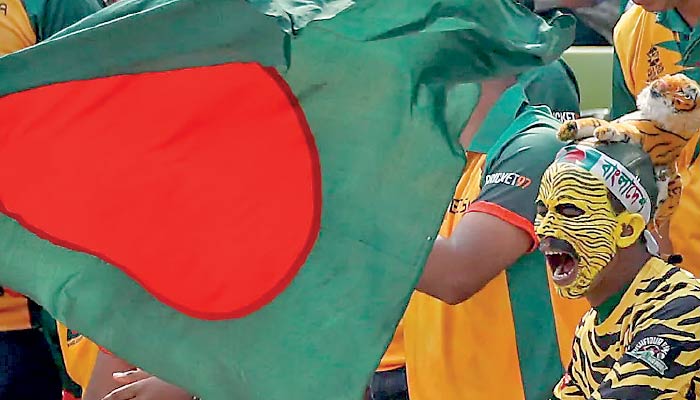
The International Cricket Council (ICC) has been condemned for practising “double standards” and damaging the reputation of the game after it expelled Bangladesh from the Men’s T20 World Cup over their refusal to travel to India due to security concerns.
Bangladesh were kicked out of the upcoming tournament by the ICC on Saturday following a weeks-long impasse between cricket’s governing body and the South Asian nation over the change of venues for its fixtures in the World Cup.
The move, which resulted in Scotland’s inclusion in the tournament in place of Bangladesh, was criticised by former cricketers, experts, and cricketers’ associations, terming it a “sad moment for the game.”
“The withdrawal of Bangladesh from the T20 World Cup, and resulting absence of a valued cricketing nation from cricket’s pinnacle international T20 event, is a sad moment for our sport, the Bangladesh players and fans, and one that requires deep reflection,” World Cricketers’ Association (WCA) Chief Executive Tom Moffat said in a statement. “Rather than allowing division or exclusion to take hold, we call on the game’s leaders to work with all stakeholders, including governing bodies, leagues, and players, to unite the sport, not divide it.”
Moffat said the WCA had become increasingly concerned by agreements not being honoured in the sport and by a lack of meaningful consultation with players and their representatives.
“It also highlights significant issues with the game’s existing operating model at [the] global level,” he added. “These issues, if continued to be left unaddressed, will weaken trust, unity, and ultimately the health and future of the game we love.”
The ICC rejected Bangladesh’s request to move their matches to tournament co-hosts Sri Lanka, saying it was not feasible to change the schedule so close to the 7 February start of the tournament, while Bangladesh remained firm on their stance on not playing in India, citing safety and security concerns for its players.
However, former players questioned the ICC’s impartiality as it recently relocated India’s fixtures from Pakistan to a neutral venue for the same reason.
India refused to travel to Pakistan for the ICC Champions Trophy in March 2025 based on the Government’s decision. It prompted the ICC to broker an agreement between the two countries, allowing them to play at a neutral venue when their neighbour hosts a global tournament.
All of India’s Champions Trophy matches, including the final, were hosted in Dubai, United Arab Emirates.
Outspoken former Pakistan Captain Shahid Afridi questioned the ICC’s decision and said it left him “deeply disappointed.”
“Bangladesh’s players and millions of its fans deserve respect – not mixed standards,” he wrote on ‘X.’ “The ICC should build bridges, not burn them.”
While India and Bangladesh do not share the same hostile relationship, their ties have been affected by recent political tensions.
Another former Pakistan Captain Mohammad Yousuf said Bangladesh’s cricket fans were being “deprived of cricket.” “Very sad to see a cricket-loving nation like Bangladesh being deprived of cricket due to security concerns not being addressed,” he said.
Yousuf, who also worked as Pakistan’s batting coach, urged the ICC to show fairness in its practices. “When similar concerns were raised earlier, a neutral venue was approved,” he said. “Standards cannot change from country to country. The ICC must act as the International Cricket Council, not appear to serve the interests of any single Board. Fairness and consistency are the foundation of global cricket.”
While Pakistan are set to play all their T20 World Cup fixtures in Sri Lanka, Naqvi said their participation was still not confirmed.
“The Prime Minister is not in Pakistan right now. When he returns, I’ll be able to give you our final decision,” Naqvi said when asked to comment on the ICC’s decision. “Our stance [on World Cup participation] will be what the Government of Pakistan instructs me,” he said. “It’s the [Pakistan] Government’s decision. We obey them, not the ICC.”




