Saturday Sep 26, 2026
Saturday Sep 26, 2026
Friday, 25 September 2026 10:06 - - {{hitsCtrl.values.hits}}
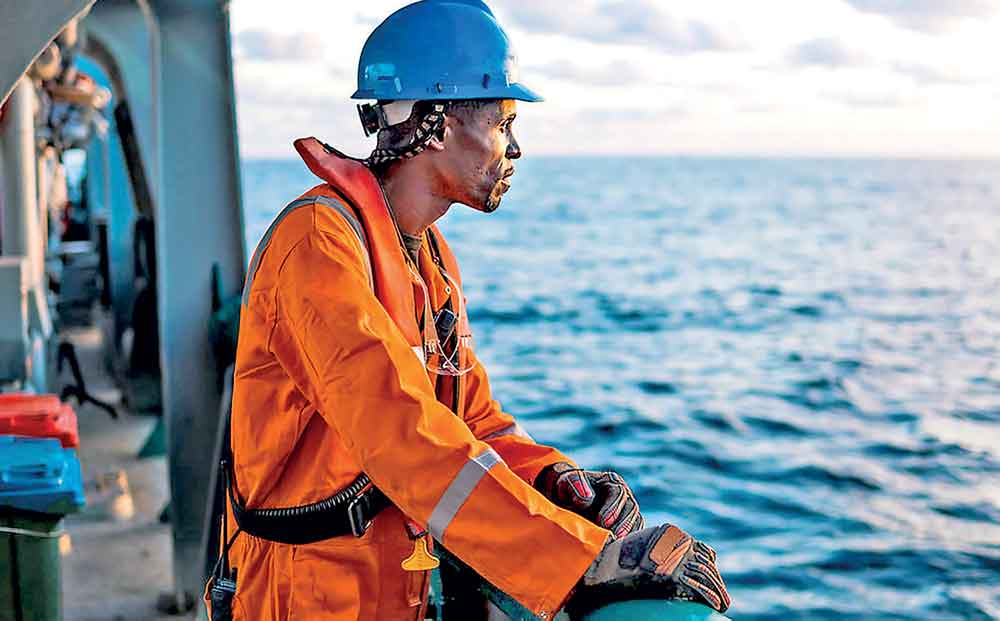
Every day, ships cross oceans carrying the goods, energy, food, raw materials and products that connect economies and communities around the world. Modern global trade depends heavily on maritime transport, but behind every voyage, every port call and every safely delivered cargo is something far more important than steel, technology or machinery: people. They are the seafarers.
From the bridge of a container ship to the engine room of a tanker, from cargo operations to navigation and safety management, seafarers carry responsibilities that extend far beyond their individual duties. They are among the people who keep the global maritime system functioning, often spending months away from their families while working in challenging and sometimes unpredictable environments.
As the world marks World Maritime Day 2026, the focus on moving “From Policy to Practice: Powering Maritime Excellence” provides an opportunity to look at what maritime excellence really means. It is not only about stronger regulations, advanced technology, efficient ports or environmentally responsible ships. It is also about creating a maritime industry in which the people responsible for operating those ships are properly trained, protected, respected and supported.
Seafarers: The Human Power Behind Global Shipping
A ship may represent an impressive combination of engineering and technology, but it cannot operate without skilled people. Seafarers navigate vessels, monitor machinery, manage cargo, respond to emergencies, maintain safety systems and make critical decisions at sea.
Their role is particularly important because maritime operations take place in an environment where conditions can change rapidly. Weather, sea conditions, technical problems and operational challenges can demand quick and professional responses.
The International Maritime Organization recognises the human element as central to maritime safety and notes that the safety of life at sea, protection of the marine environment and the movement of more than 80% of global trade depend on the professionalism and competence of seafarers.
This makes investment in seafarers not simply a welfare issue. It is an essential part of safety, efficiency and resilience across the maritime industry.
Wellbeing Is a Safety Issue
For seafarers, wellbeing cannot be separated from operational safety.
Long working hours, insufficient rest, demanding schedules, isolation, separation from family and the pressures of life at sea can affect a person’s ability to perform safely. Fatigue, in particular, has long been recognised as a human-element issue that can influence performance and maritime safety. IMO’s human-element work specifically addresses fatigue and hours of work and rest.
A healthy and rested crew is better positioned to make sound decisions, communicate effectively and respond to emergencies.
Therefore, policies concerning working hours, rest periods, accommodation, food, medical support and safe working environments should not be viewed as administrative requirements alone. They are practical measures that help turn maritime safety standards into reality.
This is where the idea of “From Policy to Practice” becomes particularly meaningful. A regulation has value when it produces a real improvement in the daily lives and working conditions of people at sea.
The Human Side of Life at Sea
One of the unique realities of seafaring is the distance between work and home.
For many seafarers, joining a vessel means leaving behind parents, spouses, children and friends for extended periods. Important family moments can take place while they are thousands of kilometres away. Birthdays, anniversaries, school events and even difficult family situations may have to be experienced from a distance.
Technology has made communication easier, allowing seafarers to stay connected with their families through video calls and messaging. However, digital communication cannot completely replace being physically present.
This is why the human side of seafaring deserves greater recognition. Supporting seafarers means creating working environments where they can maintain meaningful connections with their families, access appropriate recreational facilities, receive adequate rest and obtain support when facing personal or professional difficulties.
Respect, Dignity and a Safe Workplace
Wellbeing also means being treated with dignity.
A modern maritime workplace must provide protection from violence, harassment, discrimination and other forms of unacceptable behaviour. Recent international work on the Maritime Labour Convention has placed further emphasis on protecting seafarers from violence and harassment, recognising them as key workers and strengthening provisions related to shore leave and wellbeing.
A safe ship is therefore more than a vessel equipped with lifesaving appliances and emergency procedures. It should also be a workplace where people feel respected, where concerns can be raised, and where professional relationships are built on responsibility and mutual respect.
Preparing Seafarers for a Changing Industry
The maritime sector is changing rapidly.
Digitalisation, automation, alternative fuels, new environmental requirements and increasingly sophisticated vessels are changing the skills required from today’s maritime workforce. Seafarers will need continuous training and opportunities to develop new competencies throughout their careers.
The future of shipping will therefore depend not only on technological innovation but also on the ability of people to work confidently with that technology.
Training must move beyond certificates and compliance. It should prepare seafarers for real situations, encourage practical decision-making and build the confidence required to operate increasingly complex ships.
This is another important connection between policy and practice: international standards must translate into meaningful training and practical skills on board.
A Shared Responsibility
Seafarer wellbeing cannot be the responsibility of one organisation alone.
Shipowners, operators, governments, maritime administrations, training institutions, port authorities, regulators and international organisations all have roles to play. Even technology providers and the wider shipping supply chain have an interest in ensuring that the people operating the maritime system are supported.
The IMO’s approach to the human element recognises this shared responsibility, involving regulators, Member States, companies and seafarers themselves.
The objective should be clear: standards must be implemented consistently, not selectively. A policy that exists only on paper cannot protect a seafarer working thousands of kilometres from shore.
Powering Maritime Excellence Through People
World Maritime Day 2026 offers an opportunity to look beyond the ships and see the people behind them.
Maritime excellence is ultimately measured not only by how quickly cargo moves or how efficiently a vessel operates, but by whether ships can operate safely, responsibly and sustainably while protecting the people who make that possible.
Seafarers are professionals, skilled workers, decision-makers and human beings with families, ambitions and lives beyond the ship.
Their wellbeing should therefore be considered an essential part of the maritime industry’s future.
Moving from policy to practice means turning international standards into safer workplaces, meaningful training, adequate rest, stronger protection, better communication, access to welfare services and greater respect for those who work at sea.
Because the future of shipping is not powered by ships alone.
It is powered by people.
And when the people behind the world’s ships are supported, respected and empowered to perform at their best, the entire maritime industry becomes stronger, safer and more resilient.




