Friday Oct 16, 2026
Friday Oct 16, 2026
Wednesday, 27 May 2026 14:03 - - {{hitsCtrl.values.hits}}
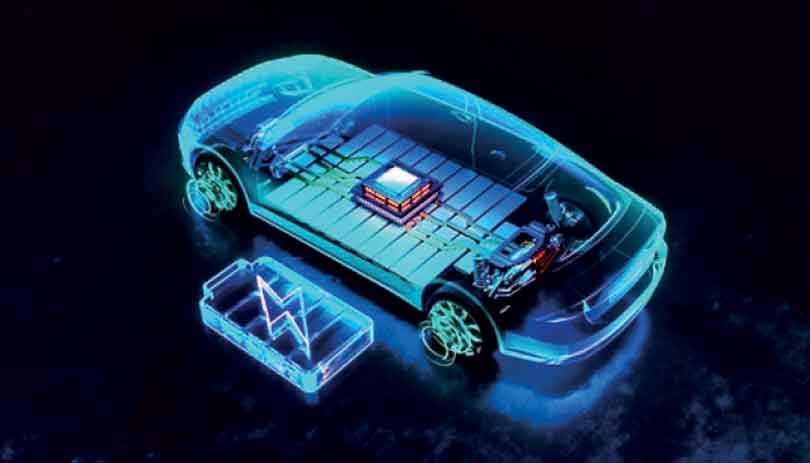
The global automotive industry is experiencing a historic transformation driven by the rapid growth of electric vehicles (EVs). At the center of this revolution lies one of the most important components of an electric vehicle — the battery. Over the past two decades, EV battery technology has evolved significantly, improving vehicle performance, affordability, efficiency, and sustainability. These advancements are not only changing the future of transportation but are also creating major economic and environmental benefits for the automotive industry worldwide.
In the early stages of electric vehicle development, battery technology was one of the biggest limitations preventing mass adoption. Early electric vehicles relied on lead-acid batteries, which were heavy, inefficient, and offered limited driving range. These batteries required long charging times and had relatively short lifespans, making electric vehicles impractical for mainstream consumers.
As technology progressed, nickel-metal hydride (NiMH) batteries became a more advanced alternative. These batteries provided better energy density and improved durability compared to lead-acid systems. During the late 1990s and early 2000s, several hybrid vehicles successfully used NiMH battery technology, helping consumers gain confidence in electric mobility solutions.
However, the true breakthrough in the EV industry came with the development and commercialization of lithium-ion battery technology. Lithium-ion batteries revolutionized the electric vehicle market due to their high energy density, lightweight structure, faster charging capabilities, and longer operational lifespan. These batteries became the standard for modern electric vehicles and remain the dominant battery technology today.
One of the most significant advantages of lithium-ion batteries is their ability to store more energy in a smaller and lighter package. This improvement allowed electric vehicles to achieve longer driving ranges while maintaining better performance and efficiency. Earlier electric vehicles often struggled to travel more than 100 kilometers on a single charge, but modern EVs can now exceed 400 to 600 kilometers depending on the model and battery size.
Battery charging technology has also improved dramatically over the years. In the early days of EV adoption, charging an electric vehicle could take many hours, limiting convenience for users. Today, fast-charging systems allow many EV batteries to charge up to 80 percent within 20 to 40 minutes. Ultra-fast charging stations are continuing to expand globally, reducing range anxiety and making EV ownership more practical for consumers.
Battery costs have experienced a major decline as production scales increased and manufacturing technologies improved. A decade ago, EV batteries were extremely expensive, contributing significantly to the overall cost of electric vehicles. However, mass production, supply chain optimization, and advancements in battery chemistry have reduced battery prices considerably. This decline has made electric vehicles more affordable and competitive with traditional internal combustion engine vehicles.
Research and development continue to push battery technology toward even greater efficiency and sustainability. Solid-state batteries are currently considered one of the most promising future developments in the EV sector. Unlike conventional lithium-ion batteries that use liquid electrolytes, solid-state batteries use solid materials that improve safety, energy density, and charging speed. These batteries could potentially deliver longer driving ranges, reduced fire risks, and shorter charging times.
Another emerging innovation is the development of lithium iron phosphate (LFP) batteries. LFP batteries are gaining popularity because they offer longer lifespans, improved thermal stability, and lower production costs. Although they may provide slightly lower energy density than some lithium-ion alternatives, they are considered safer and more affordable for mass-market electric vehicles.
Battery recycling and second-life applications are also becoming important areas of focus within the automotive industry. As EV adoption increases, manufacturers are investing heavily in recycling technologies to recover valuable materials such as lithium, cobalt, nickel, and manganese. Recycling helps reduce environmental impact, lowers raw material dependency, and supports a more sustainable supply chain.
Second-life battery applications provide additional economic value by reusing EV batteries for energy storage systems after their automotive lifespan ends. Even when batteries no longer meet vehicle performance requirements, they can still store renewable energy for residential, commercial, or industrial use. This approach extends battery usefulness and supports renewable energy integration.
The evolution of EV battery technology is providing numerous benefits to the automotive industry. One of the biggest advantages is the acceleration of the global transition toward sustainable transportation. Governments worldwide are introducing stricter emission regulations and encouraging cleaner mobility solutions. Improved battery technology is helping manufacturers meet environmental targets while reducing carbon emissions from transportation.
Battery advancements are also creating new business opportunities within the automotive ecosystem. Companies involved in battery manufacturing, raw material processing, charging infrastructure, recycling, and energy management are experiencing rapid growth. This expansion is generating employment opportunities, attracting investment, and supporting industrial development in many countries.
Automotive manufacturers are increasingly investing in battery research, production facilities, and strategic partnerships to strengthen their competitiveness. Several major automakers are establishing dedicated battery manufacturing plants to secure long-term supply chains and reduce dependency on external suppliers. This vertical integration allows companies to improve cost control, production efficiency, and technological innovation.
The development of battery technology is also enhancing vehicle performance and customer satisfaction. Modern electric vehicles offer smooth acceleration, lower maintenance costs, quieter operation, and advanced digital features. Improved battery reliability and extended warranties are increasing consumer confidence in EV ownership.
From an environmental perspective, advanced EV batteries contribute significantly to reducing greenhouse gas emissions and air pollution. Transportation remains one of the largest contributors to global carbon emissions, and the shift toward electric mobility plays a critical role in addressing climate change. When combined with renewable energy sources such as solar and wind power, electric vehicles can support a cleaner and more sustainable energy future.
Emerging economies also stand to benefit from advancements in EV battery technology. Countries seeking to reduce fuel imports and strengthen energy security can invest in electric mobility solutions and renewable energy infrastructure. Local battery assembly, charging networks, and EV servicing industries can contribute to economic diversification and job creation.
Sri Lanka, for example, has growing potential to participate in the electric mobility transition. Rising fuel costs, environmental concerns, and increased interest in renewable energy create favorable conditions for EV adoption. Expanding charging infrastructure, encouraging investment, and supporting technical education in battery technology could help strengthen the country’s automotive and energy sectors.
Despite the progress, challenges still remain. Battery raw material sourcing, charging infrastructure limitations, recycling efficiency, and energy grid capacity continue to require attention. Manufacturers and governments must work together to ensure sustainable resource management and responsible environmental practices throughout the battery lifecycle.
In conclusion, the evolution of EV battery technology has transformed the automotive industry and accelerated the global shift toward sustainable transportation. Advancements in battery performance, charging speed, safety, affordability, and recycling are making electric vehicles more practical and accessible than ever before. These innovations are not only benefiting consumers but are also driving economic growth, industrial development, and environmental sustainability. As research continues and new technologies emerge, EV batteries will remain at the heart of the future automotive revolution.




