Thursday Jun 18, 2026
Thursday Jun 18, 2026
Thursday, 7 May 2026 16:21 - - {{hitsCtrl.values.hits}}
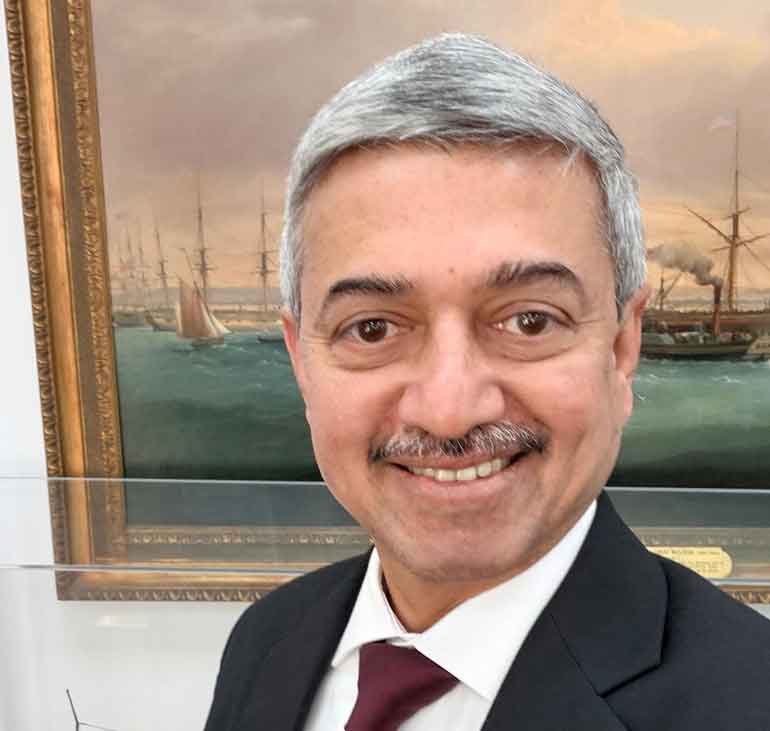
As the Institute of Chartered Shipbrokers (ICS) Sri Lanka Branch approaches its 40th year, it has evolved into a key enabler of professional capability within Sri Lanka’s maritime and logistics ecosystem - quietly but consistently strengthening the human capital that underpins the industry.
At a time when global shipping is being reshaped by digitalisation, sustainability mandates, shifting trade corridors, and regulatory complexity, the need for commercially astute and technically competent professionals has never been greater. Sri Lanka’s ambition to position itself as a regional maritime and logistics hub will depend significantly on the depth and quality of its talent pool.
This is where ICS Sri Lanka has made a meaningful contribution. By supporting structured, internationally benchmarked professional education, the branch has helped create a pipeline of talent equipped to operate across ship operations, chartering, port agency, liner trade, and integrated logistics. The emphasis has not merely been on professional qualification, but on developing practical commercial judgement aligned with global industry standards.
A distinguishing feature of Sri Lanka’s progress in this space has been the strength of industry collaboration. Professional bodies have not operated in isolation; rather, they have been supported by a network of stakeholders including government authorities, ports, and industry associations. Organisations such as Ceylon Association of Shipping Agents (CASA) Sri Lanka, Chartered Institute of Logistics and Transport (CILT), YoungShip and Women’s International Shipping and Trading Association (WISTA) have played an important role in reinforcing professional standards, advocating industry development, and encouraging continuous learning among practitioners.
Such alignment between professional institutions and industry bodies is critical. It ensures that education remains relevant to operational realities, and that the industry, in turn, recognises and values structured qualifications. This partnership model is essential if Sri Lanka is to compete with established maritime hubs in the region.
The global success of Sri Lankan professionals provides strong evidence of this foundation. Across the Middle East and the Far East, ICS-qualified individuals from Sri Lanka are contributing across shipping lines, port operations, logistics providers, and trading organisations. Their reputation for discipline, technical competence, and adaptability has made them highly sought after, with many progressing into senior management roles. This outward success also creates a virtuous cycle - enhancing Sri Lanka’s credibility as a source of skilled maritime talent.
From a global ICS perspective, the momentum within the Sri Lanka Branch is both visible and encouraging. My engagements in Colombo, including participation in industry events in 2024 and 2026, reflected a community that is increasingly confident, outward-looking, and aligned with international standards. The depth of engagement - from students to senior industry leaders - signals a mature professional ecosystem.
Looking ahead, the focus must shift from building capability to scaling it. Continuous education will be central to this effort. As the industry adopts new technologies, embraces decarbonisation pathways, and navigates evolving trade dynamics, professionals will need to continuously upgrade their skills. Equally, greater collaboration between academia, professional bodies, and industry will be required to ensure that learning pathways remain agile and responsive.
There is also an opportunity to further institutionalise professional standards within the regulatory and licensing framework of the industry. Recognising professional qualifications as a benchmark for certain roles could significantly enhance consistency, quality, and global competitiveness.
ICS, as a global professional body, is well positioned to support this next phase - through its qualifications, international network, and ongoing initiatives in digital learning and industry engagement. The Sri Lanka Branch, with its strong legacy and stakeholder support, is poised to play a leading role in this evolution.
As it approaches four decades of contribution, ICS Sri Lanka is not merely marking a milestone - it is reinforcing its role as a catalyst for capability, professionalism, and global integration. The opportunity now is to build on this foundation and position Sri Lanka as a center of excellence for maritime talent in the region.
Krishnan Subramaniam, FICS
International Chairman, Institute of Chartered Shipbrokers, U.K.




