Friday Oct 16, 2026
Friday Oct 16, 2026
Monday, 17 August 2026 15:34 - - {{hitsCtrl.values.hits}}
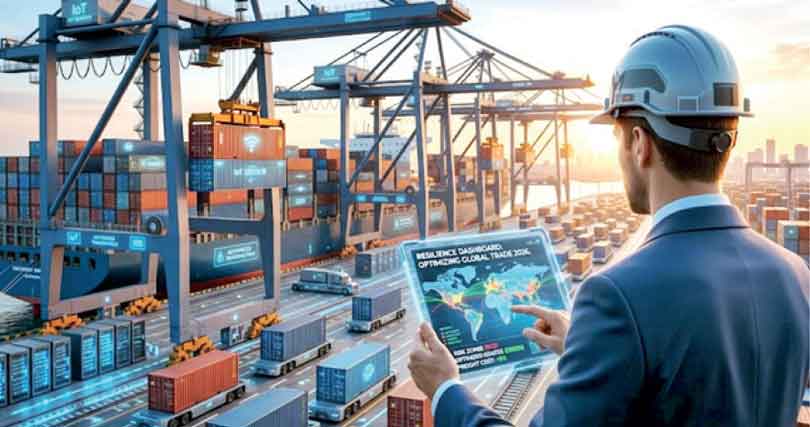
Global trade has never operated in a completely predictable environment. From geopolitical tensions and trade restrictions to extreme weather, port congestion and sudden changes in consumer demand, businesses constantly face risks that can disrupt the movement of goods across borders. In today’s highly interconnected economy, however, the impact of a disruption in one region can quickly spread across continents.
This reality is transforming the way companies think about logistics. Supply chains are increasingly moving away from a traditional focus on cost and efficiency towards a broader priority: resilience.
Supply-chain resilience is the ability of a business to anticipate disruptions, respond quickly when they occur and recover without significant damage to operations. For companies engaged in international trade, this capability is becoming a major competitive advantage.
A More Uncertain Global Trading Environment
Modern supply chains often depend on multiple countries and transportation networks. Raw materials may be sourced from one region, processed in another, manufactured elsewhere and finally shipped to customers thousands of kilometres away.
This interconnected model has created enormous efficiencies, but it also creates vulnerabilities. Disruptions to major maritime routes can increase shipping distances, fuel consumption, freight rates and insurance costs. Port closures, political instability and extreme weather can create similar challenges.
The lesson for businesses is clear: a supply chain designed only for normal conditions may not be strong enough for an increasingly uncertain global economy.
Diversification as a Strategic Priority
One of the most effective ways to reduce supply-chain risk is diversification.
Businesses that depend on a single supplier, transportation company or geographical market can face serious difficulties when that source becomes unavailable. Developing alternative suppliers across different regions can provide greater flexibility during periods of disruption.
Companies should also examine their logistics networks and identify alternative ports, shipping routes and freight providers. While maintaining these alternatives may involve additional costs, they can become extremely valuable when normal trade routes are interrupted.
Diversification does not mean abandoning established suppliers. Instead, it means creating enough flexibility to avoid complete dependence on one source.
Technology Creates Supply-Chain Visibility
Technology is becoming one of the most powerful tools for building resilient logistics networks.
Real-time tracking systems allow companies to monitor shipments and identify delays much earlier. Digital platforms can connect suppliers, freight forwarders, shipping companies, warehouses and customers, creating greater visibility throughout the supply chain.
Artificial intelligence and predictive analytics are taking this capability further. Businesses can analyse market information, weather conditions, transportation data and historical trends to identify potential disruptions and evaluate alternative responses.
The ability to know where goods are, when they are likely to arrive and what risks could affect their journey enables businesses to make faster and better decisions.
The Rise of Flexible Logistics
Flexibility is another important characteristic of resilient supply chains. Instead of relying on a single transportation method, companies are increasingly considering combinations of sea, air, road and rail.
Maritime transportation will remain essential for international trade because of its ability to move large volumes of goods efficiently. However, alternative modes can provide valuable options when delays occur.
For example, a business may transport the majority of its cargo by sea while using air freight for urgent or high-value products. Similarly, road and rail connections can provide alternative links between ports, distribution centres and final markets.
Strategic Inventory Management
The idea of maintaining minimum inventory levels is also evolving.
While excessive inventory can increase costs, insufficient stock can leave businesses vulnerable when supplies are delayed. Companies therefore need to identify critical materials and products and determine appropriate safety-stock levels.
Modern forecasting technology can help businesses achieve this balance. Instead of simply increasing inventory, companies can use data to determine which products are most vulnerable to disruption and where additional stock would provide the greatest protection.
Sustainability and Resilience
The future of logistics is also closely connected to sustainability.
Businesses are under increasing pressure to reduce emissions, improve energy efficiency and adopt environmentally responsible transportation practices. At the same time, climate-related events are becoming an important supply-chain risk.
Investing in energy-efficient warehouses, cleaner transportation, renewable energy and sustainable packaging can therefore contribute to both environmental performance and operational resilience.
Sri Lanka’s Strategic Opportunity
Sri Lanka has an important role to play in the evolving regional logistics landscape. Its location near major international shipping routes gives the country a natural geographical advantage.
Strengthening port infrastructure, improving road and rail connectivity, developing logistics parks, modernising customs processes and expanding digital trade services can help Sri Lanka become a more competitive logistics and transshipment centre.
For local businesses, the same global developments provide an opportunity to strengthen their own supply chains. Importers and exporters can benefit from supplier diversification, improved shipment visibility, contingency planning and stronger relationships with logistics service providers.
Preparing for the Next Disruption
No business can predict exactly where or when the next major disruption will occur. However, companies can prepare for uncertainty.
A resilient organisation should regularly assess its supply-chain vulnerabilities, identify alternative suppliers and routes, maintain appropriate contingency inventories, monitor geopolitical developments and establish clear crisis-response procedures.
The most successful companies will not necessarily be those that experience the fewest disruptions. They will be those that can respond to disruption faster and recover more effectively.
The Future Is Resilient
Global trade will continue to connect businesses and economies across borders. However, the supply chains supporting that trade are becoming more complex and exposed to a wider range of risks.
The future of logistics therefore belongs to businesses that combine efficiency with flexibility, technology with human decision-making, and global connectivity with strategic resilience.
For companies, governments and logistics providers alike, resilience is no longer simply a response to crisis. It is an investment in long-term competitiveness.
As global trade enters a new era of uncertainty, the ability to keep goods moving despite disruption will become one of the defining strengths of successful businesses and economies.




