Saturday Sep 26, 2026
Saturday Sep 26, 2026
Friday, 25 September 2026 10:28 - - {{hitsCtrl.values.hits}}
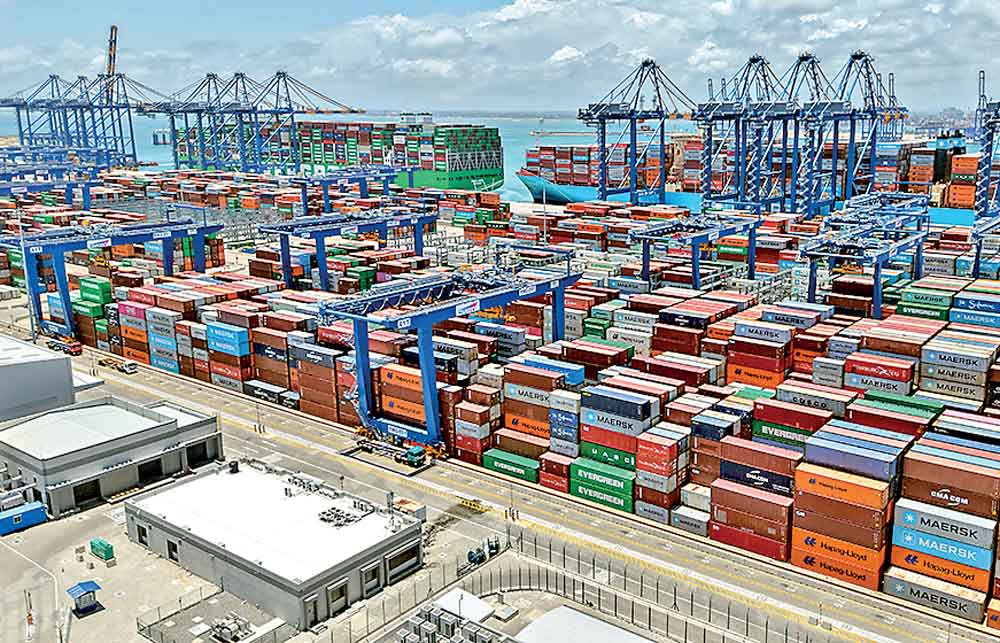
View of the CWIT Terminal
|
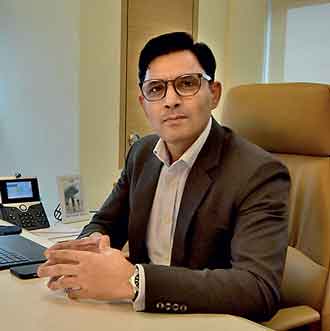
Munish Kanwar |
As global supply chains evolve and the maritime industry embraces digitalisation, ports are increasingly expected to deliver greater efficiency, reliability and sustainability. At the forefront of this transformation is Colombo West International Terminal (CWIT), Sri Lanka’s first fully automated deep-water container terminal, built to enhance the Port of Colombo’s competitiveness and support its role as a leading transshipment hub in South Asia.
Leading this journey is Munish Kanwar, Chief Executive Officer of CWIT, whose career spans more than two decades across some of the region’s most prominent ports, including Mundra, Hazira and Krishnapatnam. Drawing on this extensive experience, Kanwar is spearheading the development of a next-generation terminal that combines advanced automation, digital technologies, operational excellence and sustainable infrastructure.
In this exclusive interview, Kanwar shares his perspective on the future of transshipment, the role of AI and automation in modern terminal operations, CWIT’s sustainability ambitions, the value of its unique public-private partnership model, and how Colombo can further strengthen its position as one of the Indian Ocean’s most important maritime gateways.
Following are excerpts of the interview:
Q – You have spent over two decades leading major Indian ports like Mundra, Hazira and Krishnapatnam before taking the helm at CWIT. How has this experience shaped your approach to running a primarily transshipment-focused deep-water terminal in Colombo?
My experience across major ports such as Mundra, Hazira and Krishnapatnam has reinforced one important lesson: world-class infrastructure alone does not create a successful port. Sustainable success comes from bringing infrastructure, technology, customer focus and people together within a disciplined operating culture.
What makes Colombo distinctive is its strategic location at the crossroads of East-West trade and its established role as South Asia’s leading transshipment hub. In a transshipment business, reliability is critical because the movement of each container may depend on multiple vessels, services and destinations. Our focus must therefore extend beyond speed to predictability, connectivity and consistency.
At CWIT, we are combining proven port-management experience with the advantages of a purpose-built, highly automated deep-water terminal. As CEO, my responsibility is not simply to run the terminal efficiently, but to ensure that CWIT strengthens the competitiveness of the entire Port of Colombo and creates long-term value for Sri Lanka.
I see CWIT as critical national infrastructure. It supports regional trade, enhances Sri Lanka’s role in global supply chains and demonstrates what can be achieved when advanced technology, operational discipline and a committed workforce are aligned behind a clear strategic purpose.
Q – CWIT made history as Colombo’s first fully automated deep-water terminal when operations commenced in April 2025. In what specific ways is your AI-driven logistics system outperforming initial projections regarding vessel turnover times?
CWIT was designed from the outset as a digital and highly automated terminal. The most important benefit of this model is not technology for its own sake, but the greater predictability, visibility and operating discipline it brings to our customers and our teams.
Our integrated operating environment combines automated Ship-to-Shore cranes, automated yard cranes, fully electric Internal Terminal Vehicles, real-time tracking, Optical Character Recognition, IoT technologies and intelligent planning tools. These systems help us deploy equipment more effectively, reduce avoidable movements and make faster, better-informed decisions across the vessel and yard interface.
Vessel turnaround is influenced by many factors, including vessel size, exchange volume, stowage configuration, weather, equipment availability and shipping schedules. For that reason, I would not reduce performance to a single percentage. We assess success through the total customer outcome: berth productivity, schedule reliability, yard fluidity, safety and service consistency.
The strongest validation of our operating model is the confidence placed in us by our customers. Within our first year of operations, CWIT became the fastest terminal in the history of the Port of Colombo to handle one million TEUs.
This achievement reflects the confidence of our customers, the capability of our people and the effectiveness of our technology-enabled operating model.
For us, AI is an enabler of human judgement. It gives our teams better information and stronger tools to deliver safer, faster and more reliable operations.
Q – The deployment of automated CRMGs and electric infrastructure was a major step in green operations. Looking ahead, what steps is CWIT taking to meet strict net-zero demands?
Sustainability was embedded in CWIT’s design philosophy from the beginning. We did not want to build a conventional terminal and attempt to retrofit environmental considerations later. Electrified cargo-handling equipment, fully electric Internal Terminal Vehicles and automation provide a strong foundation for improving energy efficiency and reducing the terminal’s operational footprint.
However, the transition towards net zero is broader than replacing diesel equipment with electric equipment. It requires a holistic approach to energy management, renewable-energy integration, emissions measurement and reduction, waste management, water and resource efficiency, sustainable procurement and supplier engagement.
As we expand capacity, our objective is to ensure that growth and environmental responsibility advance together. We are progressively embedding ESG expectations into the way we plan, procure and work with business partners across our value chain.
Our ambition is for CWIT to be recognised as one of the most sustainable and technologically advanced container terminals in the Indian Ocean region. Future logistics hubs will be judged not only by capacity and productivity, but also by the quality and sustainability of the growth they enable.
Q– CWIT operates under a unique partnership comprising Adani Ports, John Keells Holdings and the SLPA. How does this public-private synergy give CWIT an operational advantage over neighbouring terminals?
The strength of CWIT lies in the complementary capabilities of its three partners. Adani Ports and Special Economic Zone brings extensive experience in developing and operating ports, terminals and integrated logistics businesses. John Keells Holdings contributes deep local knowledge, institutional experience and a long-standing presence in Sri Lanka. The Sri Lanka Ports Authority provides the wider public-sector and Port of Colombo perspective.
The real value of this partnership is not simply the combination of capabilities. It is the alignment around a shared objective: to strengthen Colombo’s competitiveness as a regional maritime hub and to create enduring value for Sri Lanka.
Partnership also extends well beyond our shareholders. Ports are ecosystem businesses. Our performance depends on close collaboration with shipping lines, logistics providers, regulators, suppliers, employees and the wider port community. We therefore do not view CWIT in isolation. Our growth must contribute to the efficiency, capacity and reputation of the Port of Colombo as a whole.
Achieving impressive volumes in record time is a clear demonstration of what can be achieved when global operating experience, local knowledge, public-sector support, advanced infrastructure and a committed workforce come together behind a common purpose.
Q – The terminal is designed to handle 3.2 million TEUs annually. As global trade normalises and shipping alliances restructure, what does the roadmap look like for capacity expansion and how will CWIT cement Colombo’s maritime leadership over the next decade?
The global maritime industry is undergoing significant change. Vessel sizes are increasing, service networks and alliances continue to evolve, and customers expect higher levels of reliability, visibility, sustainability and responsiveness. Ports must therefore invest not only for today’s demand, but for the shape of trade over the coming decades.
CWIT has been designed with that future in mind. Upon completion, the terminal will provide approximately 3.2 million TEUs of annual handling capacity, supported by advanced electric Ship-to-Shore cranes, automated yard equipment, deep-water capability and a digital operating platform. The strong growth witnessed since the commencement of operations provides clear evidence of customer confidence and highlights how quickly CWIT has established itself within Colombo’s maritime ecosystem.
However, maritime leadership is not determined by capacity alone. Capacity must be matched by productivity, equipment availability, vessel turnaround, schedule reliability, safety, connectivity and customer service. Our roadmap therefore combines physical expansion with continuous improvement in operational execution, digitalisation, sustainability and people development.
Colombo has an exceptional geographic advantage on one of the world’s busiest shipping routes. Our responsibility is to convert that advantage into sustained competitiveness as regional capacity grows. With continued investment, supportive policy and strong industry collaboration, Sri Lanka can further consolidate Colombo’s position as South Asia’s leading transshipment hub and as a critical gateway within the Indian Ocean.
I remain very optimistic about Colombo’s future. CWIT is not competing merely as an individual terminal. We are contributing to the competitiveness of the Port of Colombo and to Sri Lanka’s long-term ambition to be a leading maritime, logistics and trade hub.
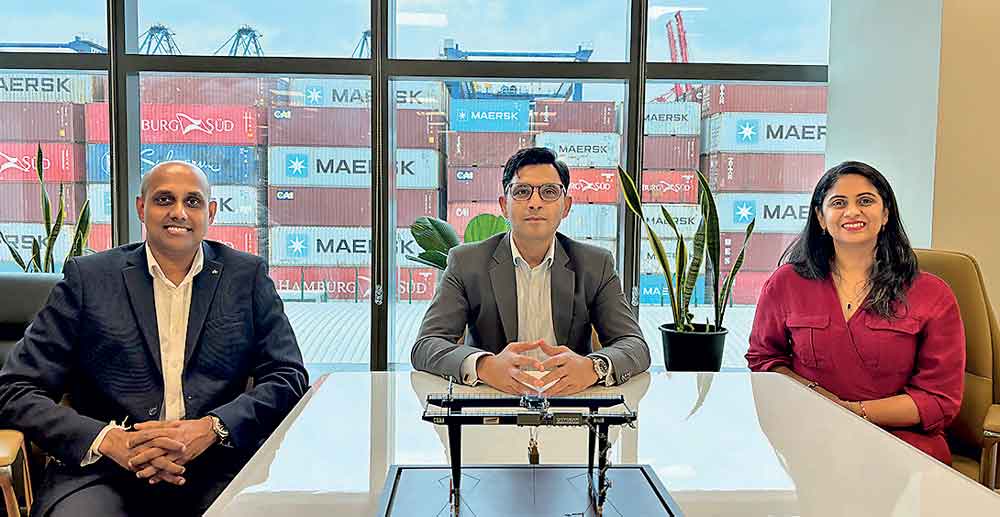
(L-R) Iresh Siriwardena - Chief Operating Officer, Munish Kanwar - Chief Executive Officer, Dhashma Karunaratne - Chief Commercial Officer