Saturday Sep 26, 2026
Saturday Sep 26, 2026
Monday, 17 August 2026 15:46 - - {{hitsCtrl.values.hits}}
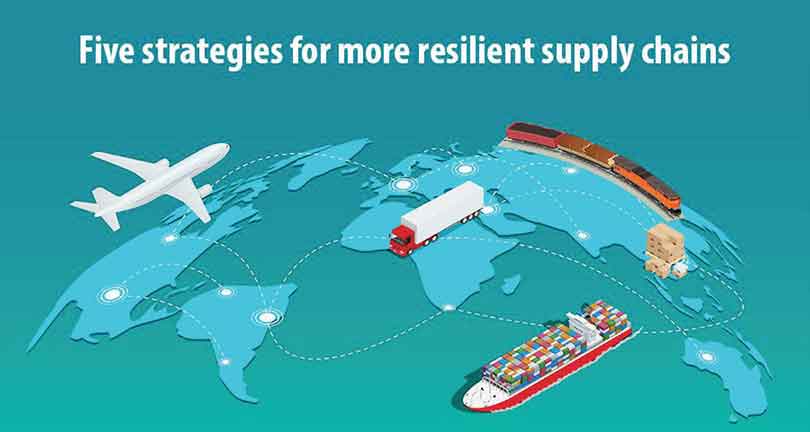
The global economy depends on an extraordinarily complex network of suppliers, manufacturers, transport companies, ports, warehouses and retailers. A product purchased in one country may contain materials sourced from several nations, be manufactured in another market and travel thousands of kilometres before reaching its final customer. This interconnected system has created enormous opportunities for international trade, but it has also made supply chains increasingly vulnerable to disruption.
Recent global events have demonstrated the importance of supply-chain resilience. Geopolitical tensions, changing trade policies, shipping disruptions, extreme weather events and sudden changes in consumer demand can create delays and increase costs across international markets. As a result, businesses are increasingly moving away from supply chains designed purely for minimum cost and towards systems designed for greater flexibility and resilience.
One of the most important strategies is diversification. Companies are examining their dependence on individual suppliers, countries and transportation routes. Establishing alternative suppliers and logistics partners can reduce the impact of unexpected disruptions. Businesses are also considering regional and nearshore sourcing strategies to bring certain stages of production closer to their major markets.
Technology is making this transition possible. Digital supply-chain platforms can provide businesses with greater visibility over inventory, shipments and supplier performance. Real-time tracking allows companies to identify delays and respond quickly, while data analytics can help managers understand potential risks across their logistics networks.
Artificial intelligence is expected to play an increasingly important role. AI-powered systems can analyse large volumes of information to forecast demand, identify potential bottlenecks and recommend efficient transportation routes. Better forecasting can also reduce excess inventory while helping companies maintain sufficient stock to respond to changes in market demand.
Blockchain and other secure digital technologies can contribute to greater transparency in international trade. By improving the traceability of transactions and shipments, digital records can help businesses and authorities strengthen compliance and reduce administrative inefficiencies.
Customs modernisation is another critical element. International trade depends on the efficient movement of goods across borders, and lengthy documentation and clearance procedures can create unnecessary delays. Digital customs systems, electronic documentation and automated processes can help streamline border procedures while improving regulatory oversight.
Ports and logistics hubs will remain central to this transformation. As global shipping networks become more sophisticated, ports must develop the infrastructure and technology required to handle increasing cargo volumes efficiently. Investments in automation, smart-port technologies, storage facilities and inland connectivity can strengthen the competitiveness of major trade gateways.
Sustainability will also influence the future of logistics. International businesses are under increasing pressure to reduce carbon emissions throughout their supply chains. This is encouraging investment in cleaner fuels, energy-efficient transportation, electric delivery vehicles, renewable-energy-powered warehouses and more sustainable packaging.
For Sri Lanka, these developments present both challenges and opportunities. The country’s location near major international maritime routes gives it a natural advantage in regional logistics. By strengthening port infrastructure, improving road and rail connectivity, developing modern logistics parks and expanding digital trade systems, Sri Lanka can enhance its position within international supply chains.
The development of logistics services can also generate opportunities beyond traditional transportation. Warehousing, freight forwarding, supply-chain management, customs services, cold-chain logistics and technology-enabled trade solutions can create new areas of economic activity and employment.
However, infrastructure alone will not be sufficient. A competitive logistics ecosystem requires collaboration between government agencies, port authorities, shipping companies, freight forwarders, financial institutions, technology providers and exporters. Coordinated policies and investment can create an environment where goods move faster, information flows more efficiently and businesses can respond quickly to global changes.
The future of global trade will therefore be defined by resilience as much as by speed and cost. Businesses that can anticipate disruption, diversify their networks and use technology to make informed decisions will have a significant advantage.
Global logistics is moving towards a model that is more connected, intelligent, sustainable and adaptable. For countries positioned along major trade corridors, this transformation represents a significant opportunity. With the right infrastructure, policies and investment, logistics can become not only a facilitator of trade but also a powerful engine of long-term economic growth.




